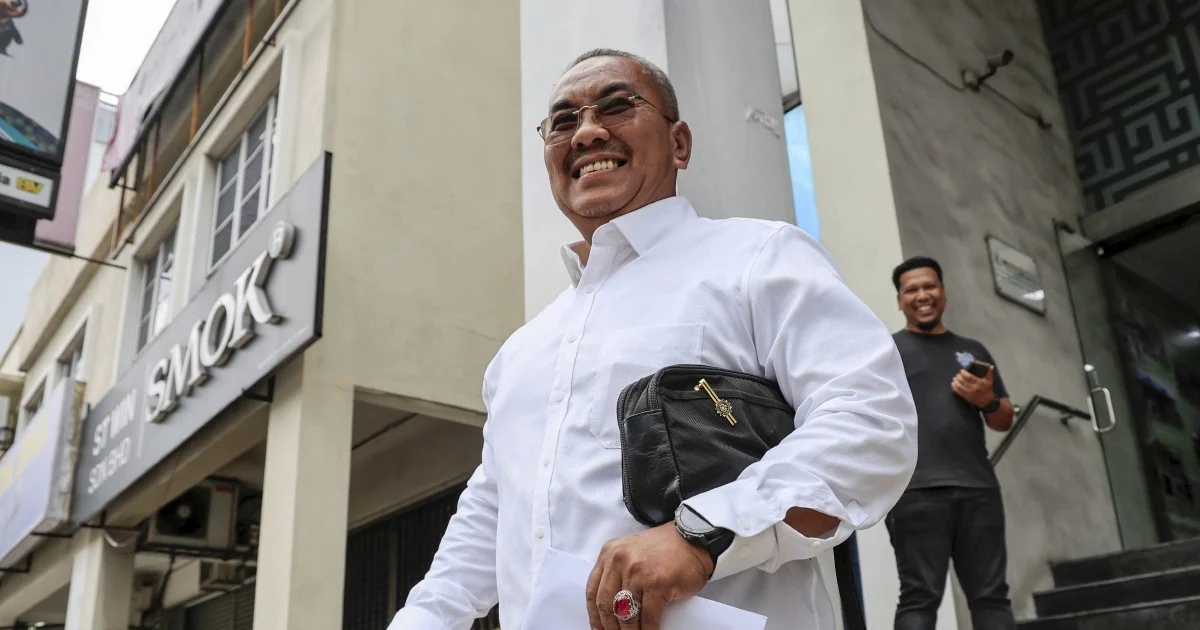
Perikatan Nasional has successfully wrapped up seat allocation discussions for the forthcoming Johor state election, marking a significant milestone in the coalition's election preparation. The announcement came from PN election director Datuk Seri Sanusi Md Nor, who confirmed that protracted negotiations among the coalition's component parties have yielded a resolution on 34 overlapping seat allocations that had previously created friction within the alliance.
The completion of these negotiations carries substantial weight for PN's cohesion heading into the Johor contest. Coalition politics in Malaysia often founder on precisely these kinds of seat distribution disputes, where multiple parties seek to contest the same constituencies. The fact that PN managed to settle these contentious positions suggests a level of internal unity and compromise capacity that will be tested more severely during actual campaigning.
The Johor state election looms as a consequential test for PN's electoral machinery and internal management. As one of Malaysia's most populous and politically significant states, Johor has historically served as a bellwether for broader political trends. A successful election outcome here could substantially strengthen PN's positioning ahead of potential federal-level contests, while conversely, a poor showing would raise questions about the coalition's long-term viability.
The resolution of overlapping seat claims represents tangible progress in managing the inherent tensions within any multi-party coalition. When component parties contest the same constituencies, both the party leadership and grassroots members face difficult choices about candidate selection and campaign strategy. By resolving these 34 cases of competing claims, PN has created clarity that allows each party to focus campaign resources and messaging without the distraction of internal seat disputes.
For Malaysian electoral observers, the manner in which PN concluded these negotiations offers insights into the coalition's decision-making structures and consensus-building capabilities. The coalition operates with significant ideological diversity—encompassing parties from different cultural, religious, and political traditions—which makes seat distribution inherently complex. Successful resolution suggests that PN's leadership structures, including Datuk Seri Sanusi Md Nor's role, possess sufficient authority and acceptance to make binding decisions on contentious matters.
The Johor election context makes this achievement particularly notable because the state represents unique political dynamics within Malaysia. Johor has substantial Malay-Muslim populations that form PN's traditional support base, but also significant urban and mixed-demographic constituencies where different coalition partners may compete more effectively. Allocating seats fairly across these diverse electoral landscapes required sophisticated analysis of each party's comparative strengths in different areas.
From a Southeast Asian perspective, Malaysia's coalition management experiences hold broader relevance. The region hosts numerous electoral democracies where multi-party coalitions compete, and successful seat negotiations without destabilising public disputes offer a constructive model. PN's apparent ability to manage internal disagreements through negotiation rather than public confrontation reflects institutional maturity that transcends Malaysia's specific context.
The completed negotiations also clarify each component party's campaign responsibilities and resource allocation for the Johor election. When parties contest separate seats as negotiated, they can concentrate campaign finances, volunteer mobilisation, and candidate preparation efforts more efficiently. This clarity reduces wasted expenditure and inter-party poaching of campaign resources, both of which commonly afflict multi-party coalitions during election periods.
Looking forward, PN's seat allocation framework for Johor provides a template that coalition leadership can potentially refine for subsequent contests. Electoral systems generate predictable types of seat disputes—where multiple parties perceive themselves as competitive, or where boundary changes create new opportunities, or where grassroots sentiment diverges from party hierarchies. Successful negotiations in the current contest position PN to handle such challenges more expeditiously later.
The timing of this announcement also deserves consideration within broader Malaysian political calendars. State elections in Peninsular Malaysia typically precede federal contests, allowing coalitions to test campaign machinery, assess voter sentiment, and refine messaging before higher-stakes national elections. PN's successful internal resolution on Johor seats suggests the coalition is treating this state election as a significant preliminary contest rather than merely a regional affair.
However, the completion of seat negotiations represents merely one dimension of coalition functionality. Actual campaign coordination, candidate quality, messaging consistency, and voter outreach remain separate challenges. PN's ability to resolve seat disputes positively, while demonstrating coalition stability, creates conditions more favourable for effective campaigning, but does not guarantee electoral success.
For Malaysian voters in Johor and across the nation, these negotiations have practical significance. Clear coalition seat allocations typically translate into clearer ballot choices for voters—they can reasonably predict which party represents which constituency under coalition arrangements. This clarity, while benefiting voters, also imposes greater accountability on each party for its designated territories, since performance in those seats directly reflects on the party rather than being muddled across coalition partners.
Ultimately, Datuk Seri Sanusi Md Nor's announcement signals that PN has successfully navigated one of the most technically complex dimensions of coalition electoral competition. The resolution of 34 overlapping seat claims, while primarily procedural, demonstrates institutional capacity that will shape how effectively the coalition functions throughout the Johor election campaign and potentially beyond.

