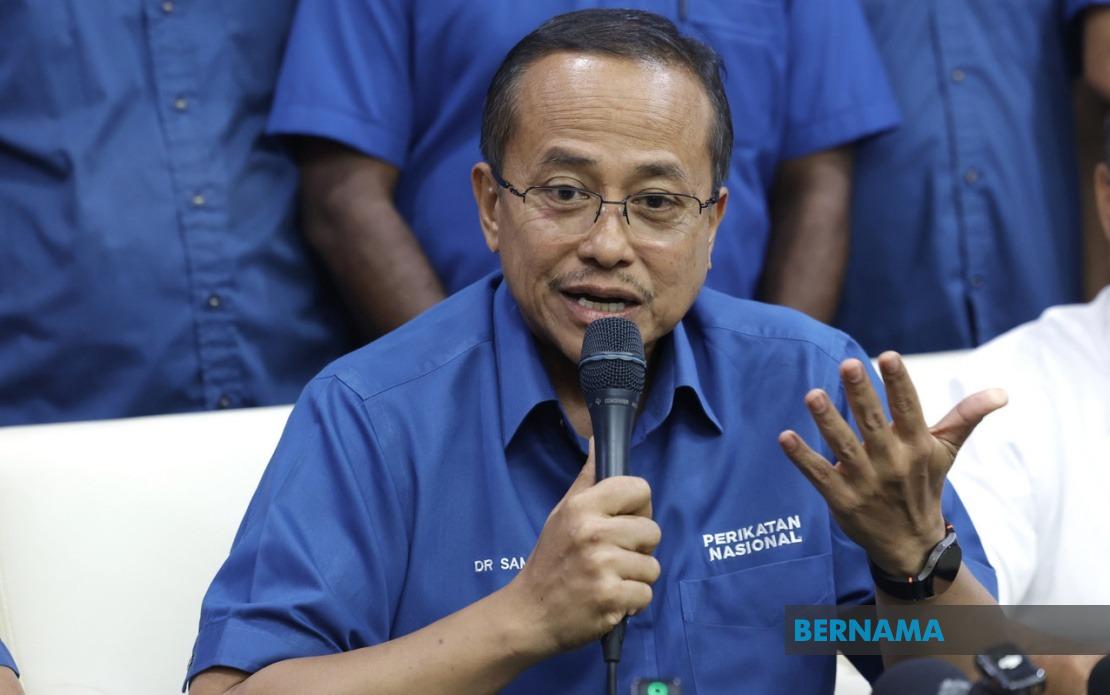
Perikatan Nasional has moved decisively to unite its component parties behind a single electoral front for the upcoming Negeri Sembilan state election, with PN chairman Datuk Seri Dr Ahmad Samsuri Mokhtar announcing the coalition's approval of final seat arrangements at a special Supreme Council meeting held in Seremban on July 16. The decision signals a consolidated approach to the 16th state poll, with all participating candidates set to campaign under the recognisable PN logo rather than their individual party banners, a strategic choice aimed at maximising coalition visibility and voter consolidation across Malaysia's central state.
The seat distribution agreement brings together four component parties within PN's framework for the Negeri Sembilan contest. PAS, the Islamist party that has become PN's dominant force nationally, will field candidates alongside Parti Gerakan Rakyat Malaysia, the veteran centrist party seeking relevance through coalition partnerships, Parti Bumiputera Perkasa Malaysia (Wawasan), and the Malaysian Indian People Party. This multi-ethnic composition reflects PN's stated aspiration to maintain broad representational appeal across Negeri Sembilan's diverse communities, though the exact number of seats allocated to each party has not been publicly detailed.
Dr Ahmad Samsuri emphasised that the coalition's candidates would prioritise practical governance over sectarian interests, framing the election effort around championing public welfare, accelerating developmental initiatives in the state, and preserving communal harmony in Negeri Sembilan's pluralistic landscape. This messaging attempts to position PN as a constructive alternative to competing coalitions, emphasising administrative competence and inclusive governance rather than divisive identity politics. For Malaysian voters, such framings have become increasingly important as state elections serve as proxies for assessing which national coalition possesses superior management credentials and social sensitivity.
A significant dimension of the PN announcement involves its explicit assertion that all preliminary discussions regarding seat allocations and potential cooperation arrangements with other parties occurred under the chairman's direct oversight and subsequent approval. This clarification represents an important procedural statement, indicating that PN's decision-making remained centralised and hierarchical, with all major negotiations flowing through the PN chairman's office rather than occurring through decentralised bilateral arrangements between individual component parties. Such emphasis on procedural transparency and centralised authority management becomes crucial in coalition politics, where perceptions of backroom dealing or unauthorised negotiations can fracture inter-party trust.
The PN decision has precipitated a notable rupture within Malaysia's current opposition landscape, as Bersatu, the Pribumi party founded by former Prime Minister Tan Sri Muhyiddin Yassin, has publicly disassociated itself from the electoral arrangement. Muhyiddin contended that Bersatu was excluded from substantive discussions regarding PN's seat allocation strategy and any potential coordination with Barisan Nasional, Malaysia's traditional ruling coalition. This exclusion prompted Bersatu to pursue an independent electoral path for Negeri Sembilan, competing under its own party symbolism rather than PN's coalition identity. Such fragmentation within opposition ranks reflects deeper strategic tensions about whether informal alliances should be built through exclusive power-sharing arrangements or more inclusive negotiation frameworks.
Bersatu's decision to contest independently introduces considerable complexity into the Negeri Sembilan electoral calculus, as the party retains significant organisational infrastructure and membership networks developed during its national prominence. The party's separation from PN demonstrates ongoing friction between the coalition's strategic direction and Bersatu's preference for independent positioning, a tension that has characterised opposition politics since PN's formation. For Negeri Sembilan voters, Bersatu's independent candidacy creates additional electoral choices but may also fragment the opposition vote across multiple banners, potentially benefiting the ruling Barisan Nasional if votes split excessively.
The announcement timing, occurring during the formal candidate selection period preceding the state election campaign proper, provides parties with sufficient opportunity to mobilise campaign machinery and resource allocation according to their confirmed participation. PN component parties can now concentrate organisational energies on supporting jointly-branded candidates, while Bersatu must establish alternative campaign infrastructure independent of coalition frameworks. This separation of electoral arrangements allows each entity to calibrate messaging and strategic positioning according to their respective political identities and voter coalitions.
From a broader Malaysian political perspective, the PN arrangement reflects continuing evolution within the opposition landscape as various political forces recalibrate alliances following the 2022 general election's complex outcome. Negeri Sembilan's state election serves as a significant testing ground for contemporary coalition viability, given the state's economic importance, relatively balanced political competition, and representative demographic composition. The election outcomes will provide measurable indicators regarding voter receptiveness toward different coalition architectures and messaging approaches, influencing subsequent coalition negotiations ahead of other pending state elections and the next general election cycle.
The consolidated PN approach also carries implications for relationships between opposition and ruling coalitions within Malaysia's federal system. Should PN perform strongly under its unified branding, it may encourage similar coalition-wide electoral branding in future contests. Conversely, Bersatu's independent gambit may signal the beginning of broader opposition reconfiguration, with parties reassessing whether formal coalition membership serves their electoral interests. These dynamics warrant close monitoring by political analysts tracking Malaysia's evolving partisan landscape and coalition structures.
For Negeri Sembilan residents, the PN confirmation clarifies ballot options and campaign landscapes as the state election timeline progresses. Voters now understand which parties will contest jointly under the PN banner versus independently, enabling more informed electoral decisions based on coalition composition and candidate quality. The timing of PN's announcement, combined with Bersatu's independent positioning, provides voters with genuine electoral choice across distinct coalition frameworks and partisan alternatives, though whether such choices ultimately serve representational interests depends on policy differentiation and candidate performance during the forthcoming campaign period.

