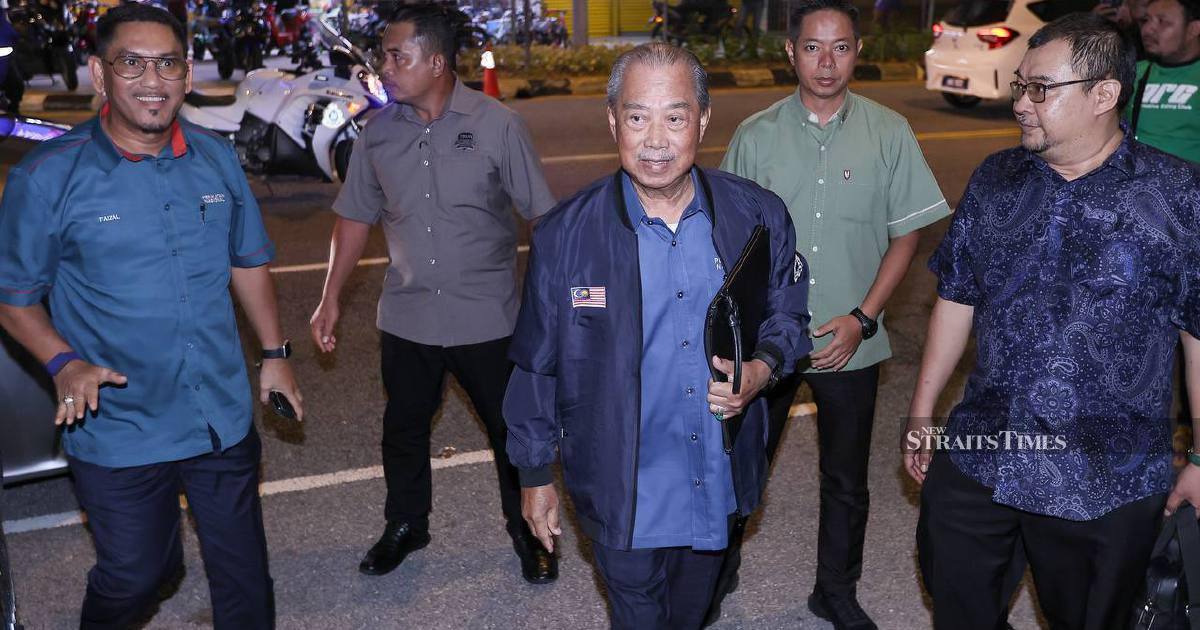
Perikatan Nasional moved swiftly to convene an emergency session of its Supreme Council at PAS headquarters in Kuala Lumpur, underscoring the urgency with which the opposition coalition is addressing current political developments. The hastily arranged gathering brought together senior figures across the PN alliance, reflecting the scale of deliberations required to navigate the coalition's evolving strategic position.
The timing of the meeting comes as PN seeks to consolidate its standing in Malaysian politics during a period of considerable flux. As the second-largest parliamentary bloc, the coalition has positioned itself as an alternative government, yet internal cohesion and external pressure from the ruling Pakatan Harapan administration require constant recalibration. Emergency sessions of this nature typically indicate that PN leadership perceives significant developments requiring immediate collective decision-making rather than routine protocol.
PAS, as host of the meeting and a dominant force within PN, holds considerable sway over the coalition's direction. The Islamic party has leveraged its grassroots machinery and rural support base to establish itself as PN's bedrock, while Bersatu and Gerakan contribute urban constituencies and technocratic expertise. This structural composition means that decisions emerging from PAS headquarters carry particular weight regarding party positioning and coalition strategy.
The emergency convening reflects broader dynamics within Malaysia's political landscape, where coalitions must manage not only inter-party relations but also respond to government initiatives, parliamentary manoeuvres, and public sentiment. PN has consistently challenged the credibility of the current administration on governance, fiscal management, and policy coherence, making rapid response mechanisms essential when circumstances shift unexpectedly.
For Malaysian observers, PN's organizational responsiveness demonstrates how the opposition coalition maintains operational readiness despite lacking federal power. The ability to mobilize senior leadership on short notice suggests institutional discipline and clear communication channels—factors that shape public perception of whether opposition parties could function effectively in government.
Regionally, PN's movements carry implications for Southeast Asian political stability. Malaysia's coalition dynamics influence investor confidence, governance perception, and the broader regional equilibrium. A stable, well-coordinated opposition provides democratic checks and creates space for policy debate, while fractious opposition politics can undermine institutional credibility and investor certainty.
The specific issues driving the emergency session remained undisclosed initially, though such meetings typically address parliamentary tactics, policy responses to government announcements, or management of internal party tensions. PN's coalition structure requires consent-based decision-making across parties with distinct ideological foundations—PAS's Islamist platform, Bersatu's Malay-centric nationalism, and Gerakan's multiracial approach require careful balancing.
Emergency sessions also serve organizational functions beyond substantive decision-making. They demonstrate to party members and grassroots supporters that leadership remains vigilant and responsive, reinforcing confidence in coalition stewardship during uncertain periods. This signalling function proves especially important for opposition coalitions, which rely heavily on perception and narrative to compete against entrenched incumbents with resource advantages.
The meeting location at PAS headquarters symbolically affirmed the party's central role within PN's architecture. As the coalition's largest single component by parliamentary seat count and organizational reach, PAS functions as PN's ballast, providing stability across rural constituencies where the coalition has consolidated considerable strength. Hosting the emergency council meeting at its own headquarters provided PAS an opportunity to reaffirm its organizational capacity and importance.
Looking forward, observers will monitor whether this emergency meeting produces visible policy shifts, enhanced parliamentary coordination, or strategic repositioning ahead of anticipated electoral cycles. PN has previously demonstrated capacity to translate internal coordination into sustained parliamentary pressure campaigns, most notably on fiscal and administrative issues where the coalition has effectively framed itself as fiscally prudent and governance-focused.
For Malaysian analysts, the frequency of such emergency sessions provides an indirect indicator of political system volatility. While Malaysia's democratic institutions have weathered numerous coalitional shifts, the necessity for emergency convocations suggests ongoing uncertainty requiring constant recalibration by major political actors. This cyclical pattern reflects how coalition governments and opposition blocs in Southeast Asia must continuously adapt to shifting circumstances, technological disruption of political communication, and evolving voter preferences.
The Supreme Council's meeting reflects PN's maturation as an institutional force in Malaysian politics. Where once such opposition coalitions barely survived beyond electoral cycles, PN has developed organizational permanence, regular decision-making protocols, and strategic capabilities that approximate governmental structures. This institutional deepening, demonstrated through rapid mobilization capacity, indicates that Malaysian political competition will likely remain structured around organized coalition blocs rather than fragmentary party competition.

