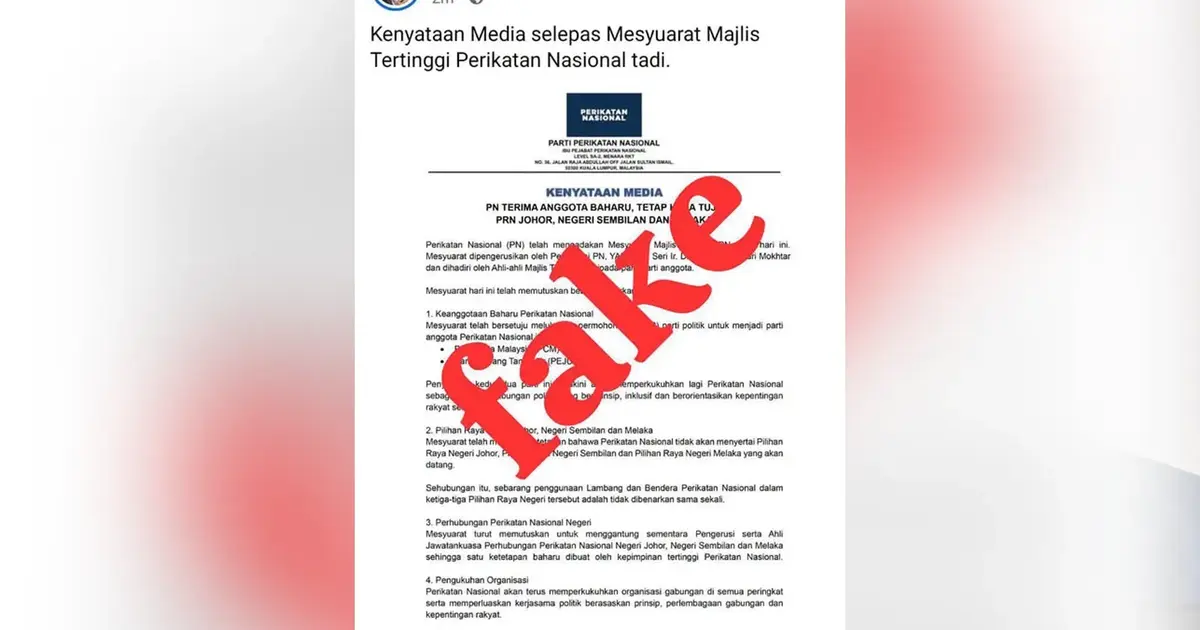
Perikatan Nasional moved swiftly on Wednesday to counter circulating allegations that the political alliance would withdraw from participating in three state-level electoral contests, describing the claims as completely baseless. The coalition's response underscores growing concerns about misinformation spreading through digital channels as Malaysia approaches a potentially consequential electoral cycle at the state level.
The disputed statement, which had begun circulating online, suggested that PN leadership had made a strategic decision to sidestep involvement in the forthcoming tripartite state elections. Such a move would have represented a significant tactical shift, given the coalition's demonstrated ambition to expand its political footprint across Malaysian states over recent years. PN's categorical rejection signals the party's commitment to contesting available electoral opportunities rather than ceding ground to rival coalitions.
This episode reflects a broader pattern of claims and counterclaims characterising Malaysian political discourse, where unverified statements can rapidly gain traction on social media platforms before official clarification emerges. The speed and reach of digital misinformation presents challenges for political parties seeking to maintain public credibility and manage their electoral messaging. For voters attempting to navigate the information landscape, distinguishing between authoritative party announcements and fabricated claims has become increasingly difficult.
The timing of these allegations merits consideration within the current political environment. State elections across Malaysia have become battlegrounds where national coalition strategies are tested and refined. The Dewan Rakyat's current composition means that electoral fortunes at state level could theoretically influence the national power balance, creating incentives for various political actors to shape public perception about their competitors' intentions and capabilities.
PN's vigorous denial suggests the coalition remains intent on maximising electoral participation wherever opportunities arise. The alliance, which consolidated around the Perikatan Nasional banner following earlier political realignments, has been building organisational capacity and refining campaign machinery across multiple states. Withdrawing from contests would contradict the investment of resources and personnel the coalition has committed to state-level organisation.
The emergence and subsequent debunking of this false narrative also highlights vulnerabilities in information verification among segments of the Malaysian electorate. As digital platforms become primary sources of political information for many Malaysians, the capacity to identify credible sources and distinguish official communications from rumour becomes crucial for informed electoral participation. Political parties, media organisations, and civil society increasingly recognise the necessity of rapid response mechanisms when false claims spread.
For regional observers monitoring Malaysian political developments, episodes like this underscore the competitive intensity characterising current Malaysian politics. Multiple coalitions vie for influence, and the stakes attached to state-level contests have risen as national political configurations remain contested and volatile. False claims about electoral strategy can serve various political objectives, from demoralising supporters of a particular coalition to testing public receptiveness to certain narratives.
PN's response mechanism—moving to deny and correct the record publicly—represents standard practice for Malaysian political organisations seeking to protect their standing with voters and media. The coalition's communications apparatus appears calibrated to address such challenges rapidly, recognising that unchallenged false claims can solidify in public memory and influence subsequent electoral behaviour. Credibility maintenance has become a competitive advantage in Malaysian politics.
The broader implication extends beyond this particular incident. Malaysian voters, civil society organisations, and media outlets would benefit from strengthening fact-checking capacity and developing more robust verification protocols before amplifying political claims. As state elections approach, the probability of deliberate misinformation campaigns—aimed at confusing voters, inflaming divisions, or discrediting opponents—likely increases. Establishing shared commitments to accuracy across political actors, media professionals, and digital platforms represents a public interest imperative.
Looking forward, PN's emphatic rebuttal sets the record straight regarding the coalition's electoral intentions. The clear statement of intent to participate in upcoming state contests provides necessary clarity for supporters, party members, and the broader electorate. How effectively the coalition translates this stated commitment into actual electoral performance across the relevant states will ultimately define its political trajectory in the months ahead, shaping broader narratives about the coalition's viability and appeal to Malaysian voters.

