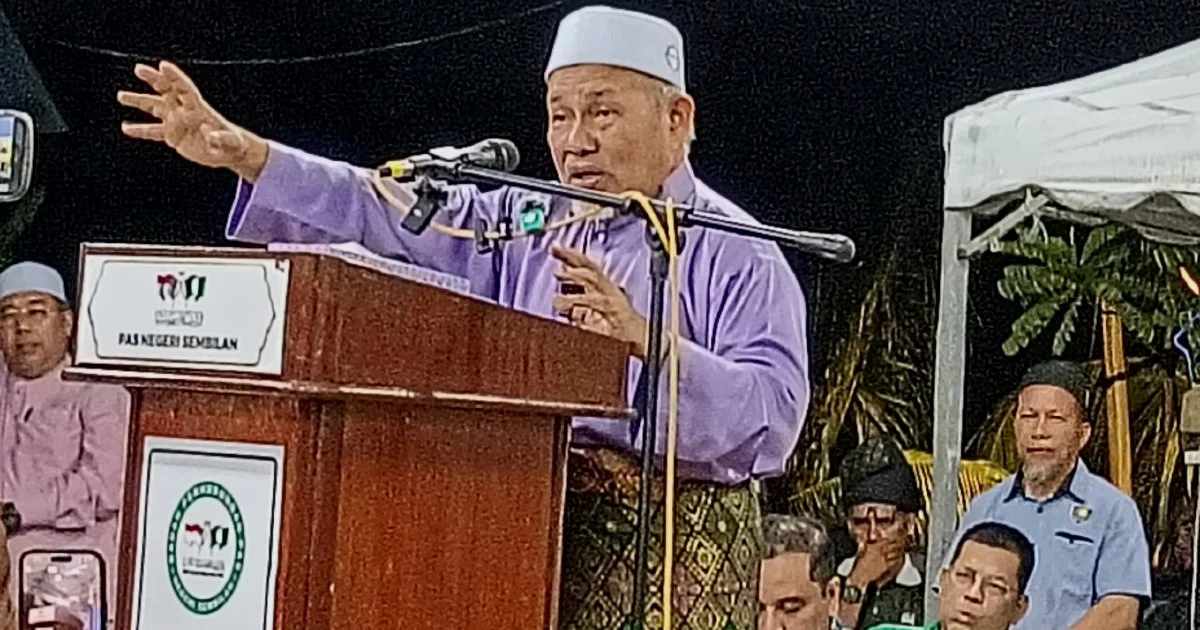
The leadership of Perikatan Nasional remains contested terrain within Malaysia's opposition coalition, with PAS deputy president Datuk Seri Tuan Ibrahim Tuan Man pushing back against suggestions that the bloc belongs exclusively to Bersatu. Speaking to address internal friction that has periodically threatened coalition cohesion, Tuan Ibrahim emphasised that PN operates as a genuinely shared political project rather than a vehicle controlled by any single party.
This declaration arrives at a moment of heightened scrutiny regarding the coalition's governance structures and decision-making processes. Since PN's formation as a formal alliance, questions have persisted about how power is distributed among its various components and whether smaller partners retain meaningful influence or serve primarily as auxiliary members. Tuan Ibrahim's intervention suggests that these tensions have become sufficiently acute to warrant public clarification from senior party leadership, signalling underlying anxieties about marginalisation among non-dominant factions.
The PAS leader's assertion carries particular weight given his party's status as the largest Malay-Muslim organisation within PN and a significant electoral asset, especially in rural constituencies and the east coast states where religious conservatism runs deep. PAS brings not only substantial parliamentary representation but also extensive grassroots organisational capacity that has proven indispensable during electoral campaigns. By insisting on PN's collective character, Tuan Ibrahim was implicitly asserting PAS's right to co-determine coalition strategy and policy direction rather than simply deferring to directives from Bersatu's leadership.
The timing of this statement reflects broader shifts within Malaysian opposition politics, where alliances have repeatedly fragmented over disputes about resource allocation, ministerial appointments, and strategic autonomy. PN itself emerged from the wreckage of earlier coalitional arrangements and internal recriminations, representing an attempt to forge a more stable multi-party structure capable of challenging the previously dominant Barisan Nasional framework. However, the coalition has struggled to establish mechanisms for managing the competing interests and egos that inevitably arise when diverse political forces attempt sustained cooperation without a common enemy strong enough to enforce discipline.
Bersatu's role as the nominal convenor of PN has occasionally created friction with other parties that view the arrangement as insufficiently consultative or equitable. Smaller components particularly worry about being sidelined in decision-making on critical matters affecting coalition unity or electoral strategy. Tuan Ibrahim's public restatement of collective ownership principles appears designed to establish clearer norms around how such decisions should be made, pushing back against any perception that Bersatu can unilaterally determine PN's direction without securing broader consensus.
For Malaysian political observers, these internal coalition dynamics carry genuine significance for electoral prospects and parliamentary stability. The opposition's ability to present a unified front during general elections and maintain coalition discipline afterwards has measurably impacted its capacity to challenge government narratives and hold ministers accountable. When coalition members engage in public disputes over ownership and leadership, voters receive mixed signals about the seriousness of the opposition project and become less confident that coalition partners would function effectively as alternative government partners.
The statement also carries implications for how PN manages its relationship with federal government structures, particularly as political tensions mount around various policy questions and state-level administrations where opposition parties exercise power. Coalition parties must balance their individual agendas with collective interests, a balancing act that becomes exponentially more difficult when basic principles of governance within the alliance remain contested or unclear. Without established norms and transparent procedures for decision-making, PN risks repeating the pattern of earlier coalitions that collapsed when pressures mounted.
Regionally, PN's internal cohesion matters for Southeast Asia's broader democratic trajectory, particularly regarding how opposition alliances can effectively constrain executive power and maintain democratic competition. Malaysia's coalition politics significantly influence perceptions among other regional democracies about whether multi-party opposition arrangements can survive pressures that inevitably arise during polarised political competition. The durability of such coalitions depends not only on external electoral performance but also on internal mechanisms for conflict resolution and power-sharing that command legitimacy among member parties.
Tuan Ibrahim's intervention thus represents more than a procedural clarification; it reflects struggles over the fundamental character of opposition politics in Malaysia and the extent to which genuinely collaborative frameworks can replace the traditionally dominant-party structures that characterised earlier political eras. Whether PN can institutionalise more equitable decision-making procedures or will continue experiencing periodic eruptions of coalition friction remains an open question with implications extending well beyond immediate partisan calculations into broader questions about Malaysian political development.

