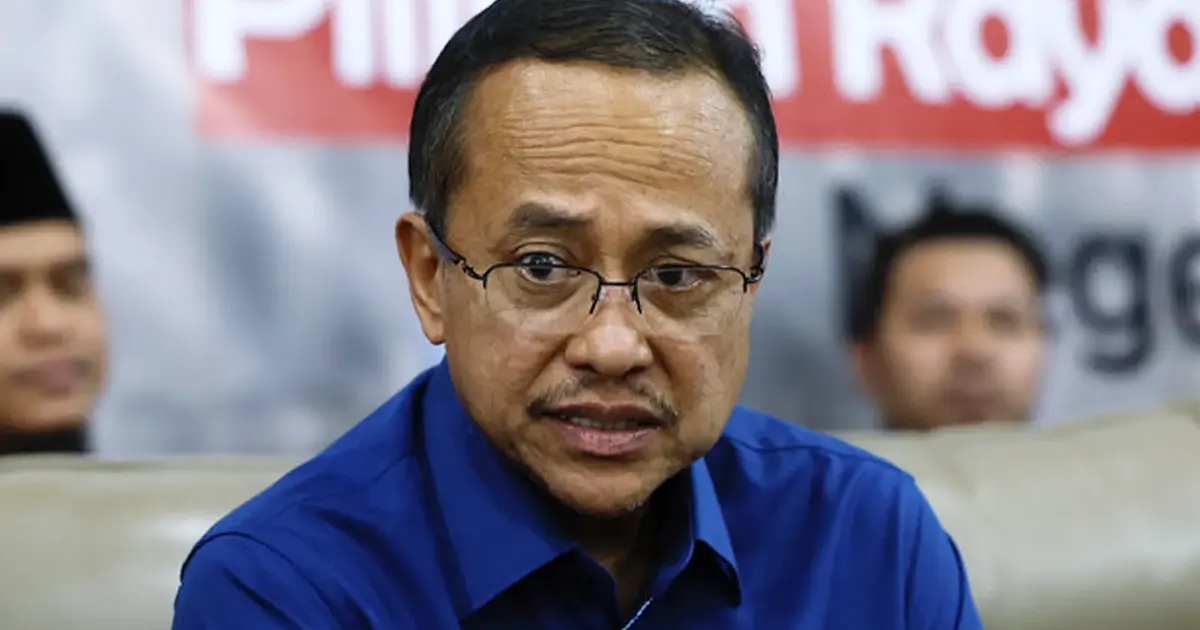
Perikatan Nasional coalition chairman Samsuri has sought to allay concerns that permitting both PAS and Bersatu to campaign under the shared PN logo in upcoming elections will confuse voters, arguing that predetermined seat divisions ensure the arrangement functions smoothly without duplication or conflict on the ground.
The assurance comes as the two-party alliance continues to consolidate its presence in Malaysian politics, particularly following recent political developments that have reshaped the electoral landscape. Samsuri's statement reflects an attempt to preempt potential criticism from rival coalitions and to provide clarity to party members and supporters who may question the mechanics of allowing multiple parties to operate beneath a single electoral banner.
The Perikatan Nasional framework has emerged as a significant political force challenging the long-standing dominance of Barisan Nasional and the growing strength of Pakatan Harapan. By uniting PAS, Bersatu, and other allies under one coalition identity, the PN leadership believes it has created a more formidable platform for electoral competition. However, the practical implications of having two major parties share branding and messaging have raised legitimate questions about how voters will differentiate between candidates and which party they are actually endorsing when they cast their ballots.
The concern stems partly from Malaysia's historical voting patterns and the traditional emphasis on party identity in electoral campaigns. Voters accustomed to supporting specific parties like Umno or DAP may find the shared-logo approach unconventional, potentially creating uncertainty about organisational accountability and policy direction. Samsuri's intervention suggests that PN strategists recognise this potential weakness and are determined to address it head-on before the arrangement becomes a liability during campaigning.
The seat allocation agreement between PAS and Bersatu, which underpins Samsuri's confidence in the arrangement, represents a compromise that acknowledges both parties' electoral ambitions while preventing wasteful competition for the same constituencies. This approach differs markedly from how Barisan Nasional coordinates among its member parties, where component parties historically negotiated seat divisions but maintained distinct party identities in voter communications. The PN model, by contrast, attempts to blur party lines in favour of coalition branding, a strategy that carries both advantages and risks.
For PAS, the arrangement provides visibility and organisational support from a coalition that extends beyond its traditional strongholds in the northern states and among rural constituencies. Bersatu, meanwhile, gains access to PAS's substantial grassroots machinery and electoral reach, especially among rural Malay-Muslim voters. This symbiotic relationship has enabled both parties to project a united front against common rivals, though critics question whether the partnership can survive potential disagreements on substantive policy matters or leadership positions in government.
The implications of this arrangement extend beyond mere electoral mechanics. The success or failure of the shared-logo model may influence how Malaysian coalitions structure themselves in future elections. If voters accept the PN branding as a coherent political force, other coalitions might attempt similar arrangements. Conversely, if the arrangement generates confusion or resentment among grassroots supporters of either PAS or Bersatu, it could undermine the coalition's electoral performance and internal cohesion.
From a broader Southeast Asian perspective, Malaysia's coalition politics offers instructive lessons about how electoral alliances operate in competitive multiparty democracies. The region has witnessed various attempts at coalition formation, from Thailand's post-coup political arrangements to Indonesia's shifting coalition dynamics. The PN model, with its emphasis on shared branding rather than hierarchical coordination, represents a distinctive approach that merits close observation.
Samsuri's assurance also reflects confidence in the electoral infrastructure and voter literacy within Malaysia. The assertion that clear seat divisions will eliminate confusion presumes that voters and party workers can readily access and retain information about which party is contesting which seats, and that campaign messaging will consistently reinforce these distinctions. This assumption may not hold uniformly across all constituencies, particularly in areas with lower political engagement or among newer voters unfamiliar with coalition arrangements.
The coordination between PAS and Bersatu requires sophisticated logistical planning to ensure that campaign activities, candidate nominations, and public statements align sufficiently to project unity while respecting the autonomy each party requires to maintain internal discipline and distinct identity. Any perceived favouritism toward one party over the other in resource allocation or leadership roles could generate resentment and undermine the partnership's effectiveness.
Moving forward, the true test of whether the shared-logo arrangement creates confusion will emerge during actual campaigns and at the ballot box. Voter behaviour, media coverage, and opposition parties' effectiveness in highlighting potential ambiguities will ultimately determine whether Samsuri's assurance proves justified. Malaysian political analysts will be closely monitoring whether the PN coalition's structural innovation proves more durable than previous ad hoc alliances or whether deeper fractures emerge as electoral pressures mount.
The broader significance of this arrangement lies in what it reveals about Malaysian coalition politics' evolution toward greater pragmatism and flexibility. Traditional hierarchies and clear party demarcation lines appear less important than achieving electoral competitive advantage through unified messaging and strategic resource pooling. Whether this transformation strengthens or weakens Malaysia's democratic institutions and electoral integrity remains an open question that will likely occupy political commentators and scholars for years to come.

