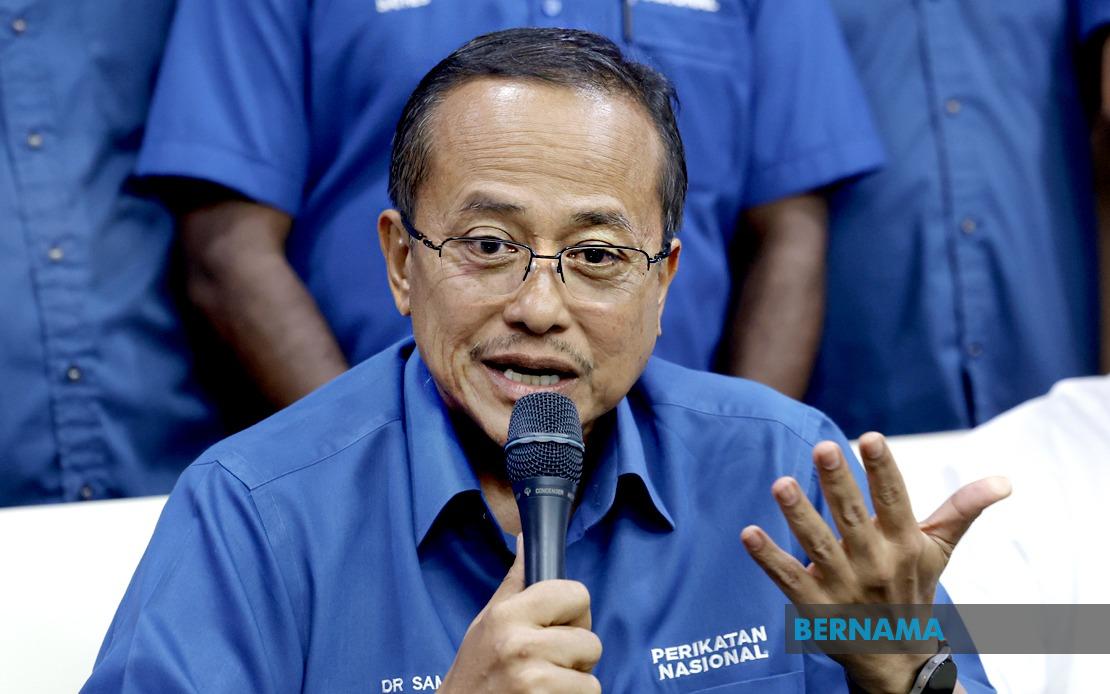
The opposition Perikatan Nasional has signalled its receptiveness to negotiations with Barisan Nasional on forming a coalition government ahead of the Melaka state election, according to PN chairman Datuk Seri Dr Ahmad Samsuri Mokhtar. The overture comes at a time when the dissolution date for the Melaka State Legislative Assembly has not yet been announced, leaving a window for political manoeuvring between Malaysia's two major political blocs. Speaking after opening the 23rd Perak PAS Convention in Taiping, Ahmad Samsuri emphasised that his coalition welcomes discussions with BN if the latter is prepared to engage in such talks.
While formal negotiations have not commenced between PN and BN, Ahmad Samsuri indicated that sufficient opportunity exists for both sides to explore partnership arrangements. He suggested that such discussions would ideally take place before the dissolution of the state assembly, a timeline that provides both coalitions with a reasonable period to assess mutual interests and negotiate terms. The PN leader's comments reflect a pragmatic approach to the political landscape in Melaka, where neither bloc has demonstrated overwhelming dominance in recent electoral cycles.
The PN chairman presented an intriguing assessment of the potential ramifications of such an alliance, suggesting that a PN-BN partnership possessed an estimated 75 per cent probability of successfully forming the state government in the forthcoming election. This optimistic projection underscores the numerical reality of Malaysian state politics, where coalition-building often determines which bloc secures the chief minister's post. For PN, which currently occupies the opposition benches in Melaka, a successful electoral outcome with BN backing would represent a significant shift from its present position outside government.
However, Ahmad Samsuri tempered his coalition's ambitions by acknowledging the considerable difficulties inherent in achieving such an arrangement. He employed metaphorical language to describe the challenges ahead, noting that the pathway to government formation would not resemble a straightforward highway but rather a more complex route without convenient rest stops. This candid assessment suggests that PN leadership understands the substantial obstacles involved in reconciling the differing agendas, membership bases, and political histories of two coalitions that have frequently positioned themselves as rivals.
The PN chairman highlighted the necessity for prudence, tolerance, and patience from all parties involved in such negotiations. These qualities would be essential, he suggested, given the structural complexities of merging two distinct political coalitions with different organisational cultures and strategic objectives. The emphasis on these virtues reflects an understanding that hasty or poorly managed negotiations could fracture either coalition or alienate grassroots members who have long viewed the opposing bloc with suspicion.
For the broader Malaysian political context, Ahmad Samsuri's comments represent a continuation of the post-2020 trend toward pragmatic coalition-building across traditional dividing lines. The 2020 general election fundamentally disrupted Malaysia's political landscape, leading to unprecedented alliances between historically antagonistic parties. Since then, state-level politics has increasingly featured opportunistic coalition arrangements based on numerical strength rather than ideological alignment. The Melaka situation exemplifies this new reality, where parties prioritise electoral viability over maintaining rigid political enmities.
PN's openness to discussions with BN also reflects the coalition's strategic calculus regarding Melaka's political composition. The state has historically been contested territory between BN and opposition coalitions, with control shifting between different blocs across electoral cycles. PN's presence in Melaka represents a relatively recent development compared to Selangor and Perak, where PN has deeper organisational roots. A successful electoral outcome in Melaka, particularly achieved through accommodation with a major establishment party like BN, could strengthen PN's claims to be a viable governing alternative at both state and national levels.
The timing of Ahmad Samsuri's remarks is particularly significant given the fluid nature of Malaysian state politics in 2024. The Melaka state assembly dissolution timeline remains unclear, providing political players with uncertainty regarding when the election will occur. This indeterminacy creates both pressure and opportunity for coalition negotiations, as parties must balance the urgency of securing electoral arrangements against the risk of appearing overly desperate for alliances. The PN chairman's public statement serves to signal seriousness while maintaining negotiating leverage.
For Barisan Nasional, Ahmad Samsuri's overture presents a calculated proposition that requires careful deliberation. BN has historically preferred to contest elections as the dominant coalition partner, benefiting from its extensive organisation and historical dominance at the state level. An alliance with PN would involve sharing power and campaign resources, potentially constraining BN's influence within a future state government. Whether BN leadership decides to engage in substantive negotiations will depend on their assessment of electoral prospects without such partnership.
The political landscape in Melaka has evolved considerably following the 2022 state election, which saw the Pakatan Harapan-led government win but subsequently face instability. The prospect of PN and BN collaboration represents a significant realignment that could reshape state politics. Such an arrangement would potentially marginalise Pakatan Harapan in Melaka, reducing the state's representation of the coalition that won the 2023 general election with a parliamentary majority.
Ahmad Samsuri's emphasis on describing potential cooperation as a "game changer" for PN reveals the coalition's perception that its current oppositional status in Melaka constrains its influence and political development. By publicly positioning PN as willing to negotiate across traditional lines, the chairman attempts to project his coalition as a mature political force capable of putting electoral outcomes above factional loyalty. This narrative construction is designed to appeal to both potential coalition partners and to voters who might be persuaded that PN offers a refreshing alternative to entrenched political configurations.
The coming weeks will prove crucial in determining whether Ahmad Samsuri's expressions of openness translate into concrete negotiations. The absence of a dissolution date suggests that both PN and BN retain flexibility in their strategic positioning. Should substantive talks commence, the substantive issues to be resolved would include seat allocation, campaign coordination, and post-election power-sharing arrangements. Each of these elements presents opportunities for disagreement that could derail negotiations or result in a coalition lacking the cohesion necessary for effective governance.

