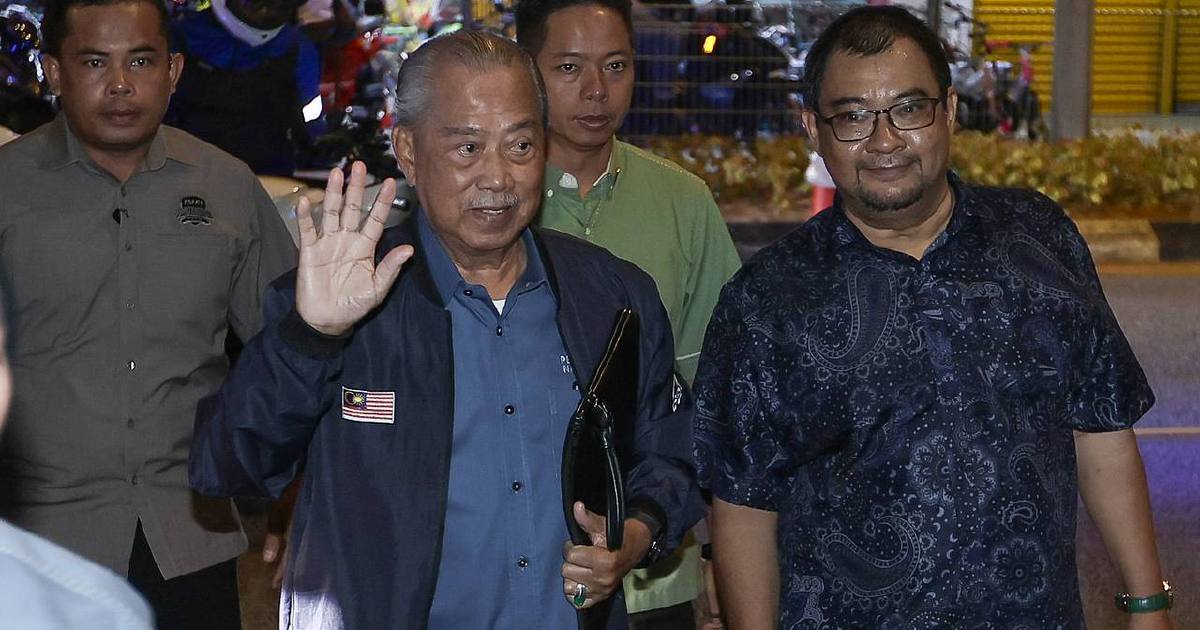
Perikatan Nasional called an emergency Supreme Council meeting in Kuala Lumpur that focused squarely on broader coalition business and the possibility of recruiting new member parties, yet conspicuously avoided examining Bersatu's position as a component of the opposition bloc. The clarification came from party leadership, who sought to manage expectations and quell speculation about internal tensions that have periodically surfaced between the coalition's various factions.
The timing of the emergency convocation carried particular weight given the fluid political landscape in Malaysia. With the Anwar Ibrahim-led federal government navigating contentious legislative sessions and managing an increasingly fractious cabinet, opposition coalitions have faced mounting pressure to demonstrate unity and strategic coherence. Perikatan Nasional, which emerged as a significant counterweight to Pakatan Harapan following the 2020 political realignment, has long grappled with balancing the interests of ethnically and ideologically distinct components, principally Bersatu, the PAS-dominated Islamist contingent, and various other regional and communal representatives.
Bersatu's status has remained a perpetual flash point within opposition politics. The party, helmed by Muhyiddin Yassin until recently and rooted in the remnants of UMNO's fractious internal dynamics, commands considerable parliamentary leverage despite its modest formal membership. The question of whether Bersatu maintains full parity with other coalition members or occupies an ambiguous peripheral position has generated recurring friction. By explicitly stating that the emergency council session did not venture into Bersatu's institutional standing, coalition leadership appeared to be signalling that such contentious matters remain unresolved and potentially too destabilising to address in a formal gathering.
The decision to sidestep Bersatu's position reflects a broader challenge confronting Perikatan Nasional as it attempts to function as a cohesive alternative administration. Opposition coalitions in Malaysia operate under structural disadvantages compared to governments commanding legislative majorities. Coalition discipline becomes exponentially more difficult to maintain when component parties pursue divergent agendas, when personality-driven leadership creates competing power centres, and when questions about power-sharing arrangements remain fundamentally unresolved. By avoiding the Bersatu question, the coalition implicitly acknowledged that broaching it could fracture already fragile consensus.
The emphasis on discussing potential new membership rather than clarifying existing relationships suggests that Perikatan Nasional leadership sees expansion as preferable to internal consolidation. This strategic orientation carries both promise and peril. Drawing in new parties theoretically expands the coalition's parliamentary firepower and broadens its electoral appeal across geographic regions and demographic constituencies. However, growth without institutional clarity risks producing a bloated structure incapable of coordinated action when parliamentary votes actually occur. For Malaysian voters and regional observers, such structural weakness raises fundamental questions about whether opposition coalitions possess sufficient coherence to present themselves as viable governing alternatives.
The clarification also underscores the delicate balancing act required within opposition politics. Muhyiddin and other coalition leaders must simultaneously project strength and unity to prospective members and the electorate whilst managing genuine disagreements about power distribution, policy priorities, and long-term strategic direction. Making explicit statements about what the emergency council did not discuss becomes, paradoxically, a way of controlling the narrative around what remains tacit or contested. By announcing that Bersatu's position was not on the agenda, coalition leaders managed expectations and potentially prevented external parties from reading too much into procedural omissions.
For Malaysian readers, the significance extends beyond immediate coalition mechanics. The opposition's capacity to mount credible challenges to government policies depends substantially on organisational coherence and strategic clarity. When opposition coalitions operate with unresolved questions hanging over foundational relationships between components, they struggle to pivot rapidly to emerging opportunities or present unified counter-narratives to government initiatives. The exclusion of Bersatu's status from an emergency council agenda therefore has implications for parliamentary politics, electoral dynamics, and the quality of public scrutiny that opposition members can bring to bear on government spending, policy implementation, and ministerial conduct.
Regionally, the event echoes broader patterns seen across Southeast Asia where multi-party opposition coalitions attempt to function as institutional alternatives. Thailand, Indonesia, and the Philippines have all contended with opposition alliances fractured by competing leadership claims, incompatible ideological commitments, and unresolved power-sharing disputes. Malaysia's Perikatan Nasional, navigating similarly contested terrain, faces persistent questions about whether coalitional arrangements can deliver the institutional discipline and strategic coherence necessary for effective governance or robust parliamentary opposition.
The emergency meeting's explicit focus on coalition expansion rather than internal clarification suggests that leadership prefers to deepen coalition ties through recruitment of sympathetic parties rather than through formal resolution of existing ambiguities. This approach may generate short-term parliamentary gains but postpones confronting deeper questions about institutional design, power distribution, and strategic purpose that will ultimately determine whether Perikatan Nasional evolves into a sustainable alternative administration or remains a loose confederation of parties united primarily by opposition to the incumbent government.

