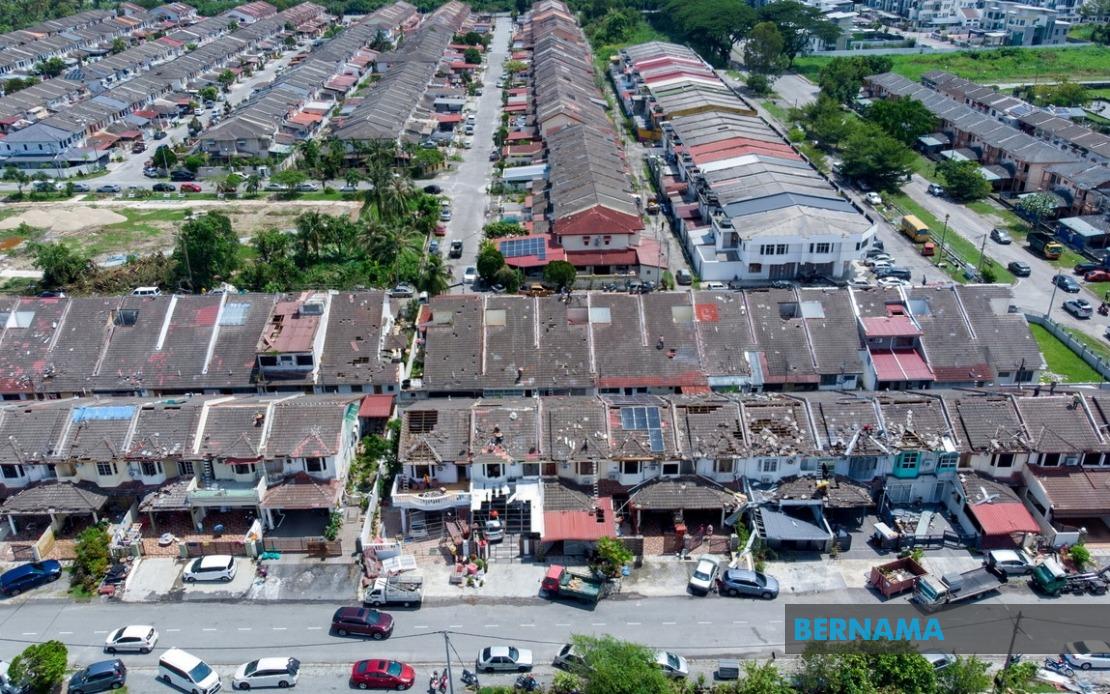
Police have established strict access controls across five separate zones in the storm-affected Bercham neighbourhood of Ipoh, with authorities implementing selective entry restrictions to protect properties vulnerable to criminal activity. The containment operation reflects growing concerns that disaster-hit communities attract opportunistic theft and property crimes, particularly in areas where residents face prolonged infrastructure disruptions and reduced visibility for night-time clean-up work.
According to Ipoh district police chief ACP Muhammad Najib Hamzah, the cordon strategy permits residents reasonable flexibility to access their homes and clear debris, acknowledging the genuine recovery needs of those whose properties sustained storm damage. However, this measured approach gives way to considerably firmer enforcement after dark, when the absence of electricity in several neighbourhoods creates conditions favourable to unlawful entry and theft disguised as legitimate salvage operations.
The police chief explained during a briefing at the Bercham police station Incident Control Post that officers conducting night-time patrols will scrutinise individuals claiming to be undertaking clean-up activities, verifying ownership and legitimacy of presence within cordoned zones. This calibrated enforcement reflects a calculated risk assessment: balancing the urgent practical needs of disaster victims against the elevated security risks that darkness and power outages present to unoccupied or partially damaged properties.
As of the morning briefing, police had documented 492 storm-related incidents through their Op Bencana reporting system, with authorities establishing no deadline for victims to formally lodge complaints. The extended filing window acknowledges that disaster-affected residents often require time to assess damage, navigate insurance processes, and prioritise urgent repairs before documenting losses to police.
The scale of the disaster remains incompletely quantified, with officials yet to compile comprehensive loss assessments across the affected zones. Ipoh Barat Member of Parliament M. Kulasegaran, who holds the concurrent portfolio of Deputy Minister in the Prime Minister's Department (Law and Institutional Reform), characterised the weather event as extraordinary and unprecedented, noting that it damaged more than 200 residential units concentrated within the Bercham area.
Meteorological authorities and local officials have attributed the destructive weather pattern to a landspout phenomenon, a rare and intensely localised weather event distinct from conventional tornados. Landspouts develop when rotating columns of air form near ground level and intensify rapidly, creating concentrated zones of extreme wind velocity affecting limited geographical areas with little warning. This explanation accounts for the concentrated nature of damage, clustering destruction within specific neighbourhoods rather than creating damage corridors extending across broader regions.
The impacted localities include Anjung Bercham Utara, Taman Mujur, Kampung Bercham, Kampung Tersusun Tasek, Taman Pusat Bercham, and Taman Indah Sakti, representing a cross-section of residential neighbourhoods spanning formal residential estates and traditional village settlements. The diversity of affected communities underscores the indiscriminate nature of the weather phenomenon and complicates recovery efforts, as different community groups may face distinct barriers to accessing assistance and undertaking repairs.
The police cordon operation represents a preventive law enforcement strategy aimed at containing secondary criminal activity arising from disaster conditions, a pattern observed internationally where disaster zones experience elevated burglary and theft rates. The electricity outages affecting Anjung Bercham and surrounding districts exacerbate security vulnerabilities, as residents cannot rely on electric lighting, security system operation, or communication systems dependent on power supply for coordinating neighbourhood watch activities.
For Malaysian readers, the Bercham incident highlights the multi-faceted challenges emergency responders and civil protection authorities face when managing disaster recovery in densely populated residential areas. Beyond immediate rescue and medical response, disaster management extends to protecting vulnerable properties during the protracted recovery phase when residents are absent undertaking temporary accommodation arrangements or focused on securing alternative shelter and essential supplies.
The incident also underscores the importance of community-level disaster preparedness and inter-agency coordination. Malaysian weather patterns have demonstrated increasing volatility in recent years, with localised severe weather events becoming more frequent across the Peninsular region. Ipoh and surrounding Perak communities should incorporate considerations of extreme wind events and rapid weather deterioration into municipal emergency planning, particularly regarding infrastructure resilience for power distribution and communication networks serving residential districts.
The police operation, while necessarily restrictive, reflects acknowledgment that disaster recovery succeeds only when security conditions permit residents and emergency workers to undertake essential restoration work without fear of criminal predation. As cleanup continues and electricity restoration progresses across affected Bercham neighbourhoods, police enforcement postures will likely moderate, though cordoning will probably persist until structural assessments confirm that properties are secure and basic utilities have been restored to acceptable standards.

