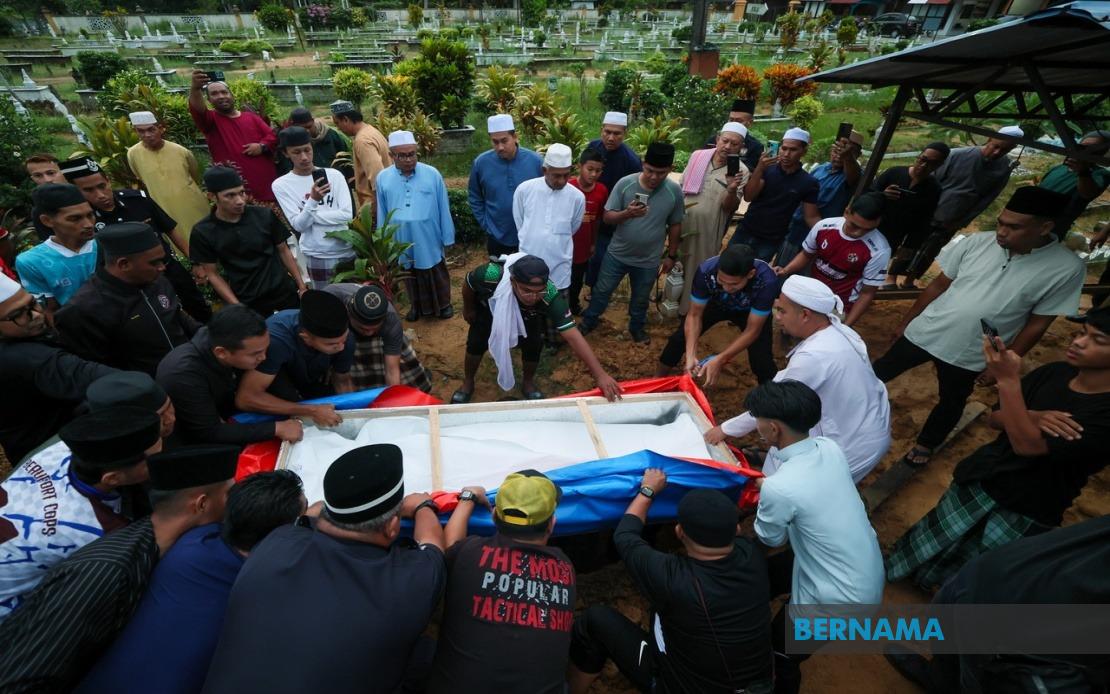
The funeral service for Corporal Mohamad Nur Hafiz Rahim, a 29-year-old police officer, took place in Kota Bharu on Thursday morning, concluding with his burial at Kampung Pangkal Kuang Muslim Cemetery in Ketereh. The officer had died the previous day from an electrical shock while stationed in Beaufort, Sabah, marking a tragic loss for both the Royal Malaysia Police and his grieving family in Kelantan.
The remains of Mohamad Nur Hafiz arrived at his family home in Kampung Hutan Pasir at 4:45 am, where funeral prayers were conducted before the cortège proceeded to the cemetery. His family expressed gratitude to PDRM for coordinating the logistics of transporting his body from Sabah to his native state, acknowledging the administrative challenges involved in bringing an officer home under such distressing circumstances.
Nurlella Rahim, the deceased's eldest sister at 34 years old, painted a portrait of a tight-knit family that transcended geographical distances through technology. Living in Ipoh, Perak, she maintained daily contact with her brother despite the physical separation, leveraging video calls and social media to sustain their bond. The family's WhatsApp group served as a digital gathering space where the five siblings regularly shared updates, photos, and moments from their lives across different Malaysian states.
The frequency and intimacy of these digital interactions underscore the modern reality of Malaysian families spread across the peninsula and East Malaysia. Mohamad Nur Hafiz maintained consistent contact with his relatives, making video calls during breaks at work and prioritizing family connection despite his police responsibilities. His last video conversation with their mother occurred on Thursday afternoon, just hours before the tragedy, when he appeared tired but emotionally present.
During that final exchange, Mohamad Nur Hafiz reassured his mother that he would continue their conversation after finishing his shift, a promise he would not be able to keep. Even in the context of exhaustion and work obligations, he made deliberate efforts to remain engaged with his family, reflecting a deep commitment to maintaining these bonds. Nurlella's recollection of their last video call on Sunday, when her brother took his wife Fatimah Shahira and their child to the beach, captured a father balancing family life with his demanding career in uniform.
The incident itself unfolded at 5:50 pm when Mohamad Nur Hafiz and two colleagues stationed at Weston Police Station in Beaufort were fatally electrocuted while handling a 29-foot-long metal pole designed to harvest coconuts. The pole came into contact with an electrical source as they attempted to relocate it outside the station near Sekolah Kebangsaan Weston. The accident claimed the lives of three officers with a combined service representing different regions of Malaysia.
Besides Mohamad Nur Hafiz, Corporal Chiu Teck Siong, a 40-year-old officer from Sarawak, and Constable Muhammad Raimi Ismarubee, a 26-year-old from Terengganu, also perished in the electrocution. The diversity of their origins—spanning the peninsula and East Malaysia—highlighted the interconnected nature of the PDRM workforce and the broad impact such tragedies have across the nation's police communities.
The incident prompted immediate attention from Malaysia's highest political leadership. Prime Minister Datuk Seri Anwar Ibrahim issued a directive ordering a comprehensive, transparent, and expedited investigation into the circumstances surrounding the deaths. In his public statement on Facebook, Anwar emphasized the critical importance of understanding what led to this preventable tragedy and ensuring systemic improvements to eliminate similar risks in the future.
The Prime Minister's intervention reflected the seriousness with which the government viewed workplace safety failures within the police force. Such electrical hazards at operational locations demand rigorous examination not merely as a matter of procedural accountability but as a fundamental issue of occupational protection for men and women in uniform who expose themselves to various dangers in service of public safety.
The three-officer fatality represents one of the most significant losses the PDRM has sustained from a single workplace incident in recent years. The electrocution of multiple personnel simultaneously raises profound questions about safety protocols, equipment handling procedures, and emergency response mechanisms at police stations throughout Malaysia. The fact that a routine task—relocating a coconut-harvesting implement—resulted in mass electrocution suggests potential gaps in hazard identification and risk mitigation strategies.
For Malaysian families with relatives serving in law enforcement, the Rahim family's experience underscores both the rewards and perils of police work. Mohamad Nur Hafiz's dedication to maintaining family connections despite the distance and demands of his posting demonstrates the personal sacrifices officers make. His unexpected death serves as a sobering reminder that occupational hazards can strike suddenly, regardless of rank, experience, or precautions.
The investigation ordered by Prime Minister Anwar will likely examine electrical infrastructure at police facilities, protocols for equipment movement, and whether proper safety equipment was available or utilized. The outcomes of this inquiry may establish new standards for workplace safety across the PDRM, potentially affecting operational procedures at hundreds of police stations nationwide. For the families of Mohamad Nur Hafiz, Chiu Teck Siong, and Muhammad Raimi Ismarubee, ensuring that meaningful changes emerge from this investigation represents a pathway to honor their sacrifice and protect future generations of officers.

