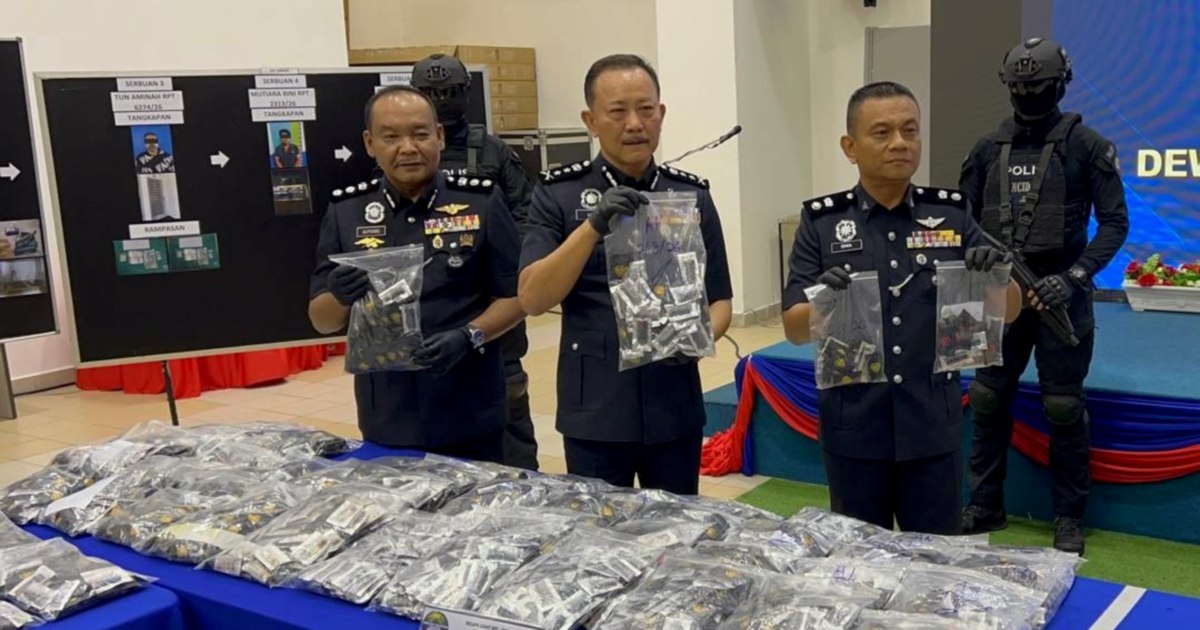
A significant criminal network involved in the manufacture and peddling of drug-contaminated vape cartridges has been neutralised by Johor police, culminating in the apprehension of seven individuals and the seizure of contraband estimated at RM10.68 million. The breakthrough came through coordinated enforcement operations staged simultaneously across multiple locations throughout the state on Sunday, marking a substantial victory against the rising menace of illicit vaping products laced with controlled substances.
The syndicate operated a processing infrastructure designed to infuse commercial vape cartridges with narcotic compounds before channelling them into distribution networks across Johor and potentially beyond state boundaries. The scale of the operation underscores the growing sophistication of criminal enterprises exploiting the vaping market as a vehicle for drug trafficking. What began as legitimate vaping products was systematically transformed into delivery mechanisms for illegal substances, capitalising on the portable nature and innocuous appearance of vape devices to evade detection.
The coordinated nature of Sunday's enforcement action reveals the depth of intelligence gathering that preceded the swoop. Five simultaneous raids across geographically dispersed locations in Johor suggest comprehensive surveillance and investigation work by the police authorities. Such coordinated operations require meticulous planning to prevent suspects from fleeing or destroying evidence, indicating the seriousness with which law enforcement viewed the threat posed by this particular syndicate.
The seizure of RM10.68 million worth of contraband represents both the financial magnitude of the operation and the potential health impact had these products continued circulating. Drug-laced vape cartridges present a unique public health concern, particularly among younger consumers who may be unaware of the narcotic content. The masking of controlled substances within seemingly ordinary vaping products creates additional dangers beyond the addiction potential of the drugs themselves, as users remain ignorant of what they are inhaling.
The emergence of drug-infused vaping devices reflects a troubling adaptation by criminal networks to contemporary consumption patterns. As authorities have tightened controls on traditional drug distribution channels, traffickers have pivoted toward incorporating narcotics into products associated with leisure and lifestyle, particularly those popular among younger demographics. This represents a calculated evolution in drug marketing tactics that exploits the social normalisation of vaping in many communities.
For Malaysian public health authorities and parents, this bust serves as a stark reminder of the evolving nature of substance abuse threats. The vaping sector, which has already faced scrutiny over nicotine addiction concerns, now presents an additional layer of risk through deliberate contamination with illegal drugs. Young people may believe they are purchasing standard nicotine products when they are in fact acquiring gateway products to more serious narcotic dependence.
The seven arrests represent key figures within the syndicate's operational hierarchy, though authorities have not yet detailed their specific roles within the organisation. Whether the detainees included manufacturing specialists, logistics coordinators, or retail distributors remains unclear, but the breadth of the operation suggests a hierarchical structure with distinct functional divisions. The subsequent investigation will likely focus on identifying additional network members, upstream suppliers, and downstream customers.
Johor's particular vulnerability to such criminal operations stems partly from its geographical position. As Malaysia's most southern state with extended coastlines and proximity to Singapore, Johor serves as a strategic transit zone for contraband moving between jurisdictions. The porous nature of cross-border movements, while economically beneficial to the region, creates enforcement challenges that organised criminal syndicates actively exploit.
This raid reflects broader patterns of drug trafficking innovation occurring throughout Southeast Asia. Criminal organisations across the region have increasingly adopted modern products and delivery systems to move narcotics, from social media-based distribution networks to the weaponisation of e-commerce platforms. The integration of drugs with vaping technology represents the convergence of technology abuse and traditional trafficking, creating detection and enforcement difficulties for authorities.
The implications extend beyond Johor's borders, as vape distribution networks frequently operate across state lines and national boundaries. A syndicate operating in Johor likely maintained connections to retailers and end-users throughout Malaysia and potentially in neighbouring countries. The investigation phase will be crucial in mapping these broader connections and identifying whether other enforcement agencies should coordinate cross-state or international operations.
Moving forward, this case underscores the necessity for enhanced regulation of the vaping industry itself. While legitimate vape retailers maintain quality controls, the absence of comprehensive industry oversight creates opportunities for criminal infiltration. Regulatory frameworks must distinguish between legitimate vaping businesses and those potentially compromised by drug trafficking operations, a distinction that requires industry collaboration and transparency.
The successful dismantling of this syndicate demonstrates police capacity to adapt enforcement strategies to emerging criminal methods. However, the discovery of such a sophisticated operation also indicates that the underlying market demand for drug-enhanced products remains robust, driven by addiction cycles and criminal profit incentives. Sustainable solutions will require complementary approaches combining law enforcement action, demand reduction through public health education, and industry regulation.

