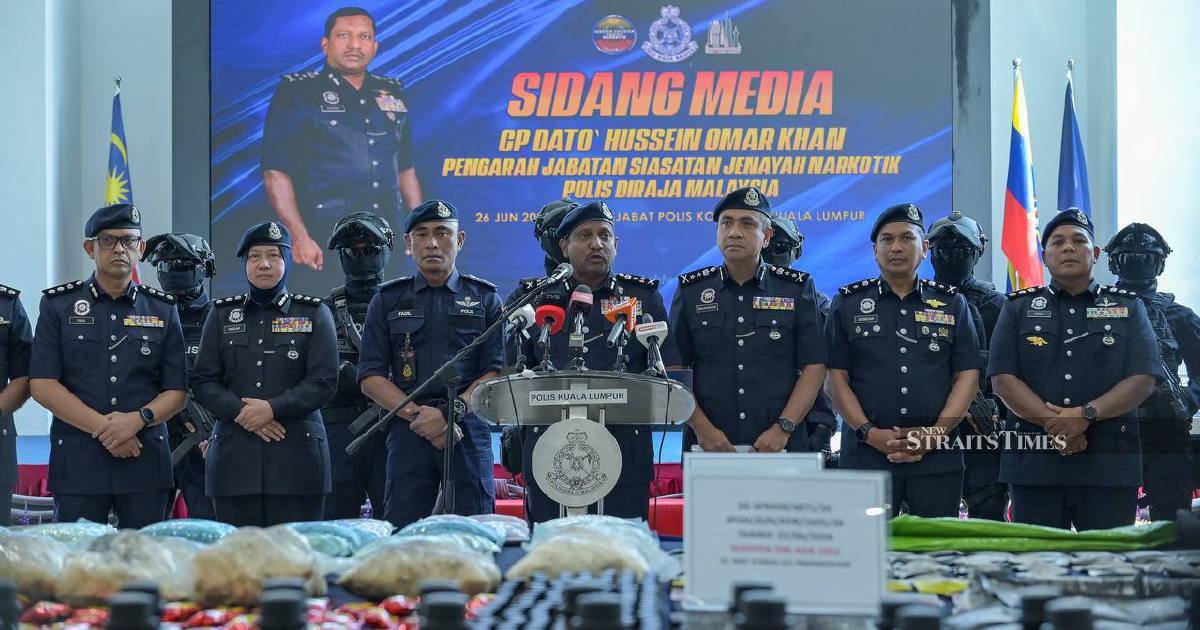
Coordinated police operations targeting a suspected major drug trafficking network across the Cheras district on June 20 have resulted in the seizure of controlled substances estimated at RM135.63 million, marking a substantial blow against organised narcotics distribution in the Klang Valley region. The enforcement action, which involved three simultaneous raids, culminated in the apprehension of seven individuals believed to be central to the distribution apparatus that authorities suspected was planning a significant increase in drug supplies entering the local market.
This operation reflects ongoing efforts by Malaysian law enforcement to disrupt the supply chains feeding illicit narcotics into communities throughout the country. The coordination of multiple raids suggests intelligence gathering had identified a sophisticated network structure, with the timing of simultaneous operations designed to prevent suspects from destroying evidence or alerting associates to the police presence. The scale of the seizure indicates this operation represented more than isolated street-level dealing, pointing instead toward an organised supply mechanism capable of sustaining prolonged market distribution.
The estimated value of RM135.63 million assigned to the seized materials underscores the substantial financial dimensions of Malaysia's drug trafficking problem. Such figures represent the street value of confiscated substances, which provides insight into the enormous illicit revenue streams flowing through organised crime networks. For context, this single seizure represents the kind of high-impact enforcement action that makes headlines precisely because it succeeds in intercepting materials before they permeate the wider community.
The arrest of seven individuals provides law enforcement with opportunities to investigate the full scope of the suspected operation. Through interrogation and forensic examination of digital communications, investigators typically seek to identify the source of the drugs, distribution networks, money laundering mechanisms, and the identity of any higher-level organisers who may operate at a remove from street-level activity. The detention of this group may provide crucial intelligence regarding the organisational hierarchy within the trafficking network.
Cheras, a densely populated area with mixed residential and commercial development, has in recent years been identified as a zone where drug activity warrants heightened police attention. The selection of this location for major raids reflects intelligence assessments of where significant trafficking infrastructure is concentrated. Urban areas with high population density often serve as distribution hubs precisely because of the difficulty in conducting effective surveillance amid crowded conditions and numerous transaction points.
The attempted expansion of drug supplies into the local market that authorities apparently identified through their investigation highlights the adaptive nature of trafficking networks. Rather than remaining static, criminal organisations continually seek to increase market penetration, develop new customer bases, and maximise profits. The successful interception of this expansion bid demonstrates the value of intelligence-led policing approaches that anticipate criminal intentions rather than merely responding to crimes already committed.
For Malaysian readers, the significance of this operation extends beyond the immediate headline figures. The continuous cycling of major drug seizures, while demonstrating police effectiveness, also illustrates the persistent challenge that illicit narcotics distribution represents. The fact that networks sufficiently large to handle RM135.63 million in inventory continue to operate indicates that demand remains robust and profit margins sufficiently attractive to draw criminal investment despite enforcement risks.
The institutional response to this operation will likely involve the prosecution of the seven arrested individuals through Malaysia's drug laws, which include provisions for trafficking charges carrying severe penalties. The specific substances seized will determine which statutes apply and what sentencing brackets become relevant. Meanwhile, the investigation phase will continue as authorities attempt to extract further intelligence from suspects and examine their financial records and communications.
Regionally, this seizure reflects the broader Southeast Asian challenge of drug trafficking, which often involves transnational networks spanning multiple countries. Thailand, Myanmar, and other neighbours have become source regions for various controlled substances flowing southward through Malaysia toward regional and international markets. Malaysian law enforcement agencies work alongside regional counterparts to address supply chains, though the fundamental economics of the illicit drug trade continue to drive criminal entrepreneurship.
The successful completion of these raids and arrests demonstrates that Malaysian police maintain significant operational capability to identify, track, and interdict major trafficking operations. However, the continued existence of networks of this scale suggests that enforcement alone, without complementary public health and demand reduction strategies, faces inherent limitations. The persistence of organised trafficking despite repeated high-profile seizures indicates that addressing this challenge requires sustained multifaceted approaches touching prevention, treatment, and community engagement alongside law enforcement.
Moving forward, investigators will work to ascertain whether the materials seized represent the complete inventory of this operation or whether distribution had already commenced, potentially affecting street-level availability in the coming weeks. The quality of intelligence gathered during this operation may inform subsequent enforcement actions targeting suppliers further up the distribution chain or alternative trafficking networks currently operating within the region. For now, the RM135.63 million seizure stands as a significant operational success that has temporarily disrupted a major source of supply into Malaysian communities.

