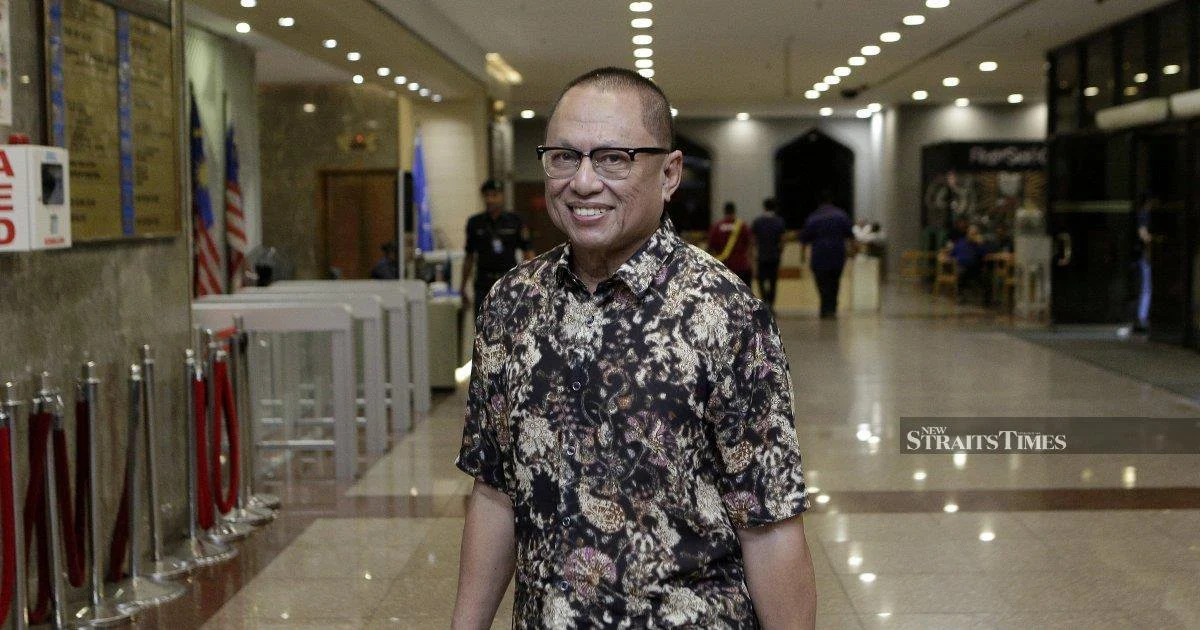
Police authorities in Johor Baru have formally commenced an investigation into remarks attributed to former Umno veteran Datuk Dr Mohd Puad Zarkashi, a development that came after a coordinated wave of police reports sweeping across the country. The decision to probe the alleged statements, which were circulated through social media platforms, represents a significant escalation in the controversy surrounding the veteran politician's recent online activity. Nationwide, a total of 153 reports have been lodged, indicating the breadth of public concern that the comments have generated among Malaysian citizens.
The investigation marks another chapter in the ongoing tensions within Malaysia's political landscape, where senior figures occasionally find themselves at the centre of public scrutiny over their communications. Datuk Dr Mohd Puad Zarkashi, who has long been a recognisable figure in Umno circles, appears to have provoked considerable reaction through his social media postings. The sheer volume of reports—153 nationwide—suggests that the matter has resonated beyond typical political discourse and has mobilised concerned citizens to take formal action through the police complaint system.
Social media has increasingly become a flashpoint in Malaysian politics, where statements made online can quickly gain traction and generate significant public response. The scale of the reporting phenomenon highlights how digital platforms have empowered ordinary citizens to formally lodge complaints about public figures' statements. This represents a marked shift from previous decades when such matters might have been confined to political circles or traditional media commentary. The accessibility of reporting mechanisms, combined with the speed at which information spreads online, has fundamentally altered how political controversies develop and escalate.
The specific nature of Puad Zarkashi's alleged remarks, referenced as "3R comments" in the reports, remains a matter under investigation by police. The cryptic designation suggests the comments may have touched on sensitive national themes, though the precise details of what triggered such widespread reporting require clarification. For Malaysian readers and the broader Southeast Asian audience, the incident underscores the increasingly volatile nature of political speech in the digital age, where comments that might once have been confined to private circles can now instantly reach millions.
The Umno establishment finds itself navigating challenging terrain as one of its veteran figures becomes the subject of a police investigation. Such developments can create internal party complications, particularly when senior members become entangled in formal legal proceedings. The party's response to the situation, or lack thereof, may signal something about its current internal dynamics and how it manages controversial behaviour among its ranks. Historically, Umno has weathered numerous controversies involving party members, but each incident carries distinct political implications depending on the timing and context.
Police investigations of this nature typically involve careful examination of the statements in question, assessment of whether they contravene relevant legislation, and consideration of public complaints. The fact that authorities have determined sufficient grounds exist to proceed with an investigation suggests that initial assessment found merit in the concerns raised. Malaysia's legal framework contains various provisions that can apply to statements deemed inflammatory or contrary to public order, and investigators will need to determine whether any applicable thresholds have been crossed.
For citizens and political observers across Southeast Asia, the episode illustrates the complex intersection between free speech rights, social media's amplification effects, and governance in contemporary Malaysia. The region has seen similar controversies in neighbouring countries, where online political commentary occasionally triggers formal legal responses. Understanding how Malaysia navigates these situations provides insight into the broader question of how developing democracies in Asia are adapting to challenges posed by digital communication.
The involvement of 153 distinct reports represents not merely administrative volume but potential evidence of genuine grassroots concern. Whether this reflects coordinated action by opposition supporters, spontaneous citizen response, or some combination remains relevant to assessing the controversy's broader political dimensions. The timing and organisation of such reporting campaigns can themselves become subjects of political analysis, as different factions seek to control the narrative around the incident.
As the investigation proceeds, media coverage and public discourse will likely continue focusing on the alleged statements and their implications. The resolution of the inquiry may have ramifications extending beyond the individual involved, potentially influencing how other political figures approach social media communication and setting precedents for future cases. For Malaysia's political ecosystem, which has experienced considerable turbulence in recent years, the Puad Zarkashi investigation represents another data point in the ongoing evolution of political norms and enforcement mechanisms.
The investigation's outcomes remain uncertain, but the episode already demonstrates how quickly political controversies can mobilise public action in Malaysia's digital age. Whether the matter results in formal charges, clarifications, or other resolutions will likely shape subsequent discussions about appropriate boundaries for political speech and the role of social media in national discourse. The coming weeks will prove instructive for observers seeking to understand contemporary Malaysian politics and its interaction with modern communication technologies.

