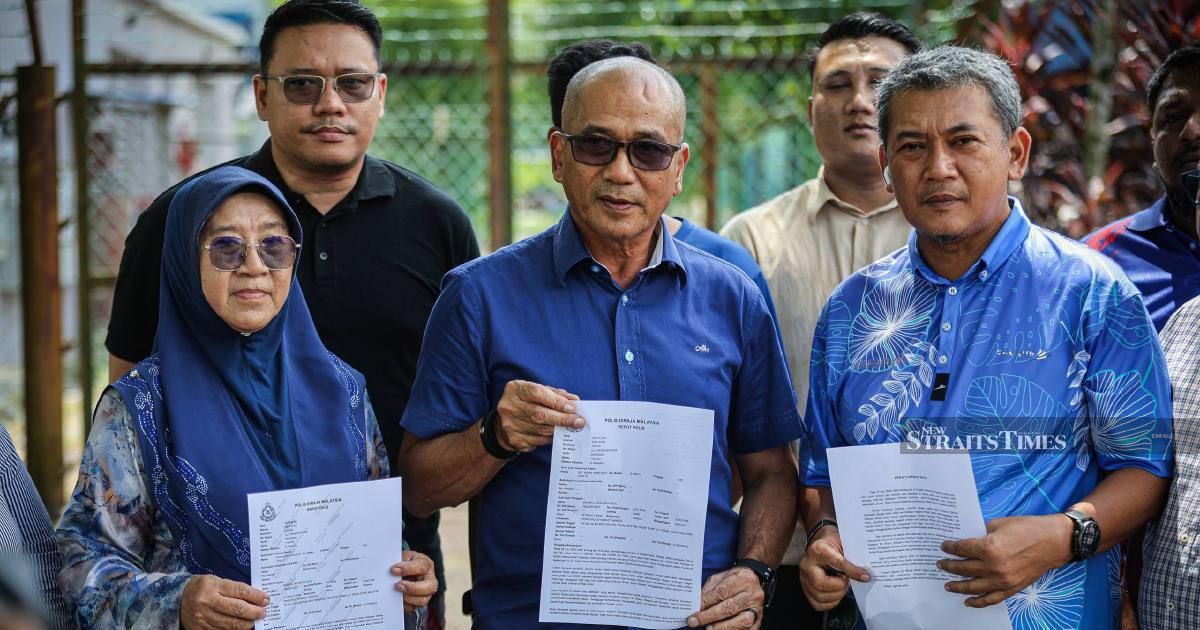
Tensions within Johor's Umno faction have escalated into police complaints, with several Barisan Nasional members formally reporting allegations made by former senior party leader Datuk Dr Mohd Puad Zarkashi to law enforcement authorities. The action represents an escalation of internal party disputes that have simmered within the state's Umno structures, bringing disagreements that might typically remain confined to party corridors into the public domain and law enforcement arena.
Puad, who previously held a prominent position on Umno's supreme council, triggered the formal complaints after making claims about what he characterized as improper interference by palace officials in Johor's political affairs and internal party machinations. The allegations, which centered on the dynamics between state leadership and royal institutions, struck at sensitive fault lines within Johor's political establishment, where the monarchy has historically wielded considerable informal influence alongside constitutional authority.
The decision by Johor BN members to pursue police reports rather than seek internal party resolution mechanisms suggests the depth of friction between different camps within the coalition's state structures. This approach also indicates that some party figures view Puad's statements as sufficiently damaging to warrant formal documentation with law enforcement, potentially setting a precedent for how future intra-party disputes might be handled. The escalation reflects broader governance challenges within Malaysia's dominant political coalition, where managing consensus among diverse regional interests has become increasingly strained.
Johor's political landscape presents unique complexities compared to other Malaysian states due to the Johor monarchy's historical prominence and the deep-rooted networks connecting royal circles, state leadership, and business interests. Any public discussion of palace involvement in politics touches upon institutional arrangements that authorities typically view as sensitive subjects requiring careful handling. Puad's willingness to articulate such allegations publicly suggests either considerable confidence in his position or a calculated gambit to pressure factional rivals through public exposure rather than private negotiation.
The filing of police reports introduces legal dimensions to what might otherwise remain partisan controversy. Depending on how such allegations are framed and what legal grounds complainants cite, this could trigger investigations into claims of sedition, defamation, or other offenses. The involvement of law enforcement adds an unpredictable element to internal party dynamics, as police proceedings follow their own logic distinct from party discipline mechanisms. For other Umno members observing this development, it demonstrates real costs to public criticism of established arrangements.
The incident also reflects deeper transformations within Umno itself, where the organization that once enjoyed near-monopolistic control over Malaysian politics has faced recurrent internal conflicts, leadership transitions, and challenges to its authority. The emergence of competing factions with different visions for the party's direction has made it difficult to maintain unified positions on sensitive matters, particularly when those matters touch upon traditional power structures and institutions. What was once potentially manageable as closed-door disagreement becomes harder to contain when multiple power centers within the party seek to mobilize support.
For Malaysian political observers, this development underscores how coalition politics at the state level can function quite differently from federal dynamics. While the Johor-based royalty maintains its institutional prerogatives, actual governance involves complex negotiations between elected representatives, party machinery, and appointed officials. When such arrangements face public scrutiny through allegations and police reports, the careful balance required to maintain these structures comes under pressure. The Johor situation may offer insights into similar dynamics operating in other states where traditional institutions intersect with modern party politics.
The police reports also raise questions about the evidentiary standards and specific allegations underlying the complaints. Without detailed public disclosure of what exactly was reported and on what grounds, observers must rely on fragmentary information. The vagueness itself can become strategically useful for all parties involved—those filing reports can claim serious concerns while maintaining flexibility, while Puad can frame the response as an attempt to suppress legitimate political discourse. This ambiguity suggests that the real battleground may extend beyond police investigations into the court of public opinion and factional positioning within Umno.
The timing and coordination of multiple reports from Barisan Nasional members indicate organized action rather than spontaneous individual complaints. This suggests that organizational structures within Johor BN mobilized to respond collectively to Puad's allegations, reflecting established factional alignments and leadership preferences. Such coordination, while common in Malaysian politics, demonstrates how quickly internal disputes can transition from theoretical disagreement to practical organizational conflict with institutional consequences.
Looking forward, the trajectory of police investigations into these matters will significantly influence how Malaysian political actors approach similar situations. If law enforcement pursues the matter vigorously, it may chill public discussion of palace-related political questions beyond Johor. Conversely, if investigations stall or produce inconclusive results, the episode could embolden others to raise comparable concerns. Either outcome will subtly reshape the landscape within which Malaysian politicians, particularly those in hereditary monarchies, navigate discussions of institutional relationships and political influence.

