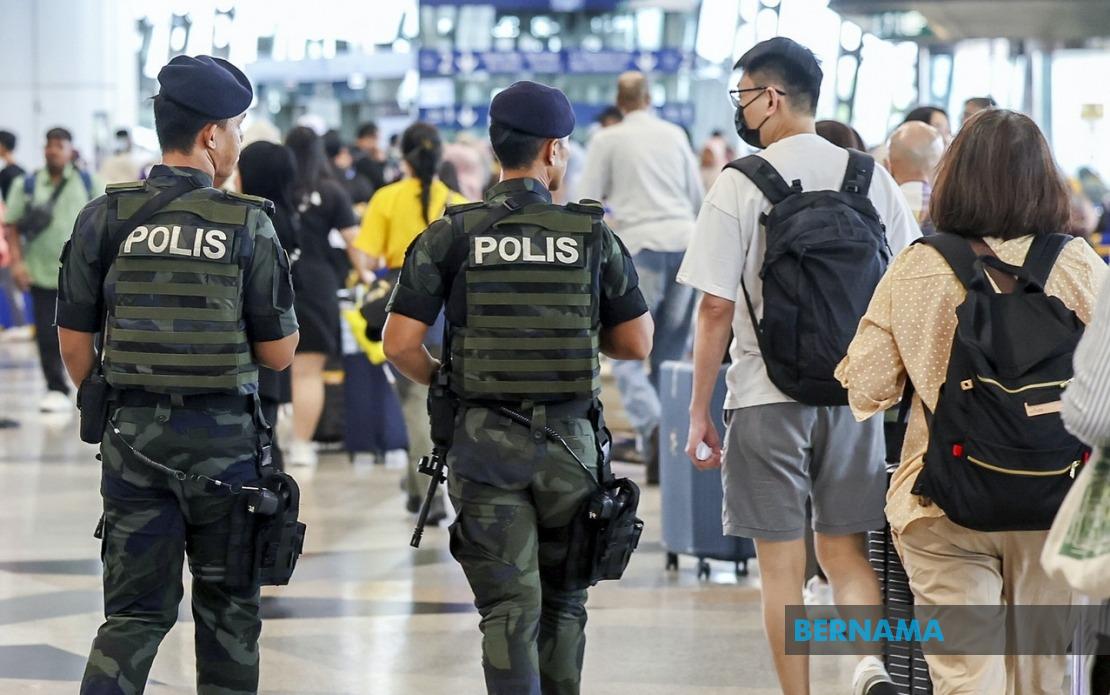
The Malaysian government has announced a significant restructuring of airport security operations, deploying personnel from the Royal Malaysia Police to oversee the Aviation Security unit at airports nationwide. Communications Minister Datuk Seri Fahmi Fadzil made the announcement following a Cabinet decision prompted by the arrest of a 39-year-old Malaysian pilot in Indonesia, who was caught with approximately 25 kilogrammes of drugs at Soekarno-Hatta International Airport. The move represents a substantial shift in how Malaysia manages security at its aviation entry points, transitioning control from auxiliary police to full-fledged police personnel.
The decision emerged from presentations by both the Home Ministry and Transport Ministry during a Cabinet meeting, where officials outlined the vulnerabilities exposed by the pilot's arrest. Currently, the AVSEC unit operates under auxiliary police management, a structure officials have determined insufficient to address emerging security threats. By introducing Royal Malaysia Police officers directly into these roles, the government aims to strengthen enforcement capabilities and ensure more rigorous screening procedures at critical checkpoints. Fahmi emphasized that this represents merely the first in a series of corrective measures designed to close identified gaps in Malaysia's aviation security infrastructure.
Indonesian authorities discovered the contraband during inspections at Terminal 3, uncovering 15 packages containing approximately 70,114 ecstasy and methamphetamine capsules. Based on Indonesian market prices, the haul carried an estimated street value of RM45 million, underscoring the scale of potential drug trafficking operations that could exploit airport vulnerabilities. The incident has raised serious questions about how someone with access to restricted areas of an international airport could attempt such an operation, prompting Malaysian authorities to examine their screening and vetting procedures comprehensively.
Beyond the immediate deployment of police personnel, the government has instructed Malaysia Aviation Group to overhaul its background screening and health assessment protocols for all pilots and co-pilots. These reviews will examine existing procedures in light of recent incidents, with particular focus on identifying psychological indicators or personal circumstances that might increase vulnerability to criminal involvement. The aviation industry's reputation depends heavily on maintaining the highest standards of crew integrity, and this comprehensive audit signals the government's commitment to preventing similar incidents.
The Royal Malaysia Police and the Malaysian Border Control and Protection Agency have received specific instructions to conduct thorough audits of current security systems. These reviews aim to identify structural weaknesses or procedural loopholes that sophisticated operators might exploit. Rather than implementing reactive measures following each incident, this systematic examination seeks to anticipate vulnerabilities before they can be weaponized. The scope encompasses physical security measures, personnel screening protocols, and interdepartmental coordination mechanisms that might currently lack sufficient integration.
Fahmi indicated that the government is still gathering comprehensive information before deciding whether to establish a specialized investigation task force. While the case remains active in Indonesia, Malaysian authorities recognize the necessity of understanding the full scope of the operation and determining whether the arrested pilot acted alone or operated as part of a larger network. Such details would significantly influence how Malaysia structures its response and what additional preventive measures prove necessary. The minister stressed that accountability for those responsible must be pursued through proper legal channels while simultaneously implementing systemic improvements.
The timing of these security enhancements reflects broader regional concerns about aviation safety and drug trafficking operations. Southeast Asia has increasingly become a transit point for narcotics trafficking, with airports serving as critical junctures where criminal networks attempt to move contraband internationally. Malaysia's geographic position and its role as a major air hub make it particularly vulnerable to such exploitation. By strengthening internal security measures, the country can reduce its attractiveness as a trafficking route while demonstrating to international partners its commitment to combating transnational crime.
The incident also highlights the tension between operational efficiency at busy international airports and the need for thorough security screening. Airport authorities must balance expedited passenger processing with comprehensive security checks, a challenge that becomes more acute as aviation traffic increases. Introducing full police authority into AVSEC operations may slow certain procedures, but officials believe the trade-off serves the broader public interest. The government's decision reflects a calculation that security enhancement justifies modest increases in processing times.
For Malaysian aviation workers and the broader travel industry, these changes signal a tightening of oversight that could affect operational procedures. Crew members and airport personnel should anticipate more rigorous background checks and periodic security reviews. While such measures may create temporary inconvenience, they ultimately protect the industry's integrity and public confidence. Airlines operating from Malaysian airports will need to adjust their hiring and training protocols to align with enhanced governmental requirements.
The government's approach demonstrates a recognition that security threats require continuous reassessment and adaptation. Rather than treating the pilot's arrest as an isolated incident, officials are using it as a catalyst for comprehensive institutional reform. This forward-looking stance suggests that additional measures may follow as investigations conclude and vulnerabilities become clearer. The commitment to studying full reports before determining next steps indicates a deliberate approach that prioritizes thorough understanding over rushed reactions.
Regionally, Malaysia's enhanced airport security measures may set a precedent for other Southeast Asian nations grappling with similar challenges. As countries increasingly coordinate border security and transportation safety efforts, successful innovations in one jurisdiction often influence policies elsewhere. Malaysia's experience and the outcomes of its strengthened procedures could inform regional best practices for aviation security in the coming years. The incident serves as a reminder that maintaining secure international travel requires constant vigilance and willingness to evolve security frameworks as threats emerge.

