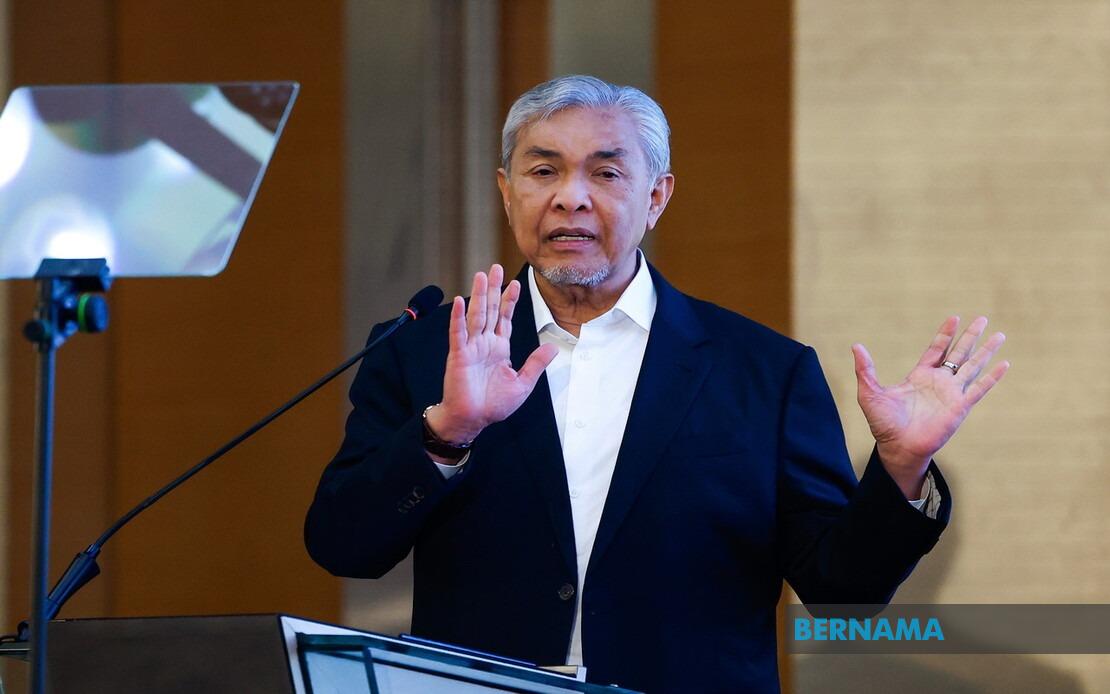
Deputy Prime Minister Datuk Seri Dr Ahmad Zahid Hamidi has reminded all political parties contesting the upcoming Negeri Sembilan state election to demonstrate respect for the institution of the monarchy and to refrain from campaigning on sensitive matters involving race, religion and royalty. The directive came in response to guidance issued by the Negeri Sembilan Palace, which had publicly urged contesting parties to avoid incorporating such divisive topics into their ceramah and campaign activities.
Ahmad Zahid underscored the critical importance of protecting Malaysia's constitutional monarchy, particularly emphasising the need to safeguard the institution of the Undang Yang Empat, the paramount ruler of Negeri Sembilan. He stressed that Barisan Nasional, the ruling coalition he chairs, has consistently maintained this principle throughout its political history, pointedly noting that the coalition has never weaponised matters related to the three Rs in pursuit of electoral advantage. This stance reflects a calculated positioning of BN as a custodian of institutional stability and constitutional norms at a time when political competition has intensified across multiple electoral contests.
The Deputy Prime Minister's remarks, delivered at the Negeri Sembilan Entrepreneurs Gathering Programme in Seremban on July 27, served as a public call for political decorum during what promises to be a closely contested state election. Ahmad Zahid characterised the palace's reminder as constructive guidance that deserves the respect and compliance of all political actors, suggesting that parties which fail to heed such counsel would be acting against the wishes of the institution itself. By framing the issue in this manner, he sought to establish a clear boundary for acceptable campaign conduct and to position any violation of this boundary as constituting a disrespect to the monarchy.
The timing of this appeal is significant within the broader context of Malaysian electoral politics. State elections in Negeri Sembilan represent a crucial battleground where the ruling coalition seeks to consolidate its position and opposition alliances attempt to make electoral gains. The Palace's intervention suggests that the royal institution is concerned about the potential for campaign rhetoric to become polarising, particularly around themes that historically have proven sensitive in Malaysian public discourse. By issuing such guidance proactively, the palace has signalled its expectation that all political actors will maintain standards of propriety and constitutional respect.
Ahmad Zahid's statement also functioned as an indirect appeal to opposition parties, though he did not explicitly name specific organisations. The reference to "any party that raises the issue" suggests an awareness that some contesting parties might be tempted to exploit sensitive topics for electoral mobilisation. His warning that "there is no need to do so" carries an implicit message that such tactics would be counterproductive and contrary to the preferences of respected institutions. This positioning allows BN to claim the moral high ground while simultaneously cautioning competitors against divisive campaigning.
In addressing questions about the relationship between Malaysia's two major political coalitions, Ahmad Zahid also sought to dispel reports of friction between Barisan Nasional and Perikatan Nasional. He characterised such accounts as baseless, emphasising instead that both coalitions maintain a relationship grounded in mutual understanding and respect. This assertion appears designed to project an image of stability and reasoned cooperation between major political forces, potentially to reassure voters and investors about the predictability of Malaysia's political environment. However, the need to explicitly deny such disputes suggests that tensions between these coalitions remain a matter of active speculation and concern in political circles.
The Deputy Prime Minister's broader statement reflects a deliberate strategy to frame the Negeri Sembilan election within a narrative of institutional respect and constitutional propriety rather than allowing it to devolve into unstructured partisan competition. By invoking the palace's guidance and reaffirming Barisan Nasional's commitment to these principles, Ahmad Zahid positioned the ruling coalition as the defender of established norms and constitutional governance. This rhetorical approach has particular resonance in a Malaysian context where respect for the monarchy remains a powerful political value, even as competing visions of development and governance generate intense electoral competition.
For Malaysian observers, the significance of this episode extends beyond the immediate Negeri Sembilan contest. It illustrates how Malaysia's constitutional institutions, particularly the monarchy, continue to function as reference points in regulating political discourse and setting boundaries for acceptable campaign conduct. The fact that such reminders require periodic reiteration underscores the ongoing tension between Malaysia's commitment to democratic competition and its reliance on institutional frameworks to maintain certain standards of political behaviour. Regional counterparts across Southeast Asia note with interest how different democracies navigate this challenge.
The intervention also highlights the practical limitations of such guidance. While the palace can issue reminders and express preferences, enforcement mechanisms remain limited, and the effectiveness of such appeals ultimately depends on the voluntary compliance of political parties and their ability to maintain discipline among their members and supporters at the grassroots level. Campaign rallies and social media discourse operate in increasingly decentralised environments where central party leadership may struggle to maintain consistent messaging and enforce boundaries on what activists and supporters choose to emphasise.
Moving forward, the Negeri Sembilan election will serve as a test of whether all contesting parties genuinely respect the palace's guidance or whether some organisations will attempt to circumvent it through more subtle messaging or grassroots mobilisation. Observers will be watching to assess whether this electoral contest proceeds with the institutional restraint that Ahmad Zahid has called for or whether political competition generates the kind of heated rhetoric around sensitive issues that the palace sought to prevent. The outcome will likely influence future palace interventions in electoral campaigns and how political parties calibrate their responses to royal guidance.

