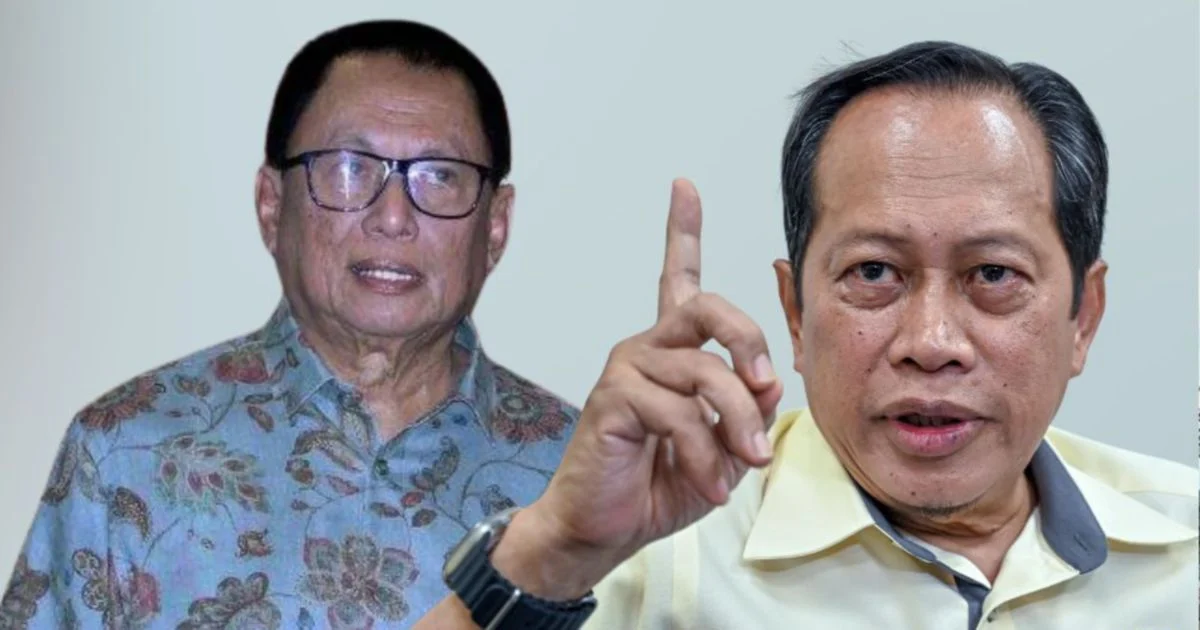
Johor's Umno leadership delivered a stern message at a gathering in the state capital, emphasizing that the process of identifying and nurturing capable future leaders cannot be rushed or compressed into brief timelines. Datuk Seri Ahmad Maslan, the party's deputy chairman in the state, used the occasion to articulate principles that underscore the party's approach to succession planning and cadre development in an organization with deep historical roots in Malaysian politics.
The remarks represent a pushback against what party figures apparently perceive as impatience within the ranks, where younger or ambitious members may seek rapid advancement through electoral candidacies or prominent positions. Ahmad Maslan's characterization of politics as an endurance event rather than a sprint encapsulates a conservative philosophy about institutional stability and the dangers of promoting untested figures into critical roles without sufficient preparation or understanding of political complexities.
In the context of contemporary Malaysian politics, where generational transitions within major parties have become increasingly fraught and contested, this message carries particular weight. Umno faces the ongoing challenge of renewing its membership base and leadership cohorts while maintaining party cohesion and electoral competitiveness. The pressure to promote younger voices coexists with institutional preferences for veterans whose track records are established and whose loyalty to party structures has been proven over decades.
The emphasis on experience as a prerequisite for candidacy and leadership reflects broader anxieties within Umno about whether new entrants fully grasp the organization's values, strategic interests, and operating principles. There is an implicit concern that accelerated promotion might introduce individuals without the patience or commitment necessary to navigate complex party dynamics, factional considerations, and the careful balance required in Malaysian coalition politics.
Ahmad Maslan's intervention also signals that Johor Umno, traditionally one of the party's strongest regional divisions, remains focused on internal discipline and orderly progression through ranks. This stance contrasts with the more fluid, sometimes chaotic leadership competitions that have characterized other periods in Malaysian political history, when rival factions have aggressively recruited and promoted candidates to strengthen their respective positions.
The timeframe for leadership development encompasses multiple electoral cycles and requires individuals to demonstrate competence across various party roles and public-facing responsibilities. Candidates groomed for significant positions typically progress through local party structures, community engagement, secondary party committees, and increasingly visible electoral contests before being entrusted with constituencies or major elected offices. This apprenticeship model, while sometimes frustrating for ambitious individuals, serves important organizational functions.
From a Malaysian governance perspective, the Umno deputy chairman's words reflect a particular vision of how political institutions should manage change and succession. Rather than merit-based rapid advancement or democratic selection of all candidates through broad party consultation, the model emphasizes that senior figures should exercise judgment in identifying suitable candidates, nurturing their capabilities, and timing their elevation to maximize both individual readiness and party advantage.
For Southeast Asia more broadly, Umno's approach to cadre development represents a distinctive tradition within regional politics. Unlike some other parties in the region that have experienced dramatic generational shifts or revolutionary personnel changes, Umno has generally maintained continuity through carefully managed transitions. This gradualist philosophy shapes how the party perceives its own future and how it positions itself relative to rival organizations competing for relevance and electoral support.
The shortage of obvious succession candidates and the question of who will ultimately lead Umno has become increasingly prominent as the party navigates post-pandemic politics and attempts to restore electoral performance after setbacks in recent years. Comments like those from Ahmad Maslan suggest the leadership remains committed to organic, internally-driven development rather than external recruitment or accelerated pathways that might compromise institutional stability.
The implication for party members, particularly younger aspirants, is clear: advancement depends on demonstrated commitment to party norms, willingness to work through established channels, and proven capacity in assigned roles. The refusal to offer shortcuts reflects confidence in the organization's capacity to identify talent and bring it forward when appropriate, while simultaneously reinforcing hierarchical structures and respecting seniority within the party framework.
This perspective also carries implications for Malaysian electoral politics more broadly. If major parties consistently emphasize organic development and reject rapid advancement, the overall quality of political leadership across different organizations might benefit from more rigorous testing and experience accumulation. Conversely, such approaches can limit fresh perspectives and create environments where established figures face insufficient challenge to evolve their thinking or acknowledge changing public preferences.
As Umno continues working to strengthen its position following the 2022 general election and prepares for future contests, the message about patient leadership development appears designed to signal both internal stability and rejection of what senior figures may view as problematic shortcuts that could undermine party coherence or expose the organization to inexperienced candidates.

