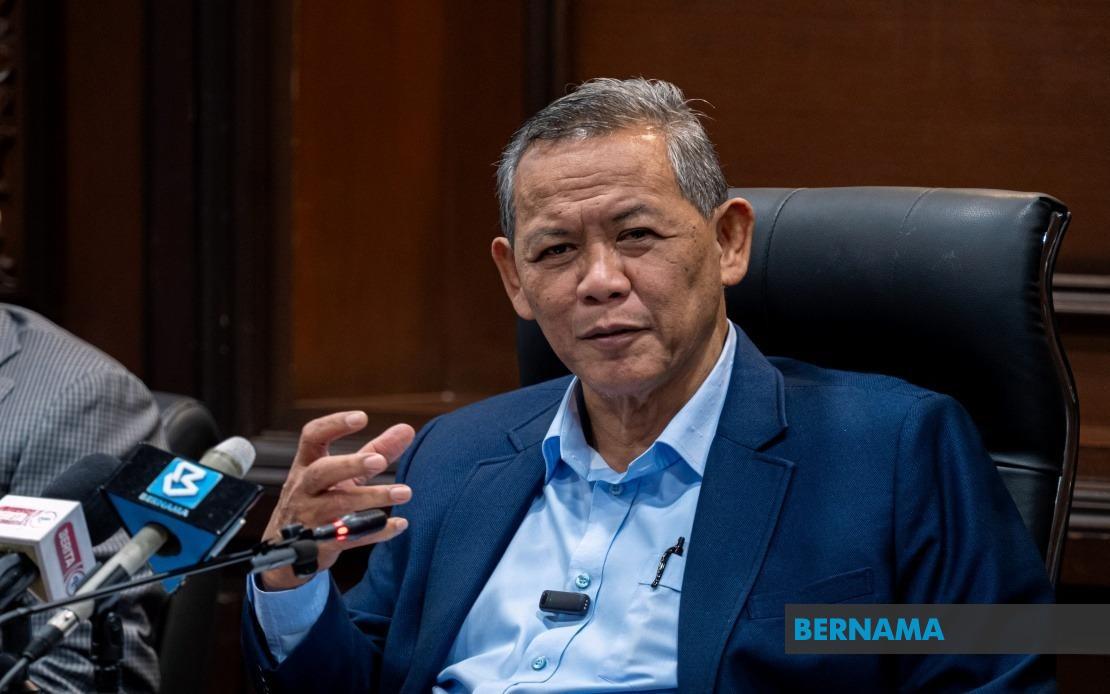
Negeri Sembilan's top administrator has moved to quell growing public concern about a major maritime development project in Port Dickson, clarifying that the proposed AI-powered Smart Port will not necessitate compulsory land acquisition or affect environmentally protected areas. Menteri Besar Datuk Seri Aminuddin Harun made the statement in response to circulating allegations that the initiative would require seizure of approximately 566 hectares—encompassing villages, forest reserves, customary land, industrial zones, farmland, and residential properties. The clarification underscores mounting sensitivity around large-scale infrastructure projects in Malaysia, where land acquisition disputes have historically sparked community tensions and political controversy.
Aminuddin emphasised that the project's footprint would remain entirely within land parcels already owned by Tanco Holdings Berhad and Midports Holdings Sdn Bhd, its operational subsidiary. The combined existing landholding designated for port development amounts to roughly 202 hectares, according to the state leader. This distinction carries significance for communities neighbouring Port Dickson, as it suggests residents and smallholders would not face compulsory acquisition proceedings—a process that, while legally sanctioned, often generates friction between local inhabitants and government authorities over compensation valuations and livelihood displacement.
The Menteri Besar's video statement carried particular emphasis on reassuring the Malay community and indigenous stakeholders. He rejected the notion that any traditional villages would be sacrificed, that forest reserves would be compromised, or that customary land would be affected. Aminuddin further clarified that customary land as a legal category does not exist within Port Dickson's boundaries, existing instead in specific districts including Kuala Pilah, Jelebu, Rembau, and Tampin. This geographical distinction matters for understanding where potential conflicts might genuinely arise, as disputes over customary land rights have proven contentious in other Malaysian development contexts, particularly in Peninsular Malaysia's interior regions.
The first operational phase of the Smart Port venture carries an investment valuation of RM3.4 billion, positioning it as a considerable economic undertaking for the state. Aminuddin characterised the development as transformative infrastructure that would catalyse Port Dickson's economic trajectory and potentially establish the locality as a duty-free commerce zone. The project's significance extends beyond Negeri Sembilan itself, as Port Dickson occupies a strategically important position along Malaysia's west coast, and enhanced port capacity could facilitate regional trade flows through Peninsular Malaysia. The anticipated advantages would accrue primarily to communities in Linggi and Pasir Panjang, adjacent areas that could capture employment opportunities and commercial spillovers.
Concerns regarding fishing communities relying on the Linggi River represented another flashpoint in public discourse surrounding the project. Aminuddin addressed these apprehensions directly, clarifying that the Smart Port development does not encompass Kampung Tanjung Agas, Kampung Sungai Raya, or the waterway itself. He attributed some confusion to a separate maritime initiative—the Kuala Linggi International Port (KLIP)—situated on the Negeri Sembilan–Melaka border and operating under Melaka state administration. This clarification proves important for Malaysian coastal communities dependent on fishing, as port expansions can indeed alter riverine hydrodynamics, affect fish spawning grounds, and impact traditional maritime livelihoods if inadequately managed.
The state government's posture throughout the clarification emphasised protection of Malay-owned properties and local stakeholder interests. Aminuddin committed to maintaining security over land holdings within the Malay community and rejected characterisations of the initiative as involving misleading information or intimidation of local residents. This defensive framing suggests that suspicion and misinformation had proliferated within certain population segments, prompting official intervention to reshape public perception. In Malaysia's contemporary political environment, such clarifications often carry electoral implications, as land rights and community welfare represent emotionally resonant issues that influence voting behaviour, particularly in rural and semi-rural constituencies.
Prime Minister Datuk Seri Anwar Ibrahim had previously contextualised the Midport development within Malaysia's broader maritime and digital infrastructure ambitions. Speaking on July 14, he characterised the AI-powered port initiative as instrumental for reinforcing Malaysia's credentials as a regional hub for digital innovation and maritime commerce. His framing situated the project as more than mere infrastructure augmentation, presenting it instead as a strategic imperative reflecting Malaysia's geographic positioning along the Strait of Malacca—arguably the world's most commercially significant maritime chokepoint. This rhetorical positioning seeks to elevate the project beyond local controversy, embedding it within narratives of national competitiveness and Malaysia's capacity to capture evolving global trade patterns.
The Smart Port concept itself represents an emerging category of port infrastructure integrating artificial intelligence, automated cargo handling, real-time logistics coordination, and digitalised administrative processes. Such facilities promise enhanced operational efficiency, reduced turnaround times for vessels, and improved supply chain visibility—advantages increasingly material as global commerce becomes more time-sensitive and technologically sophisticated. For Malaysia, positioning Port Dickson as a Smart Port could potentially attract container traffic, particularly for transhipment operations, from competitors including Singapore and other regional hub ports. This competitive positioning provides economic rationale for the investment and helps contextualise official enthusiasm for project advancement.
The controversy surrounding the Smart Port development reflects broader Malaysian debates about balancing modernisation imperatives against community welfare protection and environmental conservation. Large-scale infrastructure projects, particularly those involving maritime and port infrastructure, necessarily interface with fishing communities, residential populations, and ecological systems. Public scepticism toward land acquisition claims, whether substantiated or speculative, indicates that Malaysian stakeholders have become increasingly vigilant regarding protecting local interests against potential external impositions. This heightened vigilance, while sometimes generating friction with government objectives, fundamentally reflects democratic accountability expectations and communities' desire to participate meaningfully in decisions affecting their territories and livelihoods.
Moving forward, the project's advancement will likely depend substantially on maintaining community confidence and demonstrating transparent stakeholder engagement. Aminuddin's clarifications represent an initial step toward addressing public anxieties, yet sustained trust will require ongoing communication with affected populations, demonstrated commitment to promised protections, and mechanisms enabling residents to monitor compliance with environmental and social undertakings. For Malaysian policymakers generally, the Smart Port experience underscores that infrastructure modernisation succeeds most durably when coupled with genuine community consultation, transparent information provision, and mechanisms respecting local stakeholder agency in development decisions affecting their living spaces.

