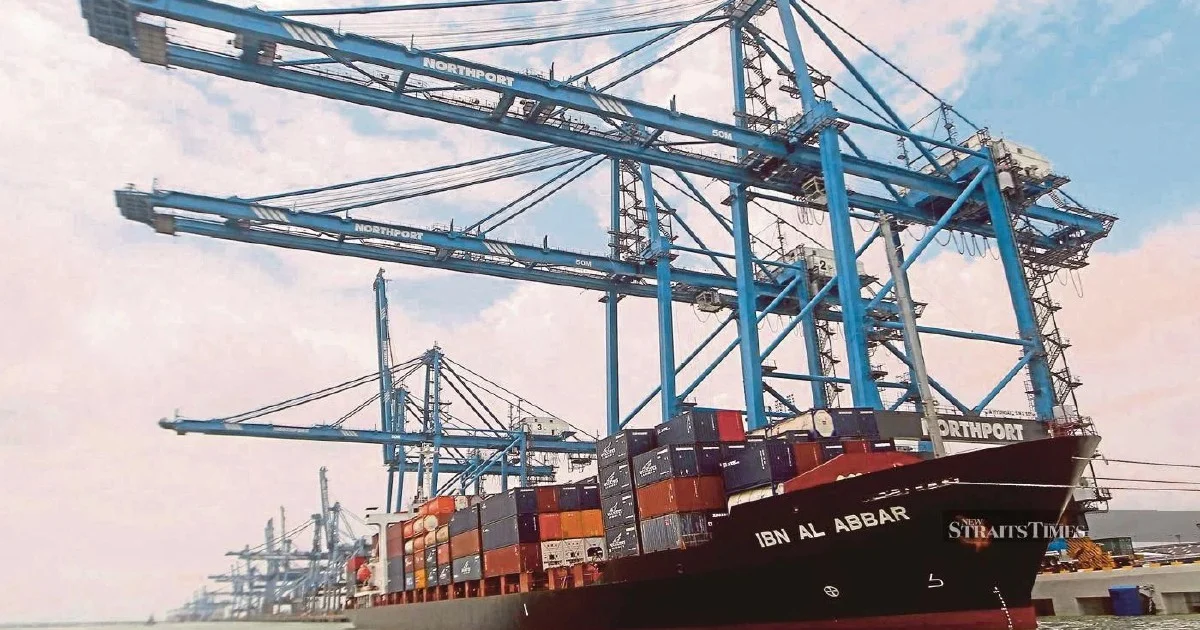
Malaysia's ambitious Port Klang 3 development project, a cornerstone of the nation's port modernisation agenda, remains firmly on schedule and could see construction commence within the current year should ongoing property negotiations with the Selangor state administration reach conclusion, Transport Minister Anthony Loke announced. The timeline represents an important milestone for one of Southeast Asia's busiest and most strategically positioned ports, which has long faced capacity constraints amid surging container traffic through the Strait of Malacca.
The Port Klang 3 initiative forms a critical component of Malaysia's broader infrastructure strategy to enhance its competitive position as a regional transhipment hub. With global trade patterns increasingly gravitating toward East and Southeast Asia, the port's expansion has assumed heightened urgency for both the private sector and government agencies seeking to accommodate growing volumes whilst maintaining operational efficiency. The project's advancement reflects acknowledgment within the Transport Ministry that current infrastructure, despite recent upgrades, faces mounting pressure from escalating containerised cargo movements and the larger vessels increasingly deployed on major shipping routes.
Loke's remarks underscore the technical readiness of the Port Klang Authority and project stakeholders to mobilise construction resources swiftly once administrative hurdles clear. The emphasis on land-related resolution suggests that property acquisition and boundary demarcation have emerged as the principal constraint rather than financial commitment or engineering planning. This distinction carries significance for market observers tracking the government's capacity to execute infrastructure projects within announced timeframes, a metric closely monitored by international investors and shipping operators evaluating Malaysia's logistics competitiveness.
The Selangor government's involvement in resolving land matters reflects the multi-layered governance structure characterising major port developments in Malaysia, where state and federal authorities must coordinate on matters spanning maritime jurisdiction, industrial zoning, and property rights. Such collaborative requirements, whilst essential for comprehensive planning, occasionally introduce procedural delays that extend beyond technically feasible schedules. The successful navigation of these intergovernmental negotiations will signal the government's ability to expedite such processes without compromising environmental or social safeguards.
For Malaysia's port industry specifically, Port Klang 3 represents the response to a recognised bottleneck that has gradually limited the country's capacity to retain regional trade flows. The port currently handles substantial volumes from major shipping lines, yet faces challenges in accommodating the ultra-large container vessels now standard on mainline routes. The expansion project addresses this capacity gap whilst positioning Port Klang to capture additional transhipment opportunities currently routed through competing hubs in Singapore, Thailand, and Vietnam.
The project's implications extend beyond Port Klang itself into the broader Malaysian supply chain ecosystem. Manufacturers, logistics providers, and trading companies depending on reliable maritime access have expressed keenness for the expansion, viewing upgraded port infrastructure as foundational to their competitiveness in export markets. Construction commencement this year would translate into tangible labour opportunities and equipment procurement across the construction sector, with multiplier effects throughout related industries from cement production to heavy machinery hire.
Regionally, Port Klang 3 development factors prominently into Southeast Asia's port infrastructure landscape, where competition among nations intensifies as they vie for transhipment traffic and foreign shipping investment. The port's strategic location at the gateway to the Strait of Malacca, through which vast petroleum and manufactured goods volumes transit annually, reinforces its importance within global maritime networks. Project acceleration thus carries implications not merely for Malaysia's port competitiveness but for the broader region's ability to efficiently process international commerce.
The condition that land matters require resolution before construction acceleration underscores ongoing complexities in executing large-scale infrastructure initiatives in Malaysia, even when consensus exists regarding necessity and technical viability. Historical precedent suggests that such land-related negotiations, whilst ultimately resolvable, frequently extend beyond initial optimistic projections. Loke's acknowledgment of this prerequisite represents candour regarding implementation realities, though it simultaneously signals optimism regarding the feasibility of reaching settlement with Selangor authorities relatively expeditiously.
For shipping lines and freight forwarders currently routing cargo through Malaysian ports, confirmation of Port Klang 3's trajectory provides planning certainty regarding future capacity availability. Several major carriers have indicated willingness to increase Malaysia-based operations contingent upon port infrastructure maturation, implying that successful project commencement could catalyse operational realignment across regional shipping networks. The economic value of such reallocation extends to port workers, inland transport operators, and customs brokers whose businesses correlate directly with port throughput.
The announcement also carries implications for government revenue projections, as port expansion directly correlates with toll and container-handling fee income. Enhanced capacity supports higher cargo volumes and justifies premium pricing for premium services targeting time-sensitive shipments and specialised cargo categories. These revenue streams contribute to federal finances available for allocation toward other national priorities, creating indirect linkages between port infrastructure investment and broader budgetary considerations.
Moving forward, stakeholder attention will concentrate on the pace at which Selangor authorities and federal officials resolve outstanding land questions. Should negotiations conclude expeditiously and construction commence in the latter half of 2024, project completion timelines become increasingly credible, potentially delivering operational capacity increases within the decade. Conversely, should land issues prove more resistant to resolution, schedules may experience successive deferrals, perpetuating capacity constraints that impose incremental costs across Malaysia's traded goods sectors through higher logistics expenses and delayed shipments.

