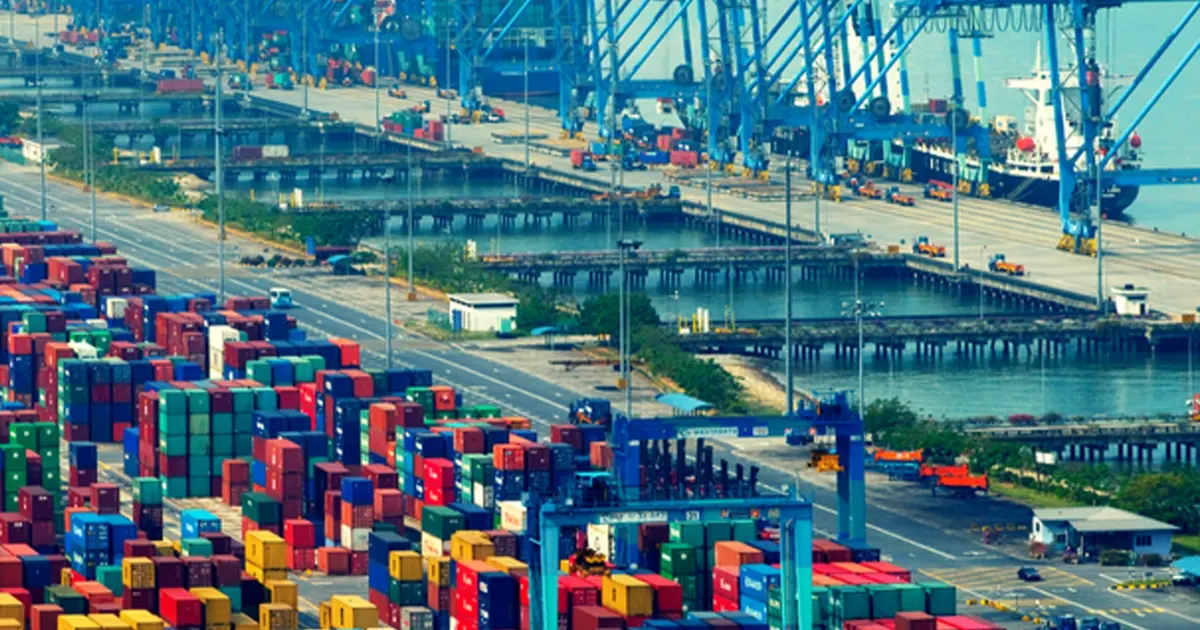
Transport Minister Loke Siew Fook has outlined the Port Klang Free Zone's impressive financial performance over the past year and a half, characterising the facility's trajectory as one of stable and heartening expansion. The RM108 million revenue figure represents a meaningful inflection point for the free zone, which has undergone substantial restructuring and operational overhaul to restore confidence among shipping lines, logistics operators, and international traders.
The 86 percent reactivation rate signals that the vast majority of the facility's tenants and operational capacity have been brought back into productive use following years of underutilisation and operational challenges. This metric carries particular significance given the free zone's strategic importance to Malaysia's broader trade and shipping ecosystem. The Port Klang Free Zone, located within Port Klang—Southeast Asia's busiest container terminal and one of the world's top transshipment hubs—serves as a crucial node in regional and global supply chains. When the facility operates below capacity, the knock-on effects ripple through warehousing, logistics, and manufacturing sectors across Malaysia and the wider region.
The government's push to revitalise the free zone reflects a deeper recognition that Malaysia's competitive position in global trade depends on maximising the efficiency and attractiveness of critical infrastructure. Port Klang itself handles roughly 40 percent of the nation's containerised cargo, making the free zone's recovery essential to reducing bottlenecks and offering traders viable alternatives to congested competitors in Singapore and other regional ports. The reactivation drive has involved modernising facilities, streamlining administrative procedures, and actively courting investors with tailored incentives.
The RM108 million revenue achievement in the context of 86 percent reactivation suggests that the free zone is beginning to attract higher-value operations and premium logistics services. This diversification away from basic warehousing toward value-added services—including light manufacturing, re-packaging, quality control, and digital logistics platforms—indicates that operators and tenants are investing in the facility's longer-term potential. The revenue figure also reflects higher lease rates and utilisation levels as businesses consolidate their South East Asian operations within the zone.
For Malaysian stakeholders across supply chain management, trading companies, and third-party logistics providers, the free zone's resurgence carries tangible benefits. Improved turnaround times, lower handling costs, and enhanced service offerings make the facility more competitive against alternatives in neighbouring countries. Manufacturing-heavy states such as Selangor and Johor, which depend on efficient cargo movement, stand to gain from reduced logistics friction and more predictable shipping schedules.
The reactivation milestone also underscores the effectiveness of Malaysia's targeted investment in transport infrastructure following the 2020-2021 pandemic downturn, which devastated container traffic and left significant portions of the free zone idle. Government intervention, coupled with private sector confidence, has gradually rebuilt occupancy and tenant commitment. The 86 percent figure suggests that most remaining challenges are operational refinement rather than fundamental structural problems.
From a regional perspective, Port Klang Free Zone's recovery matters to the entire South East Asian logistics network. As global supply chains grow more complex and companies diversify sourcing away from sole concentration in China, Malaysia positions itself as a logistics and transshipment hub for Southeast Asia. A fully functional, competitively priced free zone enhances this proposition and attracts multinational logistics operators seeking resilient, cost-effective distribution points.
The Transport Minister's characterisation of the past 18 months as showing steady, encouraging growth implies that the trajectory is sustainable rather than a temporary spike. This suggests that operational improvements, tenant retention, and new business acquisition are outpacing seasonal volatility or cyclical shipping downturns. Sustained revenue growth and high reactivation rates indicate that the facility is transitioning from crisis recovery mode to genuine expansion.
Looking forward, the Port Klang Free Zone's momentum raises expectations for further enhancement of Port Klang's broader competitiveness. The government has signalled commitment to deepening the free zone's integration with port operations, digital connectivity, and regional trade agreements. Initiatives to simplify customs clearance, enhance cybersecurity infrastructure, and promote green logistics may unlock additional value and attract sustainability-focused multinational corporations seeking efficient, environmentally responsible supply chain partners.
The RM108 million revenue and 86 percent reactivation rate represent more than accounting metrics; they signal Malaysia's determination to leverage its geographic advantage and port infrastructure to strengthen its role in global and regional commerce. For businesses operating across Southeast Asia, the Port Klang Free Zone's revival offers a tangible, increasingly viable option for consolidating operations, managing inventory, and accelerating time-to-market—ultimately benefiting companies and consumers through improved efficiency and reduced trade friction across the region.

