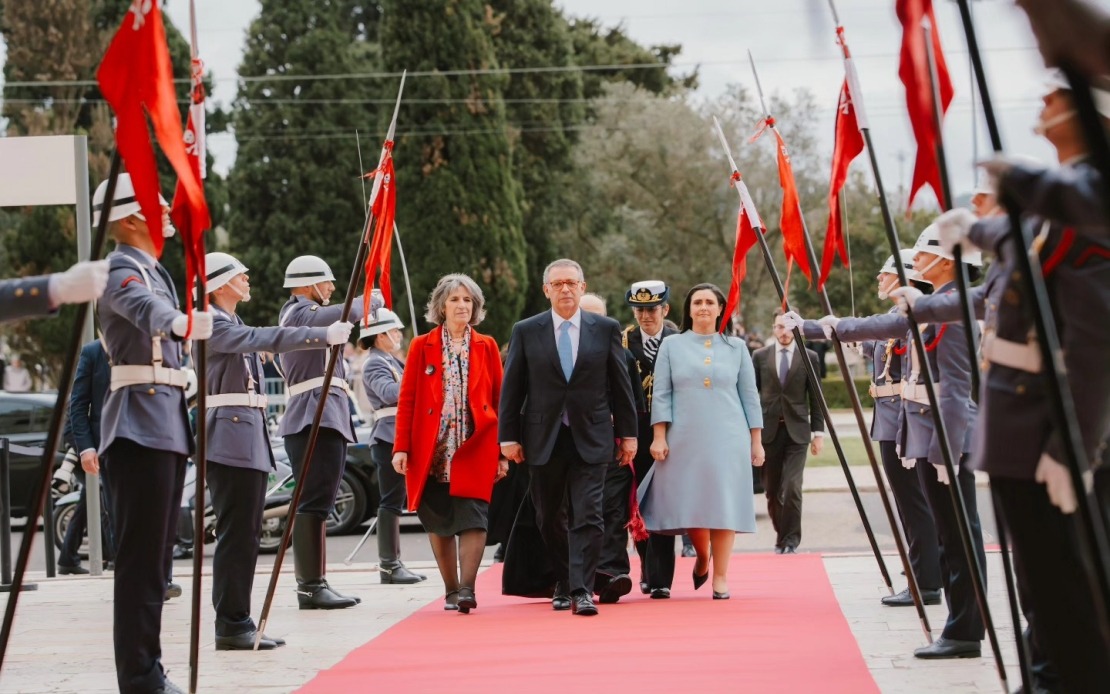
Portugal has become the latest European nation to implement restrictions on face coverings in public spaces, with President Antonio Jose Seguro formally signing the controversial legislation on Tuesday. The decision marks a significant moment in the country's ongoing debate over identity, integration, and religious freedom, placing Portugal alongside a growing list of European democracies grappling with similar policy questions.
The law's origins trace back to the right-wing Chega party, which championed the measure as addressing concerns about social cohesion and public safety. Presidential spokesperson at Belem Palace, the executive residence in Lisbon, noted that Seguro had determined the legislation addressed matters of "great social and cultural sensitivity." The President's decision to sign came after parliamentary amendments were introduced during the legislative process, changes that reportedly convinced Seguro the final text merited his approval.
In his justification for endorsing the ban, Seguro articulated three primary rationales: social integration, prevention of discrimination, and public security concerns. He also referenced precedent established by the European Court of Human Rights in cases involving face coverings. According to the presidential statement, Seguro views an uncovered face as fundamental to what he describes as a "structuring dimension of social trust," positioning facial visibility as intrinsic to Portuguese society's character and foundation.
The President's reasoning extended to gender equality considerations, emphasizing that requiring only women to conceal their faces entirely creates an untenable asymmetry. Seguro argued this disparity contradicts the principles of parity and equal dignity between genders that underpin modern European democracies. This framing attempts to reposition the ban not as a restriction on religious expression but as a measure protecting women's equality and preventing discrimination based on sex.
Seguro also invoked the concept of "common experience" as justification, suggesting that functioning free societies depend on shared frameworks of interaction. According to this perspective, the ability to live one's identity and beliefs must occur within collectively established rules that facilitate mutual recognition and direct human connection. The President claimed the European Court of Human Rights has validated this reasoning in previous judgments.
However, the legislation faces significant opposition from human rights advocates. Amnesty International Portugal has publicly condemned the ban as discriminatory, arguing it disproportionately impacts Muslim women who choose to wear face coverings for religious or cultural reasons. The organization contends the law undermines fundamental freedoms and threatens the rights of individuals to practice their faith and express their identity.
Portugal's decision aligns it with an expanding cohort of European states pursuing comparable restrictions. France, Belgium, Austria, Denmark, and the Netherlands have all introduced full or partial prohibitions on face coverings in public settings. This European trend reflects broader anxieties about immigration, integration, and national identity that have gained political salience across the continent over the past decade.
For Malaysian observers, Portugal's experience offers instructive perspective on how democracies navigate tensions between pluralism and social cohesion. Malaysia's own multi-ethnic, multi-religious framework has historically balanced religious freedom with social harmony through different mechanisms than those European nations are adopting. The Portuguese approach—emphasizing facial visibility as essential to trust and interaction—contrasts with Malaysian society's acceptance of various forms of religious and cultural dress within public spaces.
The implications for religious minorities in Portugal warrant close attention, particularly given Amnesty International's concerns about unequal enforcement and disproportionate impact. Similar bans elsewhere have generated debates about how legislation targeting specific practices affects particular communities and whether the stated objectives of security and integration are actually achieved.
This Portuguese legislation reflects broader European conversations about managing diversity and defining national identity in increasingly pluralistic societies. The tension between protecting religious freedom and establishing common civic norms represents one of contemporary democracy's enduring challenges, one that will likely intensify as European nations continue refining immigration and integration policies.

