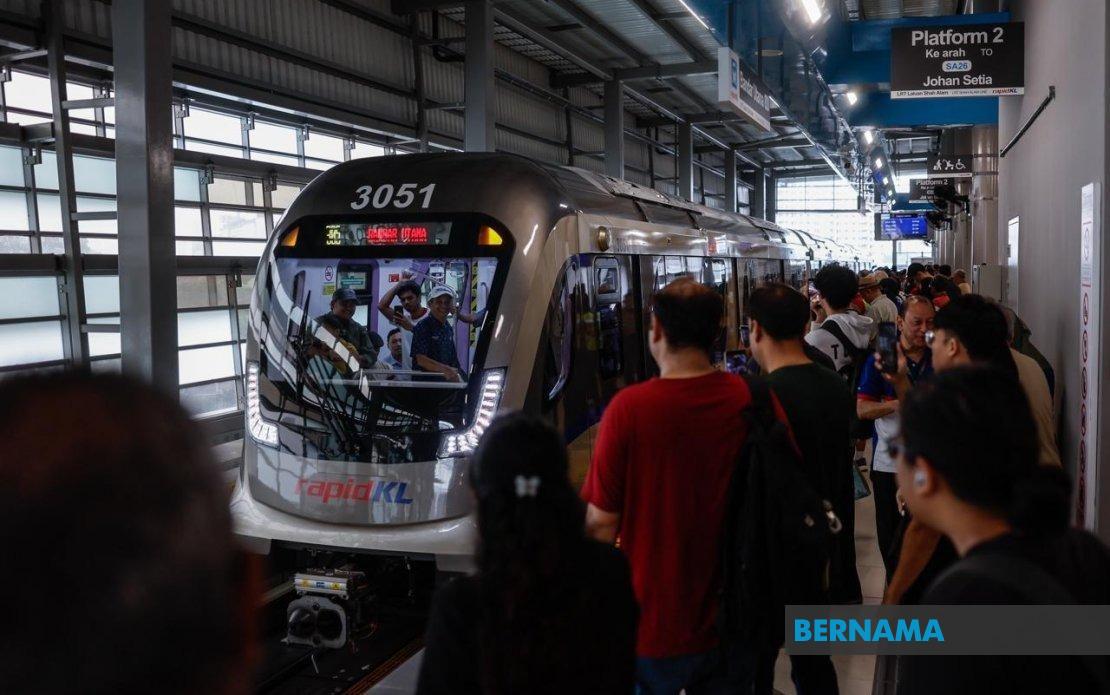
The LRT3 Shah Alam Line commenced operations this morning with Prasarana Malaysia Berhad projecting conservative ridership figures as the new rail corridor establishes itself in the commuting landscape. Chief executive Amir Hamdan indicated that passenger volumes are anticipated to range between 5,000 and 10,000 during the inaugural day, with expectations rising significantly over the coming months once travellers integrate the service into their regular routines.
The expansion marks another milestone in the Klang Valley's rapid transit infrastructure, offering residents an alternative to road congestion that has long plagued the western corridor. Initial passenger reactions have been overwhelmingly positive, with many commuters expressing relief at having a less stressful commuting option that eliminates the daily grind of traffic navigation. Prasarana has captured considerable enthusiasm on social media, where early adopters have shared their experiences boarding the first trains and navigating the new stations along the 37-kilometre network.
Prasarana's growth projections target 67,000 daily passengers within the first year of full operations, a figure that reflects realistic expectations for infrastructure adoption patterns. New mass transit lines typically experience a gradual expansion phase as word spreads and commuters adjust their travel habits. The operator acknowledges that immediate saturation is neither expected nor necessary, preferring instead to monitor organic demand development and user behaviour patterns across the entire network.
Operations commenced smoothly at 6 am with train intervals maintained at approximately eight minutes during rush periods. All station facilities, including automatic access gates and ticketing machines, have performed without significant incident, allowing Prasarana to focus on refining passenger experiences rather than managing technical disruptions. The eight-minute headway represents a reasonable frequency that should accommodate early-phase demand without creating crowding that might deter potential regular users.
Key interchange stations present particular strategic importance for the network's success. Glenmarie 2 station provides crucial connectivity to the existing Kelana Jaya Line, while Bandar Utama links passengers to the Kajang Line, enabling multi-line journeys across the metropolitan area. These connection points will drive network effects as commuters discover time-saving possibilities through integrated travel, potentially accelerating adoption beyond Prasarana's conservative projections. Monitoring passenger flows at these interchange hubs will offer early indicators of whether the new line is capturing meaningful market share from competing transport modes.
Prime Minister Datuk Seri Anwar Ibrahim has announced a promotional period offering free travel on the LRT3 Shah Alam Line and its associated feeder bus services through July 31. This one-month incentive programme is strategically timed to encourage trial usage among hesitant or unfamiliar commuters, potentially converting exploratory trips into permanent behavioural change. Free-ride initiatives historically demonstrate whether latent demand exists beneath surface-level awareness, and this period should clarify whether the 67,000 daily target is aspirational or achievable.
Prasarana's management has explicitly stated that current circumstances do not warrant introducing specialised facilities such as women-only coaches, though the operator has committed to conducting evidence-based assessments as ridership data accumulates. This pragmatic approach avoids premature resource allocation while remaining responsive to genuine user preferences. Many transit systems have discovered that women-only facilities become necessary only when aggregate passenger volumes cross certain thresholds, making Prasarana's decision to defer this consideration reasonable at the launch phase.
The operator has signalled flexibility regarding future capacity management, indicating willingness to increase train frequencies or deploy additional rolling stock if demand justifies such measures. Contingency planning includes positioning standby trains along particularly congested routes during peak hours, ensuring that popularity does not translate into service degradation. This adaptive management stance contrasts with the rigid scheduling that has occasionally frustrated users on established lines during periods of unanticipated demand surge.
For Malaysian commuters in the Selangor region, the Shah Alam Line represents a tangible expansion of choice in daily transportation decisions. The extension reaches populations in areas previously underserved by high-capacity transit, potentially unlocking real estate development opportunities and supporting long-term urban planning objectives. Property investors and developers have likely already begun analysing accessibility improvements and market implications, understanding that proximity to rail corridors typically enhances land values and residential attractiveness.
The broader Southeast Asian context shows rapid transit expansion across major metropolitan zones, with Malaysia positioning itself among the region's more advanced transit networks. Kuala Lumpur's multi-line system now encompasses several corridors serving distinct geographic markets, creating the foundations for genuinely integrated metropolitan mobility. Success of the Shah Alam extension will influence planning decisions for future extensions and neighbouring countries' transit ambitions, making this opening day significant beyond its immediate ridership implications.
Prasarana's measured expectations reflect lessons learned from previous line launches across the region, where initial enthusiasm occasionally outpaced sustainable demand, creating operational strains and maintenance challenges. By setting realistic targets and maintaining operational discipline, the company positions itself to exceed expectations rather than disappoint stakeholders with overambitious projections that falter when tested against real-world adoption patterns. The coming months will demonstrate whether the gradual growth trajectory materialises as anticipated.

