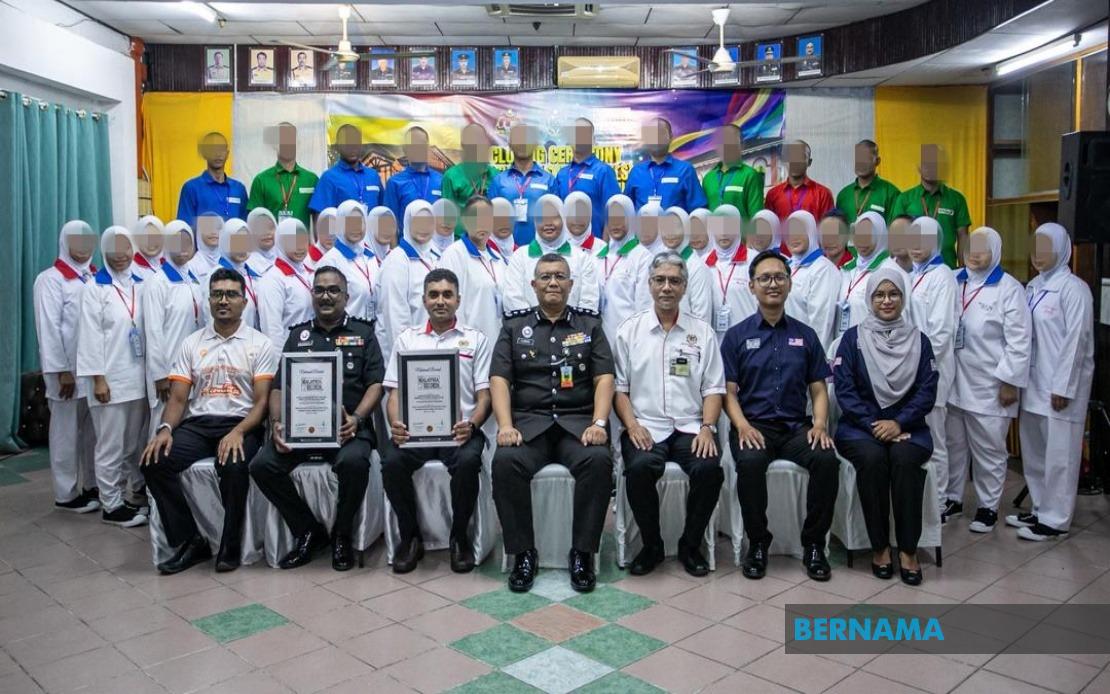
Home Minister Datuk Seri Saifuddin Nasution Ismail has commended the Malaysian Prisons Department and specifically the Batu Gajah Correctional Centre for earning recognition from the Malaysia Book of Records following the successful delivery of a Basic Life Support and Automated External Defibrillator training course that included 42 imprisoned individuals as participants.
The achievement represents a significant milestone in the department's ongoing commitment to reshaping public perception of correctional institutions. Rather than viewing prisons solely as places of punishment and confinement, Saifuddin emphasised that the recognition underscores their fundamental role as rehabilitation centres that provide individuals with genuine opportunities to transform their lives and reintegrate into society with renewed purpose.
By facilitating comprehensive training programmes such as this one, the department equips participants with practical, life-saving competencies while simultaneously cultivating essential personal qualities including humanitarian awareness, self-discipline, accountability and genuine self-belief. These dual outcomes—technical expertise combined with character development—create a foundation for former inmates to emerge as conscientious, capable members of their communities upon release.
The philosophical underpinning of the Malaysian Prisons Department explicitly prioritises rehabilitation over mere punishment, a distinction that shapes institutional policy and daily operations. This orientation reflects an understanding that incarceration, while necessary for public safety, represents an opportunity to address the underlying factors that contributed to criminal behaviour and to equip individuals with tools for lawful living.
According to Saifuddin's statement released through social media, the ultimate aspiration of the department extends beyond custody to ensuring that each person returning to the broader community possesses not only marketable skills but also the values and resilience needed to make constructive contributions to their families, neighbourhoods and the nation. This perspective acknowledges the interconnected nature of rehabilitation success, recognising that individual transformation directly benefits social stability and economic productivity.
The Batu Gajah Correctional Centre's initiative demonstrates that correctional facilities can serve as venues for acquiring credentials and capabilities that enhance employment prospects and personal agency. The Malaysia Book of Records recognition, while symbolic, validates the legitimacy and quality of training delivered within a prison setting, potentially reducing stigma associated with qualifications obtained in such environments.
For Malaysia's correctional system and the broader criminal justice framework, this achievement signals commitment to progressive rehabilitation methodologies. Comparable initiatives across developed prison systems worldwide have demonstrated measurable reductions in recidivism rates when inmates engage in meaningful vocational and personal development programmes prior to release. The investment in such programming, though requiring resource allocation, generates long-term savings through lower re-incarceration rates and reduced demands on law enforcement and judicial resources.
The minister's advocacy for expanding similar high-impact programmes throughout the prison system reflects recognition that rehabilitation initiatives require sustained institutional support and resource commitment. Scaling such efforts across multiple correctional facilities would require coordination between the Prisons Department, training providers, employers and community organisations, creating broader ecosystems of opportunity for incarcerated populations.
For Malaysian society, the implications are substantial. A corrections system that successfully rehabilitates individuals reduces cycling through the criminal justice system, strengthens community safety, and enables formerly incarcerated persons to become economically productive rather than remaining dependent on state resources. When inmates acquire recognised certifications in essential areas such as emergency medical response, they gain pathways to legitimate employment upon reentry, reducing vulnerability to recidivism.
The recognition also carries significance for the approximately 44,000 individuals currently incarcerated across Malaysia, as it demonstrates official commitment to transforming the prison experience from purely custodial to developmental. This shift in institutional purpose carries psychological and practical implications, as inmates engaged in meaningful preparation for reintegration experience different psychological states and develop different coping mechanisms than those in purely punitive environments.
Looking forward, Saifuddin's public celebration of this achievement may catalyse increased attention and resource allocation toward comparable programmes. Other Southeast Asian countries grappling with overcrowded prison systems and elevated recidivism rates may also regard Malaysia's rehabilitation-focused approach as a potential model worthy of examination and adaptation.
The Malaysia Book of Records recognition serves as external validation of internal reform efforts, providing the Prisons Department with tangible evidence to support budget requests and policy advocacy with government stakeholders and the public. Such recognition strengthens institutional credibility and may generate momentum for broader systemic improvements in rehabilitation infrastructure and programming.

