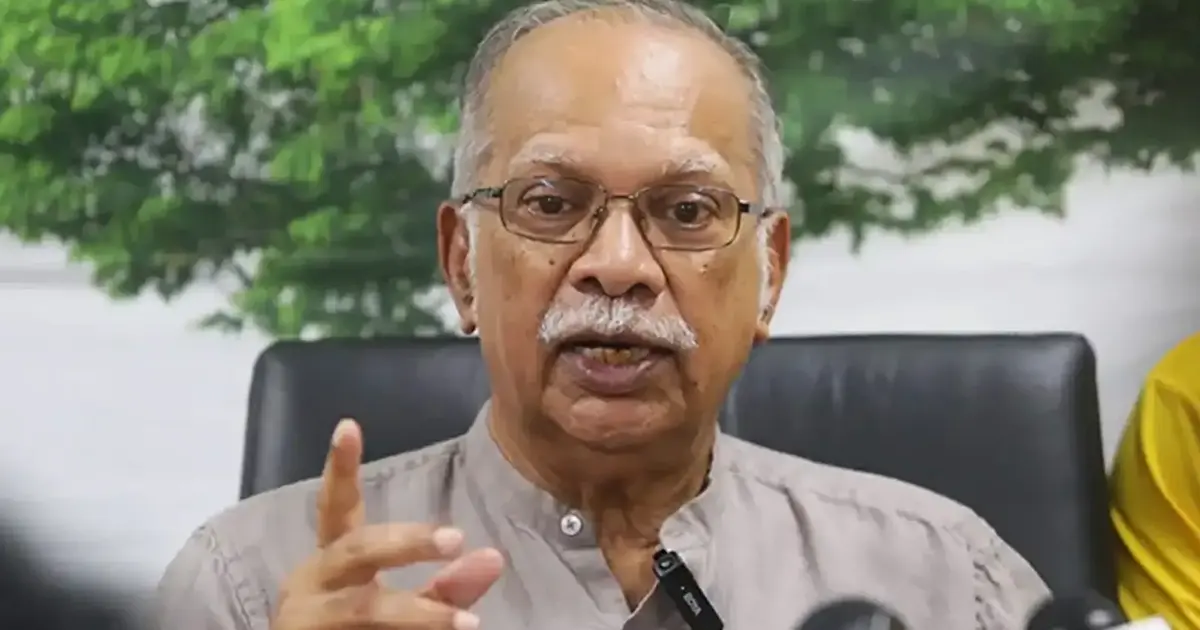
The opposition coalition Perikatan Nasional faces mounting pressure to confront fundamental questions about its internal cohesion, with observers warning that yesterday's emergency gathering missed a critical opportunity to address the deteriorating status of Bersatu within the alliance. Urimai chairman Ramasamy has pointedly argued that the coalition's leadership squandered the meeting by failing to directly engage with Bersatu's contentious position, a situation that has become increasingly untenable given the party's growing estrangement from PAS, the dominant Islamic party anchoring the bloc.
The strategic miscalculation appears symptomatic of deeper dysfunction within Perikatan Nasional's decision-making structures. Rather than seizing the chance to chart a clear path forward for the three-party coalition, senior officials allowed the meeting to proceed without meaningfully confronting the elephant in the room—whether Bersatu retains a viable future alongside its fractious partners. This avoidance perpetuates a cycle of unresolved tensions that threaten to undermine the coalition's capacity to function effectively as a cohesive political force during a critical period for Malaysia's opposition landscape.
Bersatu's troubled relationship with PAS has become the most destabilising factor within Perikatan Nasional's architecture. The two parties have demonstrated markedly different ideological trajectories and strategic priorities, creating friction points that extend beyond mere personality clashes between senior figures. These substantive disagreements on policy direction, coalition strategy, and fundamental political principles have widened into an unbridgeable chasm that informal discussions and backroom negotiations have failed to bridge.
Ramasamy's critique suggests that the emergency meeting was convened without adequate preparation or clear objectives beyond the superficial aim of projecting unity. A genuinely productive session would have required the coalition's heavyweights to make difficult decisions about restructuring arrangements, clarifying party roles, and establishing mechanisms to prevent future disputes from destabilising the entire bloc. The failure to engage these issues directly signals either a concerning lack of political will or, more troublingly, an absence of any viable solution that all parties can accept.
For Malaysian voters and observers, the protracted crisis within Perikatan Nasional raises fundamental questions about the coalition's credibility as an alternative government. A political alliance that cannot manage internal contradictions effectively presents a problematic proposition to an electorate already sceptical of opposition politics. The public spectacle of unresolved tensions and finger-pointing undermines the narrative that these parties can present a unified, competent governing alternative to the current administration.
Bersatu's position has become particularly precarious in this context. The party entered Perikatan Nasional with significant political capital and ministerial experience, but its standing has eroded considerably amid accusations of inconsistent positioning and wavering commitment to coalition principles. Whether the party can salvage its role within the bloc or whether it should consider repositioning entirely depends on urgent clarification of its status and future prospects within the alliance.
PAS, conversely, has consolidated considerable influence within Perikatan Nasional, particularly following electoral gains in recent contests. This power dynamic has shifted the coalition's ideological centre of gravity, a development that many observers believe has contributed to Bersatu's growing discomfort with certain policy directions and public positions adopted by the broader alliance. The gravitational pull toward more conservative positions on social and religious matters has created friction with Bersatu's broader electoral appeal.
The timing of yesterday's emergency meeting suggests mounting pressure from grassroots party members and concerned observers demanding resolution. Protracted uncertainty about fundamental questions of coalition structure and party positioning creates paralysis that prevents coherent policy formulation or strategic planning for the critical political contests ahead. Without clarity on these foundational issues, Perikatan Nasional struggles to present itself as a credible, organised alternative political force.
Ramasamy's intervention carries weight as Urimai chairman, positioning him as a concerned observer of broader political dynamics rather than a partisan voice. His assessment that the meeting failed to address the core issues reflects growing consensus among political analysts and commentators that Perikatan Nasional's leadership has thus far avoided rather than resolved its structural problems. This pattern of avoidance cannot continue indefinitely without serious consequences for the coalition's coherence and electoral viability.
Moving forward, Perikatan Nasional must undertake a fundamental reassessment of its internal arrangements and establish clearer protocols for managing inter-party disputes. Whether this involves restructuring Bersatu's role, formalising new partnership terms, or even accepting that the current coalition configuration is no longer workable requires honest, substantive dialogue. The alternative is continued drift toward potential collapse, a prospect that would have significant ramifications across Malaysia's entire political landscape and the regional opposition movements watching this development with considerable interest.

