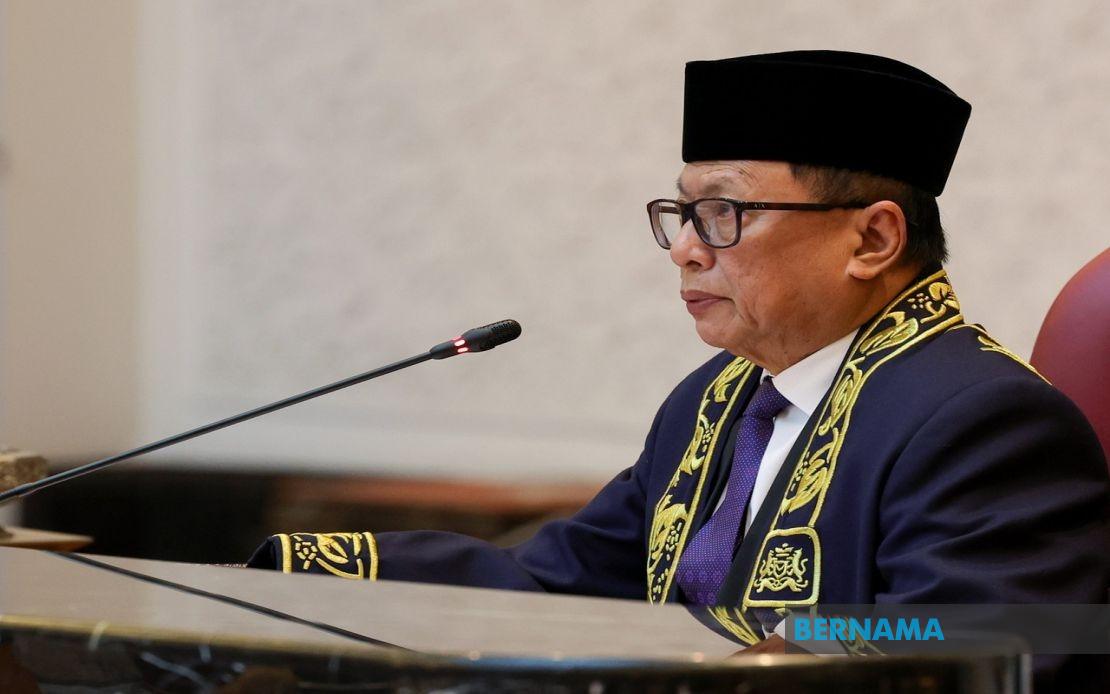
Datuk Dr Mohd Puad Zarkashi, a member of UMNO's Supreme Council, formally announced his immediate departure from the party on June 25, 2026, marking a significant rupture within the Malay-dominant coalition in Johor. The decision, communicated through a Facebook statement, underscores mounting tensions within UMNO's Johor structure as the party prepares for state elections and grapples with questions about internal governance and candidate selection processes.
Mohd Puad, the incumbent representing Rengit in the state assembly, framed his resignation as an act of intellectual and political liberation rather than a retreat. He emphasised that the move was entirely voluntary and made without external pressure, thereby removing UMNO's obligation to formally expel him from party ranks. This preemptive exit strategy allowed him to sidestep prolonged disciplinary procedures while simultaneously establishing his independence from party constraints going forward.
The former Batu Pahat Member of Parliament directed his most caustic criticism at Johor Chief Minister Onn Hafiz, characterising him as a mere "pak turut"—a Malay colloquialism meaning a subordinate who blindly follows orders without exercising independent judgment. Mohd Puad contended that this absence of autonomous leadership had reduced Johor UMNO itself to a "tethered puppet," suggesting systemic dysfunction at the state party level where decision-making capacity had been compromised or delegated elsewhere. The severity of these accusations signals deep institutional fractures beyond mere personality clashes between senior figures.
Mohd Puad justified his departure as an act of "political courage" motivated by a desire to expose what he characterised as serious irregularities before they metastasised into more intractable problems. He explicitly rejected suggestions that personal grievances or career advancement had driven his decision, instead positioning himself as a principled whistleblower acting in the broader interests of the party and the Malay-Muslim constituency UMNO purports to represent. This framing attempts to elevate his resignation beyond factional infighting into a matter of institutional accountability.
The resignation crystallises concerns Mohd Puad had begun articulating the day prior, when he hinted at an imminent major announcement and alleged irregularities in the Barisan Nasional candidate selection process for the forthcoming Johor state election. These allegations about opaque or compromised nomination procedures strike at the heart of UMNO's internal democratic mechanisms and suggest that decisions about electoral positioning may not be transparently determined. For Malaysian readers, such accusations highlight persistent anxieties about how major political parties make consequential decisions affecting their members' political futures.
Mohd Puad's decision not to defend his Rengit seat, despite winning it decisively in the 2022 Johor state election, had already signalled his ambivalence about his political future within the party structure. He had publicly advocated for younger candidates to be given electoral opportunities, a generational argument that contradicts his subsequent explosive departure. This trajectory from apparent graceful withdrawal to damaging public criticism suggests that behind-the-scenes dynamics had deteriorated significantly following his earlier announcement.
The veteran politician's parliamentary record reveals a career shaped by electoral volatility. He captured the Batu Pahat federal seat in the 12th General Election with a substantial majority of 12,968 votes, only to lose it five years later in the 13th election to PKR's Datuk Mohd Idris Jusi by a narrow margin of 1,524 votes. This electoral swing illustrates the fluid nature of Malaysian politics and the precarious position of even experienced politicians in constituencies where voter sentiment shifts rapidly. Such experiences may have sharpened Mohd Puad's awareness of UMNO's institutional vulnerabilities.
Beyond parliamentary representation, Mohd Puad accumulated significant bureaucratic experience at the federal level, serving as Deputy Education Minister from 2009 to 2013 and subsequently as Director-General of the Special Affairs Department (JASA) from March 2015 to April 2018. His tenure at JASA, a body responsible for government strategic communications during the tumultuous post-2015 period, positioned him at the nexus of state information management. This administrative background suggests he possesses insights into governance structures and decision-making processes that may inform his current allegations about irregularities in party operations.
Mohd Puad's resignation arrives amid broader instability within UMNO's state-level structures, particularly in Johor where the party has historically maintained substantial organisational strength. His accusations specifically targeting the Chief Minister's autonomy and decision-making capacity implicitly challenge the legitimacy of current state-level leadership, potentially emboldening other dissidents within the party infrastructure. For Southeast Asian observers, the episode illustrates how internal party conflicts in Malaysia's dominant coalitions can rapidly escalate from private disagreements into public recriminations with electoral implications.
The immediate aftermath of Mohd Puad's departure will likely determine whether his criticisms gain traction within UMNO or are marginalised as the grievances of a disgruntled departing member. Should other senior figures echo his concerns about Onn Hafiz's decision-making autonomy or candidate selection irregularities, the resonance could expand considerably. Conversely, if UMNO leadership successfully contains the narrative by portraying him as a sore loser motivated by electoral disappointment, the crisis may prove containable for the party hierarchy in the short term.
The resignation also carries implications for BN's electoral prospects in the Johor state election, as the defection of a Supreme Council member and former parliamentary legislator signals potential vulnerability within the coalition's organisational cohesion. Voters in the state may interpret such high-profile departures as evidence of internal dysfunction, potentially benefiting opposition parties capitalising on perceptions of UMNO instability. For regional analysts monitoring Malaysian politics, Mohd Puad's exit exemplifies how governance questions and leadership legitimacy can destabilise seemingly entrenched political structures.

