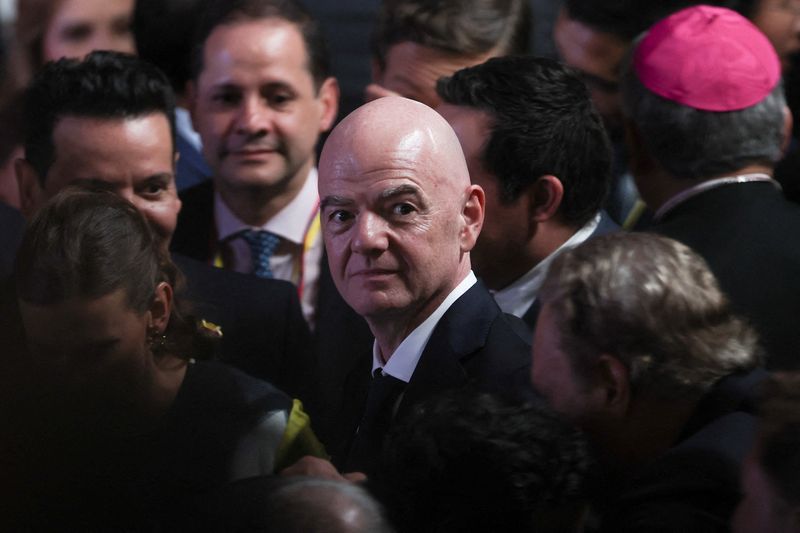
A widening schism in Asian football governance has erupted into public view as Qatar directly confronted the Asian Football Confederation over its participation in a coordinated regional assault against FIFA President Gianni Infantino. The Qatari football chief's intervention represents a significant fracture within the AFC at a moment when the FIFA leadership question hangs in the balance ahead of next year's reelection process, underlining how Infantino's embattled tenure has fractured long-standing continental alliances.
Hamad bin Khalifa Al-Thani, who holds dual positions as Qatar Football Association President and AFC Executive Committee member, dispatched a formal letter to AFC President Sheikh Salman bin Ibrahim Al Khalifa disputing the confederation's decision to join UEFA and CONCACAF in releasing a scathing public statement demanding Infantino's resignation. The core of Al-Thani's complaint centres on procedural legitimacy: the three continental bodies issued their joint condemnation on Monday without seeking input from their member associations, particularly the Gulf nation that hosted the 2022 World Cup.
Al-Thani's written challenge fundamentally questioned the AFC's legal standing to purport representing the views of all 47 member associations through unilateral declaration. In his correspondence, he emphasised that such consequential statements require demonstrable consensus-building rather than top-down pronouncements. He pointedly asked what consultation mechanisms the AFC had employed and what authority permitted Sheikh Salman's organisation to speak on behalf of its entire membership without prior deliberation or circulation of draft proposals.
The Qatari official stressed that his association received no advance notification, saw no preliminary documentation, and faced no opportunity to provide input before the AFC released the statement under its institutional banner. This procedural protest carries particular weight given Al-Thani's position within AFC governance, suggesting the challenge reflects substantive disagreement rather than mere administrative oversight.
The AFC responded to inquiries with silence, declining to offer any statement when contacted about the controversy. This reticence may reflect the sensitivity of the dispute within a continental body already struggling to maintain cohesion around its largest political decisions. The confederation's unwillingness to defend its decision-making process publicly suggests vulnerability on the procedural front, even if individual members supported the letter's substance.
The broader context involves Infantino's controversial proposal to commercialise the World Cup by carving off 20 percent of tournament rights for sale to private investors—a manoeuvre intended to generate approximately $4.2 billion in revenue. The initiative triggered unprecedented backlash from UEFA, the AFC, and CONCACAF, forcing the FIFA president into a rapid U-turn that nonetheless failed to contain the damage to his credibility.
Qatar's intervention must be understood against the competing positions now visible within Arab football leadership. Just days before Al-Thani's letter, six heads of Arab national football associations—including Qatar, Morocco, Egypt, Mauritania, and two others—had released a counter-statement explicitly backing Infantino and praising his efforts to expand football's reach across regions. Notably, four of these six signatories occupy FIFA Council positions, granting them direct influence over Infantino's reelection prospects.
Morocco's presence among Infantino's Arab supporters holds particular significance given its role as 2030 World Cup co-host alongside Uruguay and Paraguay. The Moroccan federation's backing suggests that countries scheduled to benefit from future FIFA tournaments may prioritise maintaining working relationships with the existing FIFA administration over regional solidarity positions. This calculus reveals how commercial interests tied to major tournament hosting can override continental collective bargaining positions.
The split between AFC members reflects deeper fault lines within Asian football governance. The confederation spans vastly different economic interests, development levels, and FIFA voting blocs, making unified positions inherently fragile. Wealthier Gulf associations increasingly possess independent leverage within FIFA's decision-making structures, reducing their dependence on continental collective action.
For Malaysian and broader Southeast Asian observers, this rupture carries implications for how the AFC navigates future governance questions. The confederation's apparent inability to ensure genuine consultation before issuing statements in its members' names suggests structural weaknesses that extend beyond the Infantino controversy. Southeast Asian federations relying on AFC representation face questions about whether their interests receive adequate consideration in continental deliberations.
The confrontation also illustrates how FIFA's internal politics increasingly bypass traditional continental hierarchies. Al-Thani's direct engagement with Infantino through separate Arab coalition-building demonstrates that individual member associations, particularly those with political influence or tournament hosting roles, can circumvent AFC channels entirely. This trend weakens the confederation's ability to project unified negotiating positions.
Infantino's reelection campaign now confronts not merely regional opposition but internal divisions among potential supporters that threaten any claims to widespread institutional backing. The AFC's fractured response to the FIFA crisis suggests the confederation cannot present itself as speaking authoritatively for Asian football, precisely the unified posture that would strengthen regional influence over FIFA's strategic direction.
As football's power structures continue shifting toward individual federation autonomy and bilateral relationships with FIFA headquarters, continental confederations like the AFC face declining relevance unless they substantially reform their governance mechanisms to ensure meaningful member participation in major collective decisions.

