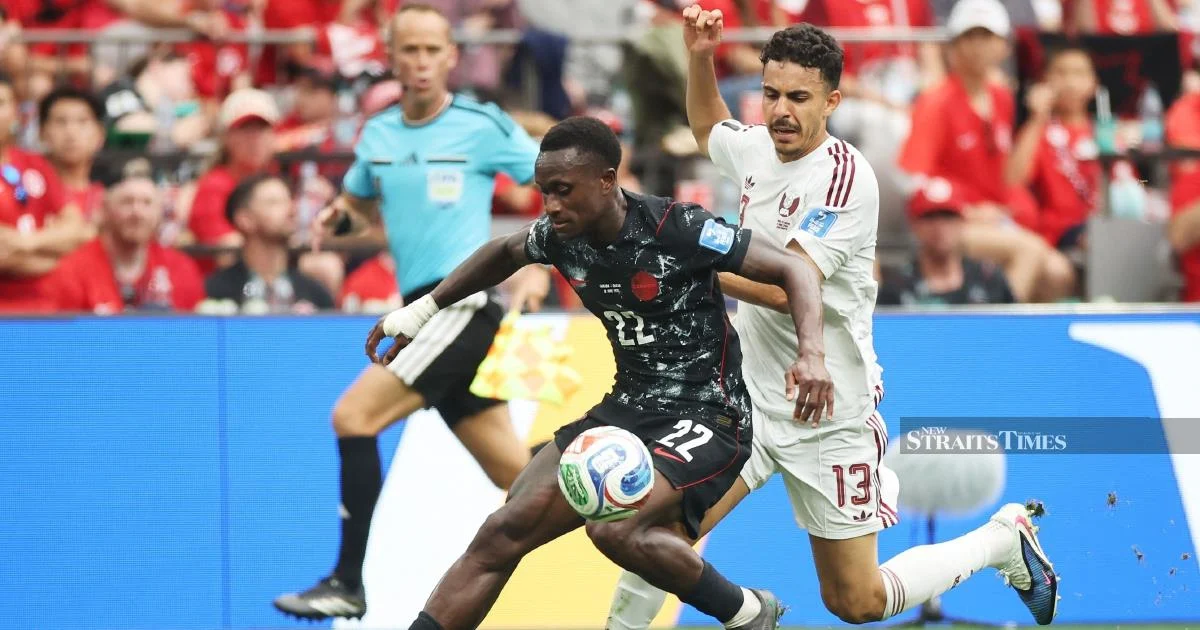
Qatar's comprehensive 6-0 defeat at the hands of Canada during the World Cup has triggered sharp scrutiny from football analysts who argue that vast financial resources, no matter how deep-pocketed, cannot guarantee competitive performance on the global stage. The emphatic scoreline has become a referendum on whether petrodollar-funded ambitions can succeed without the foundational elements that sustain footballing excellence over time.
The manner and scale of Qatar's capitulation underscores a recurring pattern in international sport: money functions as an accelerant for existing systems rather than a substitute for them. While the Gulf nation has invested billions acquiring top players and infrastructure, the absence of a coherent domestic development programme has left the national team lacking the collective understanding and playing culture essential for sustained success. Football, unlike some other pursuits, demands continuity across generations and a talent pipeline that cannot be constructed through merchant banking alone.
Examining Qatar's situation through a Southeast Asian lens proves particularly instructive. The region's football programmes, notably Thailand, Vietnam, and Indonesia, have achieved modest international progress through combinations of strategic foreign coaching recruitment, youth academy investment, and systematic domestic league improvements. Qatar's strategy differed markedly—it pursued marquee players and infrastructure without comparable attention to grassroots development or the cultural integration required for cohesive team dynamics.
The defeat raises practical questions about how emerging football nations allocate resources effectively. Qatar's hosting of the World Cup signalled aspirations beyond mere tournament participation; it represented an attempt to position itself as a continental power. Yet ambition divorced from methodical institution-building creates vulnerability when teams encounter opposition with stronger foundational structures and deeper player pools. Canada's victory reflected not merely superior individual talent but superior collective organisation—a product of sustained development investment across multiple levels of competition.
Financial capacity becomes meaningful primarily when channelled through systems designed to identify, develop, and integrate young players into established playing philosophies. Qatar's approach, by contrast, emphasized purchasing established players from Europe and South America, creating a cohort of individuals without shared tactical language or long-term familiarity. These assembled squads often lack the intuitive understanding that championship teams develop through years of competing together within coherent frameworks.
For Malaysian observers, Qatar's struggles offer instructive parallels and contrasts. Malaysia's Football Association has similarly grappled with how to generate sustained improvement despite more modest financial resources than wealthy Gulf nations. Yet Malaysia's traditional emphasis on domestic league development and regional competition provides different strategic foundations. The Malaysian challenge remains resource mobilisation rather than its deployment; Qatar's challenge is repositioning already-deployed resources toward structural rather than transactional goals.
The psychological impact of such a heavy defeat extends beyond immediate tournament consequences. Players recruited at considerable expense face questions about their competitive value and commitment. Coaching staff confront doubts about tactical flexibility and player management. Nations watching Qatar's experience absorb lessons about the limits of financial authority in competitive environments where results ultimately determine credibility. This matters particularly for Gulf region neighbours similarly building football programmes through significant investment.
Looking forward, Qatar's trajectory depends on whether decision-makers interpret this loss as a temporary setback requiring strategic refinement or a systemic failure demanding fundamental restructuring. The World Cup performance suggests underlying problems that additional spending cannot solve—problems rooted in how talent is identified, developed, and organised. Without addressing these deeper questions, further investment risks replicating current failures at higher expense.
The broader context matters considerably here. Several wealthy European clubs have discovered that exceptional spending produces inconsistent results when divorced from coherent playing philosophy and staff stability. Paris Saint-Germain, for instance, assembled arguably Europe's most expensive squad yet struggled to dominate European competition, reflecting similar tensions between acquisition-based and development-based approaches. Qatar's national team situation mirrors this dynamic at international level, where the stakes involve national prestige rather than merely club success.
Commentators emphasising this cautionary tale recognise that football success emerges from intersecting factors—financial resources certainly matter, but only as enablers of systematic development, strategic planning, cultural alignment, and sustained institutional commitment. Qatar possessed the first element abundantly; the others required different investments of time and expertise that money alone cannot purchase directly from external markets.
For Southeast Asian football, Qatar's experience reinforces that sustainable progress requires accepting slow, methodical foundation-building over quick-fix spending binges. The region's resource constraints, while frustrating, paradoxically encourage the systematic thinking that produces enduring competitive capacity. Qatar's loss, viewed from this perspective, confirms that football remains fundamentally different from sectors where monetary input directly purchases output. Instead, success reflects how intelligently nations deploy whatever resources they command within coherent, long-term strategic frameworks.

