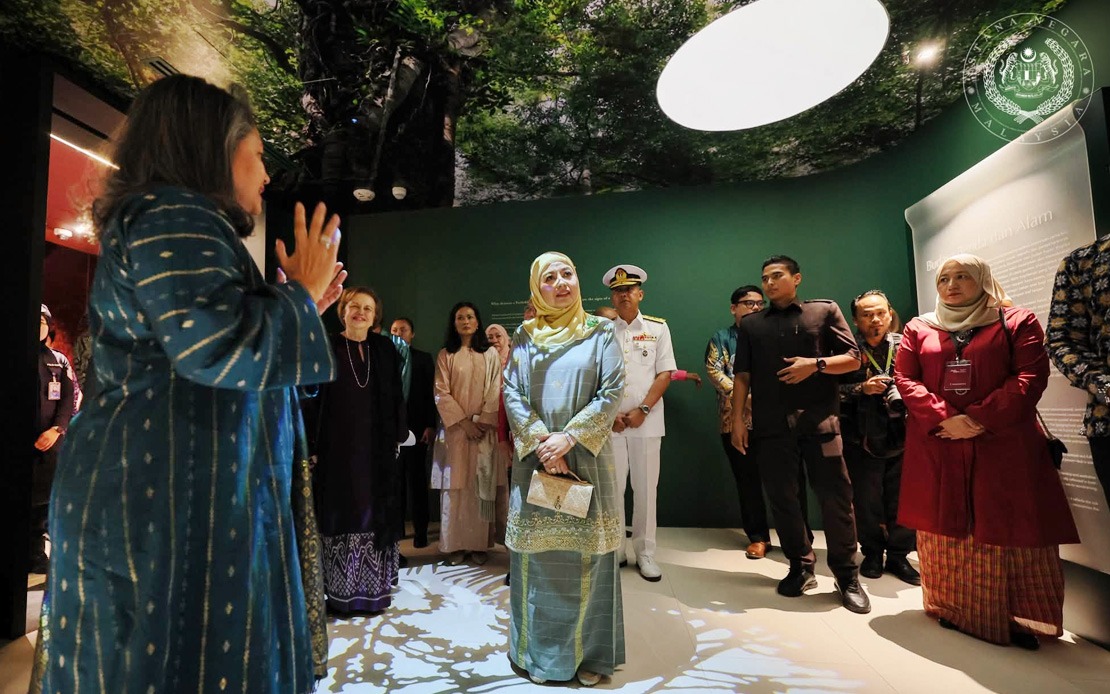
Her Majesty Raja Zarith Sofiah, Queen of Malaysia, formally inaugurated the Merdeka Textile Museum at the Menara Merdeka Maybank compound in Kuala Lumpur on August 21, marking a significant milestone in the nation's efforts to safeguard its rich cultural heritage. The establishment of this institution reflects growing recognition among Malaysia's leadership of the imperative to document, preserve, and transmit traditional knowledge to younger generations who increasingly risk disconnection from their cultural roots.
PNB Merdeka Ventures Sdn Bhd, a subsidiary wholly owned by state investment firm Permodalan Nasional Berhad, spearheaded the museum's development with an explicit mandate to honour the textile traditions intrinsic to Malay civilization. Rather than treating these collections as static historical artefacts, the institution's architects designed it to function as a living repository of cultural knowledge, emphasizing narrative depth and participatory learning experiences that encourage visitors to engage meaningfully with Malaysia's textile traditions.
During the opening ceremony, the Queen articulated a vision of cultural stewardship that extends beyond mere institutional preservation. She emphasized that every nation bears responsibility for acknowledging, safeguarding, and transmitting its distinctive heritage to subsequent generations. This framing positions the museum not as a nostalgic exercise but as an essential component of national identity formation and social cohesion—a perspective that resonates with Southeast Asian discussions about maintaining cultural authenticity amid rapid modernization.
The Queen further contextualized cultural heritage within the broader framework of national identity and values. Textiles, she suggested, embody far more than aesthetic or commercial significance; they constitute tangible expressions of the principles, beliefs, and social structures that have historically defined Malaysian and Malay societies. By elevating textile heritage to this conceptual level, the Queen articulated a sophisticated understanding of material culture's role in sustaining social meaning across time.
Queenly remarks distributed via the official Facebook page of Sultan Ibrahim Sultan Iskandar articulated aspirations for the museum's broader social impact. The institution, the Queen envisioned, should function as an intellectual hub and inspiration point—particularly for Malaysian women, who historically have been primary custodians of textile knowledge and production within Malay households and communities. This gendered acknowledgment recognizes women's disproportionate role in preserving intergenerational cultural transmission while suggesting the museum could catalyze contemporary women's engagement with heritage.
The Queen also expressed concern about cultural attrition among young Malaysians, warning against the inadvertent loss of heritage through inattention or neglect. This anxiety reflects broader anxieties across Southeast Asia about whether younger cohorts, navigating globalized consumption patterns and digital environments, will maintain sufficient connection to traditional knowledge systems. By framing heritage appreciation as an active choice requiring deliberate cultivation, the Queen implicitly challenged presumptions of automatic cultural transmission.
The museum's substantive core derives from the personal collection assembled by the late Sharifah Azah Syed Mohammed Alsagoff, commonly known as Azah Aziz. Her comprehensive accumulation of 240 textile pieces and 69 traditional jewellery items—encompassing songket sarongs, Limar Baju Kurung garments, and Tekat Emas embroidered pieces—was donated to the institution by her family. Azah Aziz's historical significance as wife of the late Prof Diraja Ungku Abdul Aziz Abdul Hamid and mother of former Bank Negara Malaysia governor Tan Sri Dr Ungku Zeti Akhtar Aziz further elevates the collection's cultural standing.
The institutional architecture of the Merdeka Textile Museum reflects contemporary museological practice extending beyond exhibition space. Eight distinct galleries provide thematic organization of the collections, while complementary facilities including a specialized conservation laboratory, comprehensive fabric library, and dedicated textile knowledge centre establish infrastructure for both preservation and scholarly investigation. This multi-functional approach positions the museum as a resource for researchers, conservators, and enthusiasts rather than exclusively as a public-facing exhibition venue.
The conservation laboratory component addresses critical preservation challenges inherent in managing historical textiles vulnerable to environmental degradation, insect damage, and improper handling. By integrating conservation expertise within the institutional structure, the museum commits to sustained maintenance of the collection rather than treating preservation as ancillary to public programming. This technical infrastructure becomes particularly significant given Southeast Asia's tropical climate, which accelerates textile deterioration without sophisticated environmental controls.
The fabric library and textile knowledge centre position the museum as an educational resource for designers, historians, students, and cultural practitioners seeking authentic primary sources and technical information about traditional textile production methods. This scholarly dimension differentiates the institution from conventional heritage museums oriented primarily toward tourism and public spectacle, instead emphasizing knowledge generation and methodological rigor.
Government representation at the inauguration underscored official commitment to the project. Minister in the Prime Minister's Department (Federal Territories) Hannah Yeoh, Chief Secretary to the Government Tan Sri Shamsul Azri Abu Bakar, and PNB group chairman Raja Tan Sri Arshad Raja Tun Uda attended the ceremony, signalling bureaucratic and commercial sector alignment behind heritage preservation initiatives. This institutional convergence reflects recognition that cultural conservation increasingly constitutes national priority requiring coordinated governmental and private sector engagement.
The Merdeka Textile Museum's establishment arrives amid broader Southeast Asian movements toward heritage documentation and cultural sovereignty, as nations reassert ownership over traditional knowledge systems historically appropriated or marginalized by colonial and post-colonial institutional arrangements. Malaysia's investment in this institution participates in a regional trend whereby governments, communities, and private entities collaborate in reconstructing cultural narratives centered on indigenous agency and aesthetic sophistication. For Malaysian observers, the museum represents both literal preservation of textile traditions and symbolic reassertion of cultural values within the contemporary nation-state.

