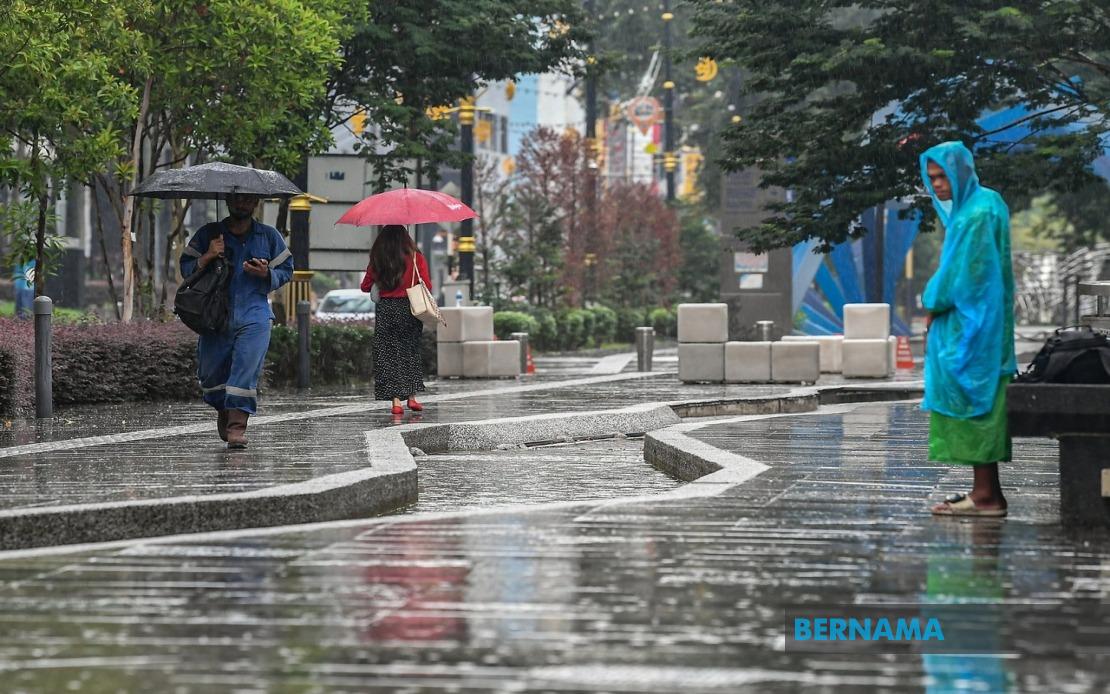
Prospective candidates contesting in Johor's 16th state election will face damp conditions during the nomination process on June 27, as the Malaysian Meteorological Department forecasts rain in nearly three-quarters of the state's districts. The wet weather presents a logistical challenge for both campaign teams and voters accompanying their favoured contenders to the 56 nomination centres, which will operate for a narrow one-hour window from 9 am to 10 am before returning officers announce the full slate of eligible candidates.
According to Azlai Ta'at, Johor's MetMalaysia director, the rainfall is anticipated across Johor Bahru, Muar, Batu Pahat, Kota Tinggi, Pontian, Tangkak and Kulai, leaving only Segamat, Kluang and Mersing with clearer morning skies. The meteorological forecast underscores the unpredictability that electoral officials and candidates must navigate during formal registration proceedings. Temperatures are expected to remain humid and warm, ranging between 24 and 25 degrees Celsius at their lowest, while afternoon highs will climb to between 31 and 34 degrees Celsius, with Segamat potentially experiencing the most intense heat at 34 degrees.
The afternoon period presents an even more volatile weather picture as thunderstorms are anticipated to coincide precisely with the launch of the official campaign season, immediately following the conclusion of nominations. MetMalaysia predicts convective activity across Johor Bahru, Segamat, Kluang, Kota Tinggi, Pontian, Mersing and Kulai, while Batu Pahat and Tangkak will experience general rain and Muar is forecast to remain predominantly hot. Candidates and their supporters are being advised to remain vigilant for sudden weather deterioration, particularly as they transition from formal registration activities into grassroots campaigning efforts.
The election itself will see an unprecedented breadth of political representation compared to previous state contests. Pakatan Harapan has committed to competing across all 56 seats through an alliance structure comprising 20 PKR candidates, 19 from Amanah and 17 from DAP, presenting a comprehensive challenge to the incumbent coalition. Barisan Nasional is similarly fielding a complete slate of 56 candidates distributed as 36 from UMNO, 16 from MCA and four from MIC, maintaining its traditional presence despite changing political dynamics in the state.
Perikatan Nasional's configuration reflects a more fragmented approach, with PAS contesting 11 seats, Bersatu fielding 16 candidates, the Malaysian Indian People's Party putting forward five contenders and Pejuang standing one candidate. This distribution highlights the coalition's attempt to carve out electoral space while managing the complexities of seat allocation among its component parties. Beyond these major groupings, several smaller political entities will participate in this contest, including the Malaysian United Democratic Alliance with four seats, Parti Sosialis Malaysia with one seat, and notably Parti Bersama Malaysia, which will make its debut electoral appearance by contesting 15 seats, signalling fresh entrants to Johor's competitive political landscape.
The election commission has carefully structured the voting timeline to accommodate administrative requirements and public participation. Early voting has been scheduled for July 7, providing opportunities for specific voter categories and those unable to participate on the principal polling date, while the main election day is set for July 11. This schedule allows candidates and parties approximately two weeks of intensive campaigning from the nomination process through to polling day, a compressed timeframe in which political operatives must build momentum and secure voter support.
The electorate participating in this contest is substantial in both absolute and regional terms. According to Electoral Commission statistics, approximately 2.73 million registered voters will determine the composition of Johor's state assembly. This constituency comprises 2.70 million ordinary voters alongside 12,041 military personnel and their spouses and 12,710 police personnel and their spouses. The inclusion of security force voting blocs reflects ongoing political debates about civilian-military separation and the extent to which uniformed personnel participate in electoral processes, considerations particularly relevant in Malaysia where such questions occasionally generate public discussion.
For Malaysian observers and those tracking regional electoral dynamics, the Johor contest carries broader significance. As the nation's southern economic hub and a strategically important state, developments in Johor's political alignment can influence national coalition mathematics and policy directions. The nomination day weather, while seemingly tangential, may subtly affect candidate visibility, supporter turnout and the symbolic dimensions of campaign launches as parties seek to establish momentum in what appears shaping as a genuinely competitive election rather than a foregone conclusion.
The convergence of meteorological unpredictability with high-stakes political competition creates an unusual backdrop for what is fundamentally a formal administrative procedure. Returning officers and nomination centre staff will manage the complex logistics of processing candidate documentation while managing crowds navigating potentially wet conditions, a scenario that seasoned election officials typically approach with contingency planning but which remains inherently challenging. Meanwhile, the transition from nomination formalities directly into thunderstorm-affected campaigning may inadvertently create obstacles for newly nominated candidates seeking to establish their campaign presence and message in the crucial opening days of the formal contest.

