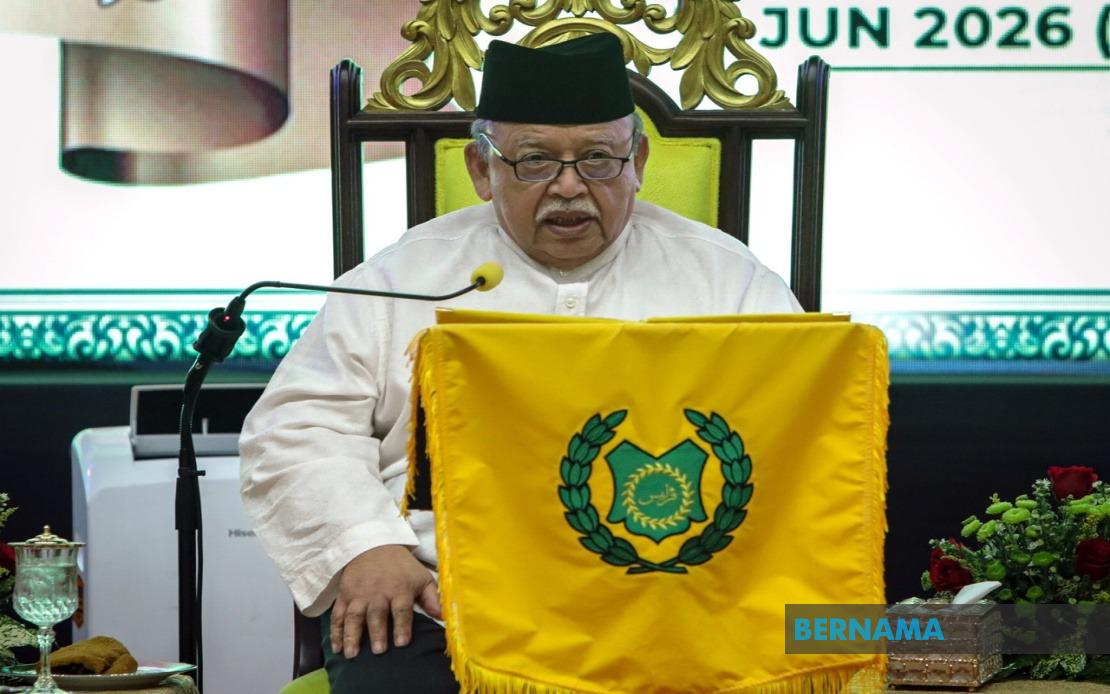
The Raja of Perlis, Tuanku Syed Sirajuddin Jamalullail, has delivered a forthright message about the values necessary for Malaysia's continued advancement, emphasising that true national progress rests not on infrastructure alone but on the moral character of the people. Speaking at the state-level Maal Hijrah 1448H/2026M celebration in Kangar on June 18, the Ruler outlined a vision of societal development grounded in knowledge, integrity and civility—qualities he identified as essential prerequisites for building a prosperous and progressive nation.
Tuanku Syed Sirajuddin articulated a philosophy of work rooted in Islamic principles, urging citizens to approach their responsibilities with sincerity and to regard labour as an act of worship. This framing elevates everyday professional conduct beyond mere economic contribution, positioning it within a spiritual and moral framework. The Ruler's call for the rejection of all forms of corruption carries particular resonance in a Malaysian context where anti-corruption efforts have become increasingly central to public discourse and governance reform. By linking this anti-corruption stance directly to national prosperity, the monarch underscores the connection between institutional integrity and economic progress—a message that extends beyond ceremonial significance into substantive governance concerns.
The concept of "true MADANI progress" featured prominently in Tuanku Syed Sirajuddin's remarks, moving beyond the conventional focus on gross domestic product and infrastructure development. The Ruler defined genuine advancement as encompassing the advancement of knowledge, nobility of character, strength of culture, maturity of thought and integrity of societal values. This multidimensional approach to progress reflects a sophisticated understanding of development that prioritises human and social capital alongside physical assets. For Malaysian policymakers and regional observers, this articulation challenges narrower definitions of prosperity that emphasise material accumulation without corresponding emphasis on civic values and intellectual development.
Central to the Ruler's vision is the imperative for unity within diversity, a particularly salient theme for Perlis and Malaysia broadly. Tuanku Syed Sirajuddin stressed that knowledge, integrity, civility and unity must converge to generate genuine state advancement. In the Malaysian context, where social cohesion remains an ongoing concern amid rapid urbanisation and economic transformation, the Ruler's emphasis on strengthened unity carries practical implications for community building and interethnic relations. The appeal for civilised values in daily life and the strengthening of social bonds speaks to challenges that extend beyond formal institutions into the realm of interpersonal conduct and community responsibility.
The Ruler also highlighted the critical importance of nurturing an authentic understanding of Islam grounded in the Quran and Sunnah, positioning this religious foundation alongside political maturity and cultural preservation. This integration of religious authenticity with modern governance frameworks reflects an attempt to reconcile traditional Islamic values with contemporary institutional demands. For Southeast Asian readers, this approach offers an alternative model to debates that often present Islam and modernity as inherently conflicting, instead proposing their complementary development within a cohesive national vision.
Tuanku Syed Sirajuddin's call for the empowerment of people to become more independent and competitive addresses fundamental dimensions of human development. The emphasis on economic competitiveness and self-reliance suggests recognition that prosperity requires not merely state provision but active citizen engagement in productive economic activity. This framing aligns with broader regional development priorities shared across Southeast Asia, where middle-income countries face pressures to enhance human capital and innovation capacity to sustain growth trajectories.
Particularly prescient were the Ruler's comments regarding contemporary challenges, including technological advancement and artificial intelligence. By explicitly naming these forces and calling for Malaysians to become initiators rather than mere observers, Tuanku Syed Sirajuddin positioned his remarks within the context of rapid global technological disruption. The exhortation to become "leaders of change and contributors to progress" rather than passive recipients of external forces reflects awareness that passive adaptation to technological change risks marginalisation. For a Southeast Asian nation navigating digitalisation pressures, this message carries strategic importance in encouraging proactive engagement with emerging technologies rather than defensive resistance.
The Ruler's framework also encompasses the need for courage, intelligence and self-reliance as foundational values for the Perlis people and, by extension, Malaysians generally. These qualities align with workforce development imperatives in an era of economic uncertainty and sectoral transformation. The call to nurture such values as part of collective identity suggests viewing character development as a deliberate, structured endeavour rather than an incidental outcome of economic activity.
The presentation of the Perlis Tokoh Maal Hijrah award to Datuk Izham Mahmud served to recognise practical contributions aligning with the Ruler's articulated values. By honouring individuals who embody integrity and service, the recognition system reinforces the normative framework established in the royal address, creating institutional mechanisms to celebrate and encourage virtuous conduct across society.
Tuanku Syed Sirajuddin's emphasis on continuous preparation for emerging challenges extends the responsibility framework beyond passive acceptance of change. The requirement that citizens and institutions anticipate and proactively address technological and economic transformations positions adaptation as an ongoing civic duty rather than periodic reactive adjustment. This perspective, grounded in Islamic concepts of continuous improvement and stewardship, offers a compelling framework for addressing the sustained disruptions characteristic of twenty-first century development.
The attendance of the Raja Muda of Perlis, Tuanku Syed Faizuddin Putra Jamalullail, and the Raja Puan Muda of Perlis, Tuanku Dr Hajah Lailatul Shahreen Akashah Khalil, reinforced the constitutional and familial dimensions of the monarchy's engagement with public discourse. The presence of the royal succession symbolises continuity of these values across generations, suggesting that the imperatives articulated during the Maal Hijrah celebration represent enduring principles rather than momentary exhortations.
For Malaysian and regional audiences, Tuanku Syed Sirajuddin's remarks synthesise Islamic values, modern governance principles and development philosophy into a coherent vision of progress. By insisting that advancement requires simultaneous development of knowledge, character, political maturity and social bonds, the Ruler challenges compartmentalised approaches to development that isolate economic growth from cultural and moral dimensions. This integrated perspective offers substantive guidance for policymakers and citizens considering how nations navigate technological disruption while maintaining social cohesion and institutional integrity.