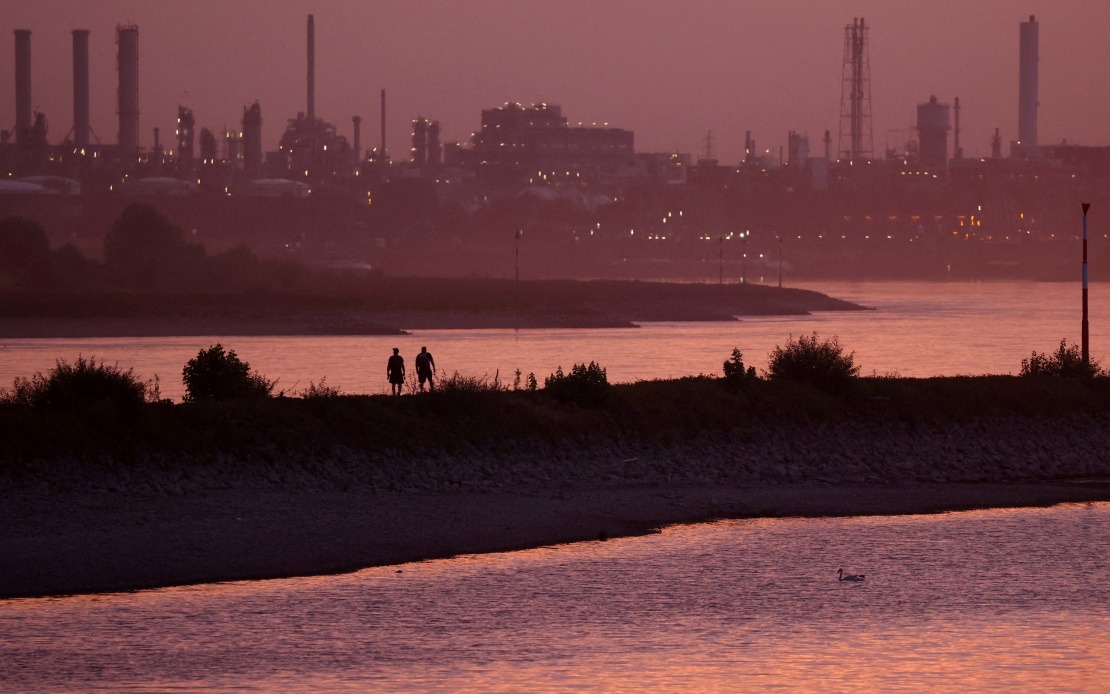
German explosives specialists were mobilized on Thursday to neutralize a substantial World War II-era bomb discovered in the Rhine river bed near Cologne, the result of an extended drought that has driven the river to historic low levels. The find underscores a phenomenon increasingly common along Europe's most economically vital waterway: as climatic pressures shrink water volumes, they simultaneously unearth dangerous remnants from decades past, creating complex operational challenges for authorities managing both environmental and security crises simultaneously.
The 500-kilogramme American aerial bomb came to light on Wednesday evening at a location adjacent to Cologne's Rheinpark, an area typically submerged beneath metres of water but now exposed to dry conditions that persist across the region. German Press Agency reports indicated that the defusing timetable had not been finalized, suggesting that specialists were still undertaking preliminary assessments to determine safe detonation or extraction procedures. The discovery exemplifies how extreme hydrological events can suddenly transform civilian landscapes into hazardous zones requiring emergency interventions.
City administrators confirmed that approximately 360 individuals residing or employed within a 400-metre safety perimeter would require temporary relocation. This evacuation zone encompasses two particularly sensitive facilities: a residential care home for elderly residents and the operational headquarters of RTL television studios, both of which rely on proximity to the city centre for their respective functions. The need to withdraw staff from a major broadcasting facility during working hours reflects the operational disruption that such discoveries cause to normal urban activities.
The Rhine's catastrophic water deficit has now reached unprecedented severity for the measurement station in Cologne, where gauges registered just 67 centimetres on Thursday morning—equalling a record minimum recorded mere days previously, with meteorological forecasts suggesting potential further descent to 66 centimetres later that day. These measurements represent functional crisis thresholds for river navigation, as large commercial vessels require substantially deeper channels to maintain economical operations. The extreme conditions have persisted over weeks of unrelenting high temperatures and virtually absent precipitation across the continental interior.
Navigational commerce along this crucial transportation corridor has suffered substantial impacts as shipping companies have been forced to reduce cargo loads dramatically to keep vessels operating in available depths. The Rhine corridor functions as Germany's principal inland waterway and supports extensive international trade connecting the industrial heartland with North Sea ports. When water levels collapse to these extremes, the economic consequences ripple through supply chains across multiple sectors, demonstrating how climate-related hydrological stress translates into tangible commercial disruption.
The underlying cause of this recurring crisis stems from prolonged thermal stress coupled with persistent atmospheric drought affecting the broader Rhine catchment region. Extended heat waves have accelerated evaporation from both the river surface and its tributaries, while inadequate precipitation has failed to replenish groundwater aquifers that normally feed the system during dry seasons. Climate scientists have increasingly characterized such extreme low-water episodes as manifestations of shifting precipitation patterns and temperature regimes likely to become more frequent under continued warming.
Hydrometeorological projections offered by German water management authorities provided little reassurance for affected communities and industries. Officials stated that water levels were forecast to rise only marginally throughout the coming days, with no substantial recovery anticipated in the foreseeable future. This assessment implies that the difficulties facing shipping operators and the risks posed by newly exposed hazards would persist for an extended period, requiring sustained coordination between emergency services, commercial interests, and regional governance structures.
The discovery of World War II ordnance along the Rhine has become increasingly routine as low-water episodes recur. During previous drought years, salvage operations have recovered numerous bombs, ammunition caches, and other weaponry deposited on the river bed from the extensive aerial bombardment campaigns that characterized the final years of the European conflict. Cologne itself suffered particularly intense bombing, and the surrounding river systems accumulated considerable quantities of unexploded ordinance never recovered after hostilities ceased.
For Southeast Asian observers monitoring European climate adaptation challenges, the Rhine crisis illustrates vulnerabilities inherent in infrastructure systems dependent on stable hydrological conditions. Region-wide initiatives addressing water security in Malaysia and across the Mekong and Salween corridors must incorporate similar risk assessments regarding how extreme drought events could simultaneously disrupt transportation networks while exposing hazardous legacy materials. The Cologne situation demonstrates that climate resilience requires integrated planning addressing multiple interconnected stresses rather than compartmentalized sectoral responses.
The defusing operation itself represents a specialized technical undertaking requiring expert personnel, specialized equipment, and carefully calibrated safety protocols. Such operations consume significant emergency services resources and disrupt civilian activities for extended periods. As similar discoveries become more frequent across European waterways experiencing climatic stress, authorities will face mounting demands on specialized technical expertise and escalating costs of managing risks created by the intersection of extreme weather events and historical military legacies.
Beyond the immediate operational response, the recurring theme of weapons exposure along the Rhine raises broader questions about how societies should manage inherited environmental hazards from historical conflicts. Complete inventory and recovery of all World War II ordnance across European waterways remains technically challenging and financially prohibitive, suggesting that communities must develop long-term coexistence strategies alongside active remediation efforts. The Cologne situation exemplifies how historical violence and contemporary climate stress combine to create compounded challenges requiring sustained attention from multiple institutional actors.

