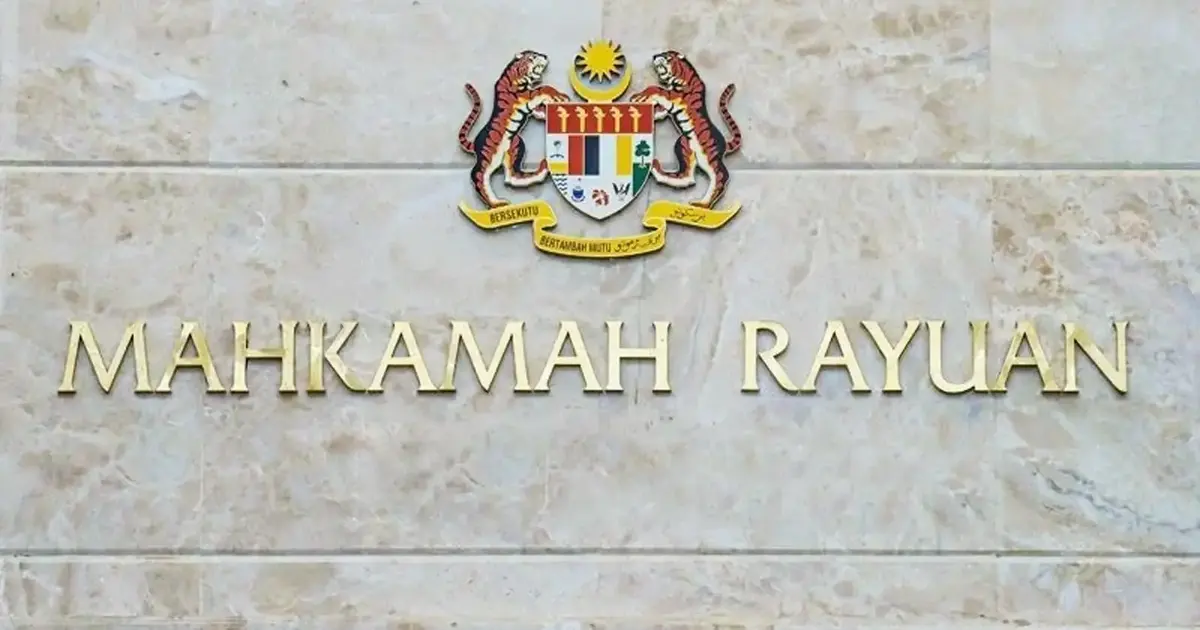
Malaysia's Court of Appeal has delivered a significant ruling on the legal standing of civil society organisations, determining that registered societies are not entitled to initiate defamation lawsuits. The court dismissed an appeal brought by Pertubuhan Ikram Malaysia, a prominent registered society, in a judgment that clarifies the boundaries of legal personality for such organisations under Malaysian law.
The core of the court's reasoning centres on a fundamental principle in Malaysian jurisprudence: that entities without legal personality cannot hold rights or obligations in their own name. Registered societies, while important institutional actors in civil society, do not possess the legal personality afforded to incorporated bodies such as limited companies or statutory corporations. This distinction proves critical when organisations seek to protect their reputations through defamation law, which traditionally shields individuals and entities with recognised legal standing from false and damaging statements.
Pertubuhan Ikram Malaysia's case raised questions about how Malaysian courts should treat civil society organisations that engage extensively in public discourse and advocacy work. The society's appeal challenged the principle that registered societies lack the capacity to be wronged through defamation, arguing implicitly that their significant public profile and role in community engagement should confer some degree of legal protection. However, the Court of Appeal found this argument insufficient to overcome the established legal framework governing legal personality in Malaysia.
The distinction between registered societies and incorporated bodies carries profound implications for how Malaysian civil society organisations structure themselves and pursue legal remedies. Limited companies, cooperatives, and associations registered under the Companies Commission of Malaysia possess full legal personality, allowing them to sue and be sued in their corporate names. In contrast, registered societies—which operate under the Societies Act—occupy an intermediate legal position where the society itself may not initiate legal proceedings in its own name, though members may do so individually under certain circumstances.
This ruling aligns with common law traditions that distinguish between entities with full legal personality and those with more limited legal capacity. The principle extends across multiple Commonwealth jurisdictions, where similar restrictions apply to unincorporated associations and societies. Malaysian courts have historically maintained this distinction to preserve legal clarity and prevent situations where entities without clear governance structures or defined membership bases could wield the mechanisms of defamation law.
For organisations like Pertubuhan Ikram Malaysia, which operates as a registered society rather than a company, the judgment necessitates alternative approaches to addressing defamatory statements. Individual members or office-bearers might pursue personal defamation claims if statements directly attack them, though proving individual harm rather than organisational harm presents evidentiary challenges. Alternatively, organisations could seek remedies through other legal mechanisms, such as applying for injunctions to prevent harmful publications or pursuing complaints through regulatory bodies with relevant jurisdiction.
The decision also reflects broader policy considerations about legal standing and access to courts. While defamation law exists to protect reputation and deter false statements, courts must balance this protective function against concerns about allowing uncontrolled access to litigation. Restricting defamation claims to entities with full legal personality maintains gatekeeping mechanisms that discourage frivolous or strategic lawsuits intended to silence criticism or debate. This concern becomes particularly acute in the context of advocacy organisations, where the ability to sue for defamation could theoretically become a tool for suppressing legitimate criticism of positions or policies.
The implications for Malaysian civil society extend beyond Pertubuhan Ikram Malaysia's specific case. Hundreds of registered societies operate across Malaysia, engaging in religious, educational, professional, and charitable work. Many participate actively in public commentary and policy discussions, yet all face the same legal constraint: they cannot individually invoke defamation law to protect their organisational reputations. This creates an asymmetry where such organisations can be publicly criticised without direct legal recourse, even if those criticisms are demonstrably false and cause reputational damage.
Organisations confronting this legal reality have begun exploring restructuring options. Some have incorporated subsidiary companies to handle certain functions and enable litigation capacity, though this approach introduces administrative complexity and expenses unsuitable for smaller bodies. Others have relied increasingly on alternative dispute resolution mechanisms or public statements to counter false claims rather than pursuing formal legal action. These workarounds highlight the practical constraints that the Court of Appeal's ruling imposes on civil society's ability to defend itself through courts.
The judgment also intersects with evolving discussions about defamation law's role in the digital age. False statements spread rapidly across social media, creating potential reputational damage that affects both individuals and organisations. While the Court of Appeal's ruling stands firm on questions of legal standing, it leaves open questions about whether Malaysian legislators might consider expanding legal personality for registered societies or creating specialized remedies for organisational defamation that operate outside traditional defamation frameworks.
Courts in other jurisdictions have occasionally shown flexibility in addressing this tension. Some systems recognise that wholly unincorporated associations performing public functions might merit limited standing to sue for defamation affecting their core activities. Malaysian courts have not yet travelled this path, preferring to maintain clear bright-line rules rather than case-by-case exceptions. This conservative approach prioritises legal predictability over adaptability to particular organisational contexts.
For registered societies and their legal advisors, the Court of Appeal's decision demands strategic recalibration. Rather than viewing the court system as the primary venue for defending reputational attacks, organisations must develop comprehensive responses combining public communication, monitoring of false claims, support for members who pursue personal defamation actions, and engagement with relevant regulatory authorities. These complementary approaches, while more complex than straightforward defamation litigation, may offer adequate protection while respecting the legal framework that Malaysian courts have now firmly established.
Looking forward, this ruling may prompt discussions about whether Malaysian law adequately protects civil society organisations operating transparently in the public interest. The decision stands as binding precedent, establishing that registered societies cannot access defamation law's protections regardless of their public prominence or the falsity and damage caused by statements made about them. Organisations will need to navigate this reality through alternative legal strategies and enhanced communication practices.

