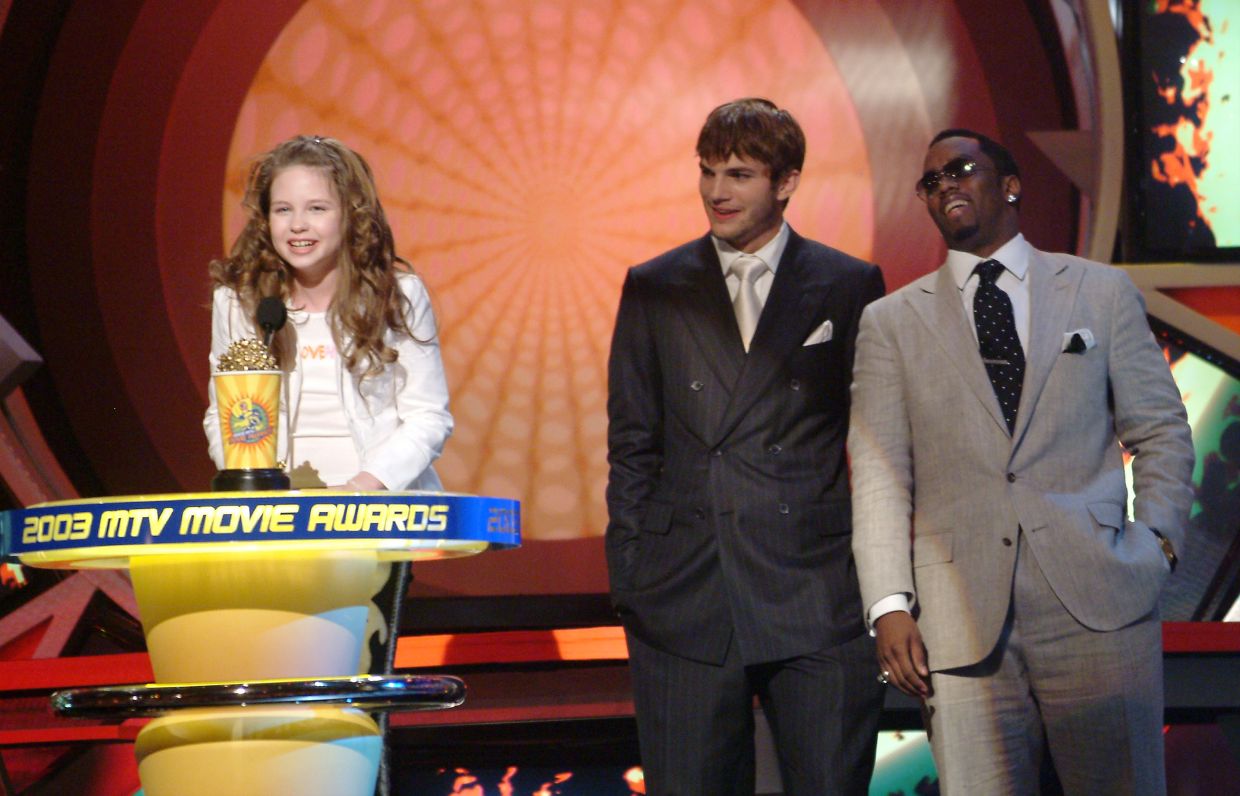
An archival video from the 2003 MTV Awards ceremony has reignited discussion surrounding Sean "Diddy" Combs' social practices, particularly in light of his July 2025 conviction on federal sex trafficking charges. The footage, which has circulated widely across social media platforms in recent weeks, captures Combs approaching then-child actress Daveigh Chase moments after she received the Best Villain award for her role as Samara Morgan in The Ring. At that moment, Chase was just 12 years old, making the interaction a focal point for those examining the music executive's conduct over his career.
In the clip, moments after actor Ashton Kutcher and Combs presented Chase with her trophy, the music producer approaches the young actress with a drink in hand and directly invites her to his after-party. Chase nods in response, prompting Combs to enthusiastically shout his approval while Kutcher laughs at the exchange. The casual nature of the invitation contrasts sharply with what is now known about the elaborate gatherings that would later become central to federal investigations into Combs' activities. The resurfacing of this footage occurs against the backdrop of mounting scrutiny regarding his conduct and associations throughout his decades-long career in entertainment.
The tragic circumstances surrounding Chase have added a layer of poignancy to the video's reemergence. The actress passed away on June 16 at a Los Angeles hospital at the age of 35, with her father, John Schwallier, confirming that she succumbed to complications arising from bacterial meningitis and a blood infection, compounded by severe malnutrition. In the years preceding her death, Chase had been grappling with significant personal difficulties, including substance addiction and homelessness, living on the streets in the vicinity of the hospital where she ultimately died. Her trajectory from child star to struggling with addiction represents one of several troubling narratives within the entertainment industry involving young performers.
Combs' legal troubles have intensified dramatically over the past year. In September 2024, the 55-year-old music mogul was arrested at the Park Hyatt Hotel in Midtown Manhattan as part of a comprehensive federal investigation. The charges centre on what authorities termed "freak-off" parties – gatherings characterised by elaborate productions, drug use, and multi-day sexual encounters frequently involving sex workers and other participants. These events allegedly violated federal prostitution and trafficking statutes, forming the basis of the government's case against the prominent entertainment figure.
The conviction secured in July 2025 marked a significant legal milestone in one of the entertainment industry's most high-profile cases in recent memory. Combs was found guilty on two counts related to transportation to engage in prostitution following a federal trial in New York. The guilty verdict resulted in a substantial prison sentence of 50 months, positioning him among the most prominent entertainment figures imprisoned on trafficking-related convictions in contemporary American legal history. He is currently incarcerated at New Jersey's FCI Fort Dix federal penitentiary, where he awaits potential appeals of his conviction.
Beyond the criminal proceedings, Combs faces an overwhelming civil litigation landscape. Over 100 civil suits have been filed against the disgraced music producer, with allegations spanning various claims of misconduct, abuse, and trafficking. This litigation represents an unprecedented level of legal jeopardy for a major entertainment executive and underscores the breadth of alleged victims and complainants coming forward. The multiplicity of civil cases suggests systemic patterns that may have extended across decades and affected numerous individuals, creating a complex legal environment that will likely occupy courts for years.
The resurfaced video from 2003 takes on heightened significance within this contemporary context. What might have appeared as unremarkable at the time – a successful music producer casually inviting a young award-winning actress to a celebrity gathering – now carries troubling implications when viewed through the lens of subsequent revelations about his conduct. The footage serves as documentation of Combs' interactions with minors in professional entertainment settings, fuelling broader conversations about power dynamics, accessibility, and the vulnerability of young performers in an industry known for hierarchical relationships and significant age disparities.
The circulation of this clip among Malaysian and Southeast Asian audiences reflects a globalised media ecosystem where celebrity misconduct transcends national boundaries. For entertainment professionals and audiences throughout the region, the case presents cautionary lessons regarding the importance of safeguarding mechanisms in entertainment environments. The intersection of wealth, influence, and limited oversight that allegedly facilitated Combs' activities represents vulnerabilities that extend across multiple national contexts and industry structures.
Combs' trajectory from celebrated music executive to convicted felon constitutes one of the entertainment industry's most dramatic falls from prominence. His contributions to hip-hop and popular music remain culturally significant, yet increasingly overshadowed by the serious allegations and convictions that have defined his recent years. The public and legal reckoning with his conduct reflects evolving standards regarding accountability for powerful figures and the willingness of institutions and audiences to reassess historical figures in light of credible allegations of wrongdoing.

