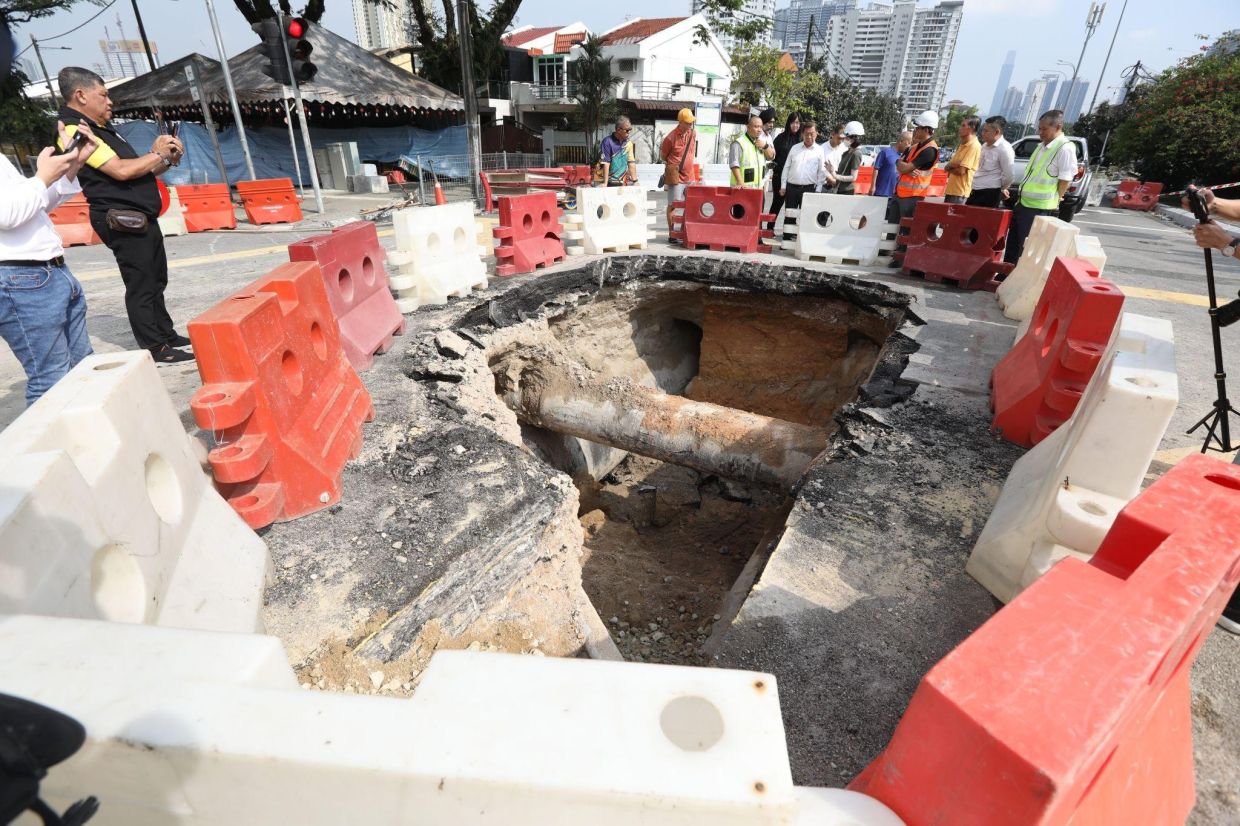
Malaysia's vulnerability to sinkholes is intensifying as the nation grapples with increasingly unpredictable weather patterns and more severe rainfall events. The underground collapse of roads and infrastructure triggered by sewer failures represents an escalating public safety concern that demands systematic intervention. Indah Water Konsortium (IWK), the entity responsible for managing the country's sewerage infrastructure, has moved to address this challenge through a comprehensive, risk-based approach to asset management that combines advanced technology with emergency preparedness.
Sinkhole formation results from a complex interplay of factors that vary from location to location. Geological conditions, patterns of water movement beneath the surface, construction and excavation activities, and the structural quality of buried pipelines all contribute to the phenomenon. The particular cause in any individual case can only be determined through detailed technical investigation, making generalised prevention strategies insufficient on their own. Understanding these triggering mechanisms is essential for developing targeted solutions that address vulnerability across the nation's diverse geography and varied soil composition.
The scale of IWK's responsibility underscores the magnitude of the challenge. The company operates approximately 22,500 kilometres of public sewer pipelines spanning the entire nation, a network that represents decades of infrastructure investment and serves millions of Malaysians daily. Within this vast system, particular focus falls on large trunk sewers—reinforced concrete pipelines measuring 600 millimetres in diameter and above—which carry the heaviest flows and face the most demanding operational conditions. These critical conduits typically function at or near maximum capacity, which creates a precarious situation when weather-related stresses occur.
The chemistry of these large sewer pipes creates an additional vulnerability layer. Operating near full capacity while processing high-velocity sewage flows, these trunk lines accumulate hydrogen sulphide gas over extended periods. This corrosive gas accelerates the degradation of concrete structures, gradually weakening pipe walls and reducing their ability to withstand pressure fluctuations or ground movement. Over time, this combination of mechanical stress and chemical corrosion creates structural weaknesses that can culminate in catastrophic pipe failure without early intervention.
To combat these risks, IWK deploys a suite of sophisticated inspection technologies designed to detect deterioration before it becomes critical. Ground Penetrating Radar, closed-circuit television crawler systems, push rod cameras and pole cameras enable technicians to assess pipe condition across the entire network, with selection depending on accessibility and operational constraints at each location. These periodic condition assessments generate detailed data about structural integrity, enabling IWK to prioritise maintenance and rehabilitation efforts where they will have the greatest protective impact. Remediation strategies include trenchless sewer lining techniques that restore integrity without extensive excavation, or complete pipeline replacement where damage is irreversible.
According to IWK chief executive officer Narendran Maniam, the relationship between extreme weather and underground infrastructure failure has become impossible to ignore. Heavy rainfall destabilises soil by increasing ground saturation, causing ground shifting that can displace and misalign buried sewer pipes. This physical displacement triggers blockages and structural breaks that compromise the network's function. Simultaneously, intense rainfall dramatically increases water pressure within sewer lines, forcing them to carry volumes far exceeding their design specifications.
The hydraulic stress from excessive rainfall creates multiple failure pathways. Pressure surges can cause pipes to crack or burst, necessitating complete line replacement and disrupting service across affected areas. The additional water weight compounds the burden on pipes already weakened by age or chemical corrosion, accelerating degradation processes. When saturated soil loses structural strength while simultaneously experiencing heightened pressure from the infrastructure within it, the stage is set for catastrophic failure. If pipes shift, crack or rupture under these conditions, surrounding soil washes away into the void spaces created by the leakage, gradually expanding underground cavities.
As these underground voids expand beyond a critical threshold, the ground surface above lacks sufficient support and suddenly collapses, creating the visible sinkhole that poses immediate threats to public safety and damages roads, buildings and surrounding infrastructure. The cascade of events—from rainfall intensification through soil saturation, pipe deterioration, leakage, soil erosion and ultimately surface collapse—demonstrates why comprehensive infrastructure management must address multiple stages of the failure pathway simultaneously. Older pipelines constructed with materials or techniques no longer considered adequate face heightened susceptibility to these cascading failures.
Beyond pipe rupture, intense rainfall affects overall sewerage system operation by introducing massive volumes of stormwater through cracks, joints and maintenance access points. This infiltration overwhelms the network's hydraulic capacity and places additional strain on already-stressed infrastructure. The combination of external pressure from saturated soil and internal pressure from excess water creates a vicious cycle where ageing pipes become increasingly vulnerable to failure. Without proactive rehabilitation of these vulnerable sections, the risk of catastrophic failure intensifies with each severe weather event.
Recognising that infrastructure preparation alone cannot address all contingencies, IWK recently conducted a comprehensive Crisis Simulation Exercise at its Asian Sewerage Training, Research & Innovation Centre of Excellence (ASTRICE). This realistic drill modelled a major sinkhole incident involving casualties and suspected large-scale pipeline damage, testing the company's operational readiness across multiple dimensions. The simulation evaluated emergency response protocols, tested mobilisation procedures for operational teams, assessed crisis management coordination, and validated communication procedures with the Fire and Rescue Department, Royal Malaysia Police and other relevant agencies.
Narendran emphasised that the exercise provided invaluable insights into coordination challenges and decision-making under pressure. By testing response procedures in a controlled environment, IWK identified gaps in interagency communication and strengthened coordination mechanisms between internal teams and external emergency responders. The findings generated from this controlled simulation directly informed updates to crisis management standard operating procedures, ensuring that employees understand their specific responsibilities and remain prepared to execute them effectively during genuine emergencies.
The enhanced standard operating procedures developed through this exercise represent more than administrative documentation; they embody institutional memory and systematised knowledge that enables rapid, coordinated response when crises occur. When extreme weather events strike and sinkholes materialise, the difference between chaos and effective management often hinges on whether personnel understand their roles and have practised executing them. By investing in regular training, simulation exercises and continuous procedure refinement, IWK builds organisational capacity that protects communities even when infrastructure reaches its operational limits.
As climate patterns become increasingly volatile across Southeast Asia, the imperative for Malaysian infrastructure operators to remain ahead of emerging threats intensifies. IWK's integrated approach—combining advanced condition monitoring, targeted rehabilitation of vulnerable assets, comprehensive emergency planning, and regular crisis preparedness drills—demonstrates how a major utility can systematically address infrastructure vulnerability in an age of climate uncertainty. Protecting public safety while maintaining the continuous operation of essential sewerage services requires sustained commitment to both technological innovation and human preparedness, a challenge that IWK has positioned itself to meet through deliberate, ongoing investment in resilience.

