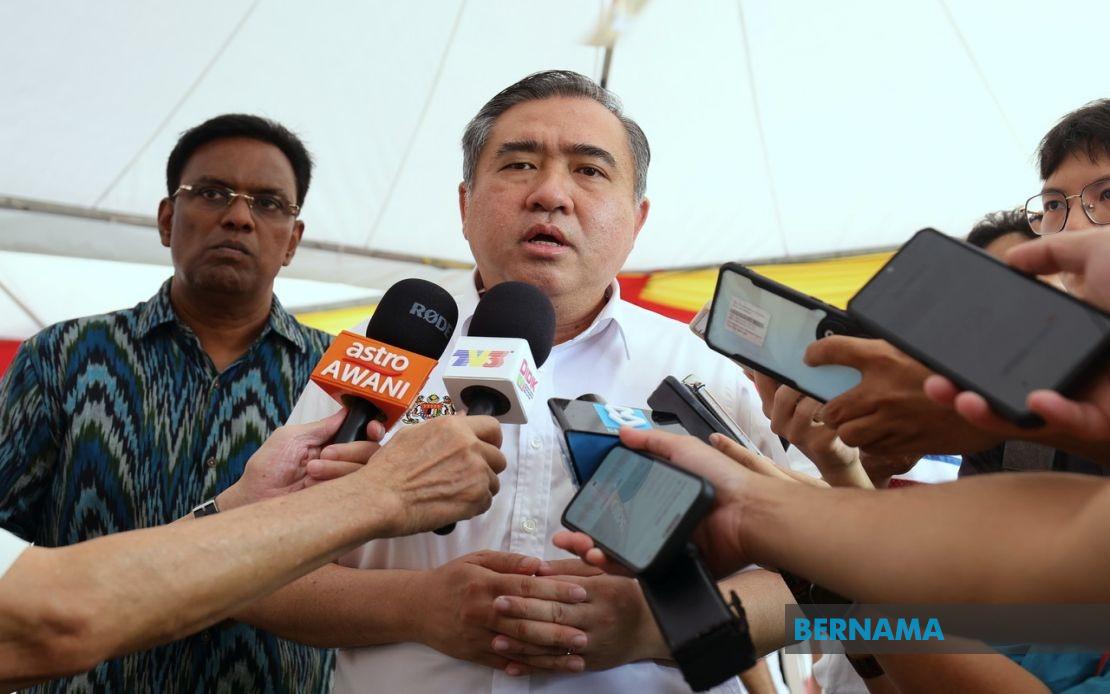
Transport Minister Anthony Loke has unveiled a RM100,000 development package for Kampung Bukit Temiang in Seremban, signalling the government's deepening engagement with rural communities through its flagship MADANI Adopted Village Programme. The funding represents a dual commitment from both the Railway Assets Corporation (RAC), which operates under the Transport Ministry, and Loke's personal allocation as the Seremban Member of Parliament, with each entity contributing RM50,000 to the initiative.
The financial commitment reflects a deliberate shift in how Malaysia's federal apparatus approaches village-level development. Rather than imposing predetermined infrastructure projects, the programme prioritises direct dialogue between government representatives and residents to identify genuine community needs. In this instance, consultation with Kampung Bukit Temiang inhabitants has yielded a roster of priority upgrades that extend across multiple dimensions of rural life, encompassing the rehabilitation of the community hall, roof repairs for residential properties, enhancement of drainage infrastructure, and remedial work on other essential facilities.
Implementation of these development initiatives will proceed under the auspices of the Federal Village Development and Security Committee (JPKK), an institutional framework designed to channel resources efficiently to grassroots communities. This committee structure permits flexibility in execution methods, accommodating both direct contracting of professional work and the mobilisation of traditional gotong-royong community labour schemes. Local contractors can be engaged for specialised repairs, whilst residents themselves may participate directly in maintenance activities, fostering both economic opportunity and social cohesion within the village.
Loke emphasised that the MADANI Adopted Village Programme transcends routine resource allocation, representing instead a fundamental reorientation of ministerial engagement with Malaysia's rural population. By establishing direct channels between federal ministries and local communities, the initiative aims to bridge the information and responsiveness gap that has historically characterised centre-periphery relations in Malaysian governance. Each ministry's deliberate adoption of specific villages creates accountability mechanisms and sustained attention that ad-hoc funding mechanisms cannot replicate.
Beyond rural infrastructure development, Loke articulated an equally ambitious vision for Malaysia's taxi industry through the National MADANI Taxi Renewal Programme. An additional RM10 million allocation recently announced by Prime Minister Datuk Seri Anwar Ibrahim seeks to accelerate uptake of vehicle replacement schemes among taxi and hire car operators, building upon the RM10 million initial allocation established in Budget 2026. This supplementary investment reflects encouraging initial participation rates, suggesting that the programme's comprehensive approach resonates with industry operators.
The taxi renewal initiative extends substantially beyond simple vehicle financing, encompassing a holistic intervention strategy designed to address multiple dimensions of driver welfare and industry sustainability. The programme architecture integrates driver-friendly financing mechanisms that reduce barriers to vehicle modernisation, income enhancement opportunities that counteract declining viability in the traditional taxi sector, social protection frameworks that provide security to an often-vulnerable workforce, and streamlined permit application procedures that reduce bureaucratic friction. By positioning vehicle renewal within this broader ecosystem of support, the government acknowledges that modernisation requires attention to the multifaceted pressures confronting taxi operators.
Crucially, the government has adopted a strategic posture regarding the relationship between traditional taxi services and emerging e-hailing platforms. Rather than viewing these as inherently competitive entities destined for zero-sum conflict, policy framework treats them as complementary service models that can coexist and reinforce each other. This pragmatic recognition reflects market realities whilst departing from earlier protectionist impulses that characterised some taxi industry advocacy. The modernisation programme thus facilitates collaboration frameworks wherein taxi associations, financial institutions, automotive manufacturers, and platform operators work collaboratively to improve service quality and driver incomes.
The Land Public Transport Agency (APAD) has been positioned as a central coordinating entity, working alongside the Transport Ministry and related government agencies to ensure programmatic coherence and stakeholder alignment. This multi-institutional approach acknowledges that taxi industry transformation involves intricate coordination among numerous actors with divergent interests. Government agencies must balance support for traditional operators with acknowledgement of technological disruption, whilst encouraging financial institutions and manufacturers to participate in modernisation financing without imposing excessive risk premiums.
For Malaysian readers, these twin initiatives illustrate the government's attempt to demonstrate responsiveness across both rural and urban constituencies. The rural development programme directly addresses infrastructure deficits in communities that frequently experience service provision gaps, whilst the taxi renewal initiative targets a vulnerable occupational group facing income pressures from technological displacement and operational cost increases. Both initiatives employ similar philosophical frameworks emphasising stakeholder consultation, institutional coordination, and comprehensive rather than narrowly fiscal interventions.
The implications extend beyond immediate beneficiaries to encompass broader questions about resource allocation and governance effectiveness. Kampung Bukit Temiang and similar communities will observe whether allocated funds materialise into tangible improvements, and whether the consultation process translates into responsive implementation. Similarly, taxi operators will evaluate whether financing arrangements genuinely improve their economic viability or merely shift debt burden structures. The success of both programmes will substantially influence public confidence in whether the MADANI framework represents genuine institutional transformation or represents repackaged conventional administration.

