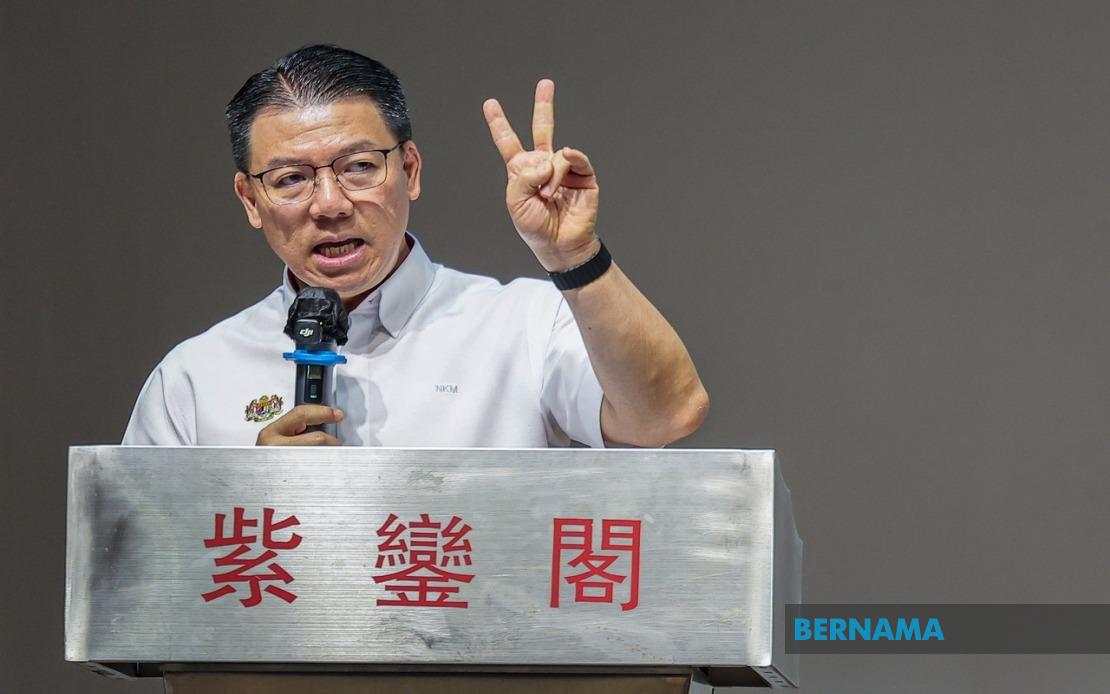
The federal government has distributed RM200 million across four years beginning in 2023 to support the maintenance and upkeep of non-Muslim houses of worship throughout the country, marking a significant investment in religious and community infrastructure. Minister of Housing and Local Government Nga Kor Ming announced the initiative during a ceremony in Kluang, Johor, emphasising that the Non-Muslim Houses of Worship (RIBI) Maintenance Initiative represents a tangible demonstration of the MADANI administration's pledge to treat all segments of society fairly regardless of their religious background or ethnicity.
The scope of the programme extends across multiple faith communities, encompassing churches, gurdwaras, Hindu temples, Buddhist temples and other religious associations seeking renovation, repair or facility improvements. Nga framed the initiative within a broader national narrative of inclusivity, asserting that government development spending should reflect Malaysia's multicultural composition rather than being channelled exclusively through the lens of majority communities. This positioning reflects a deliberate policy direction aimed at reinforcing social cohesion during a period when religious and racial tensions occasionally surface in public discourse across Southeast Asia.
Demand for the programme has substantially exceeded initial expectations, with the e-RIBI System receiving 1,478 applications requesting total funding of more than RM279 million since the scheme's inception. This gap between available allocation and actual applications reveals considerable unmet maintenance needs within religious communities nationwide, suggesting that many premises have deferred necessary repairs due to budget constraints. The overwhelming response underscores both the practical requirement for such initiatives and the willingness of religious organisations to engage with formal government funding channels when made available.
Johor state has emerged as a particular beneficiary, receiving RM18.75 million in cumulative allocations from the scheme's launch through May 2026, distributed across 154 separate religious institutions. The state's latest allocation of RM3.14 million will support 27 additional projects, enabling comprehensive renovation, emergency repairs, new construction and general maintenance work to ensure facilities remain safe and functional for congregations. This geographic concentration reflects both Johor's substantial non-Muslim population and the administrative efficiency of processing applications within individual states.
The maintenance focus addresses a practical challenge facing many independent religious institutions that lack access to large capital reserves or government funding through conventional channels. Religious buildings often require expensive structural repairs, roof rehabilitation, electrical system upgrades and safety compliance modifications that individual congregations struggle to afford independently. By creating a dedicated funding stream, the MADANI government has effectively removed a financial barrier that previously forced many institutions into gradual deterioration, a situation particularly acute in smaller towns and rural areas where economic activity is limited.
Nga's rhetoric accompanying the funding announcement emphasised national unity and social cohesion as foundational justifications for the investment. He articulated the government's role as a bridge-builder rather than a divider, countering what he characterised as separatist narratives that emphasise inter-communal differences over shared national identity. This messaging carries particular resonance in Malaysia's political environment, where coalition stability and electoral prospects increasingly depend on demonstrating inclusive governance to non-Malay, non-Muslim voters concerned about their communities' representation and resource allocation.
The initiative aligns with broader MADANI governance principles centring on fairness, transparency and ensuring that development benefits reach underrepresented communities systematically rather than incidentally. KPKT's commitment to professional monitoring and transparent project implementation suggests attempts to insulate the programme from political manipulation or resource capture by favoured organisations. This institutional framework matters considerably for programme credibility, particularly given historical concerns in Malaysia about equitable distribution of government funds and occasional allegations of favouritism in resource allocation.
From an economic perspective, the maintenance investment carries secondary benefits beyond the immediate religious communities served. Renovation projects generate employment opportunities for local construction workers, materials suppliers and engineering consultants, circulating money through regional economies. This multiplier effect proves particularly significant in smaller towns where construction activity remains sporadic, potentially supporting livelihoods beyond direct project participants and contributing to local tax bases.
The programme's existence reflects recognition that religious infrastructure constitutes genuine community assets deserving public investment comparable to secular facilities. This principle diverges from governments in certain neighbouring democracies that maintain stricter separation between religious and public funding. Malaysia's approach acknowledges that religious institutions provide substantial social services including community gatherings, emergency shelters during natural disasters and pastoral support networks that benefit broader public welfare beyond their congregations' immediate membership.
Looking forward, the scheme's demonstrated popularity raises questions about sustainability and expansion beyond the initial four-year funding window. If demand continues exceeding available allocations at the current rate, future governments may face pressure to increase annual budgets or implement more rigorous prioritisation criteria. This juncture presents opportunities for refined assessment of application quality and project outcomes, enabling evidence-based decisions about future resource deployment and programme modifications.
The RIBI initiative also carries implications for Malaysia's international standing and regional positioning. Southeast Asian nations increasingly evaluate their peers through governance quality metrics including minority protections and inclusive development approaches. By investing visibly in non-Muslim religious infrastructure, Malaysia's government projects an image of secular governance frameworks and pluralistic policy implementation that strengthens its regional reputation and may influence investment decisions by multinational corporations evaluating operational environments across competing markets.

