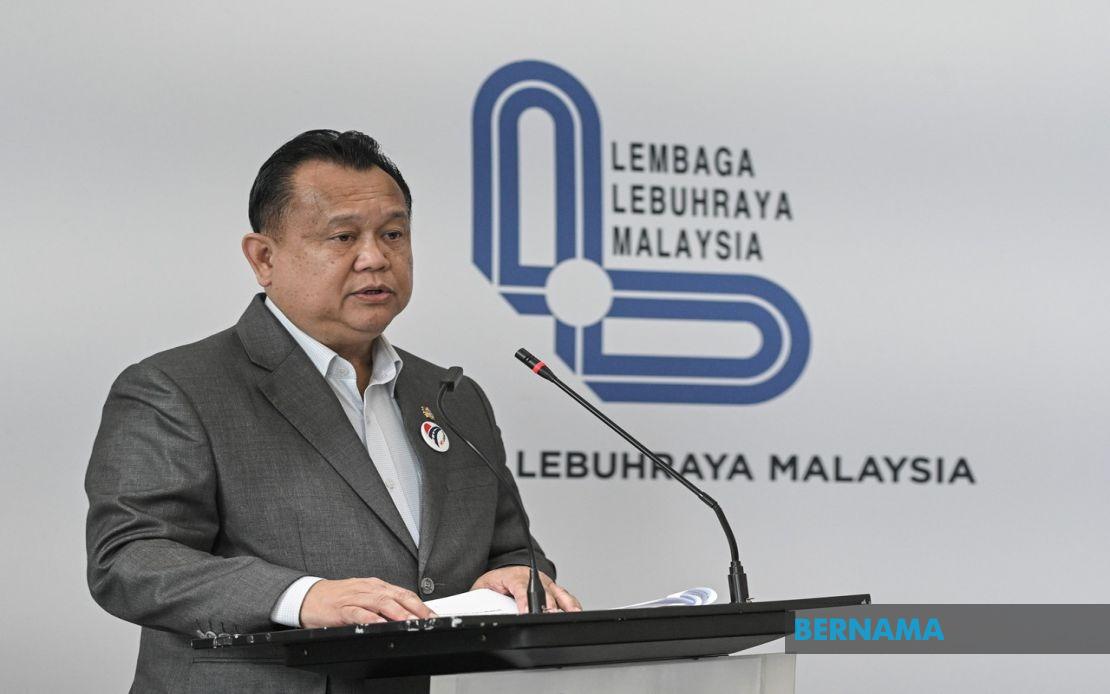
Malaysia's Works Ministry has committed RM25.2 million towards installing solar-powered LED street lights at 32 high-risk highway locations across the country in a bid to significantly reduce road accident fatalities. This initial phase represents the government's strategic response to escalating road safety concerns, with Works Minister Datuk Seri Alexander Nanta Linggi announcing that 3,000 light poles will be erected at identified accident-prone stretches along the nation's highway networks. The announcement underscores the administration's commitment to transforming infrastructure as a critical component of public safety strategy.
The project emerges directly from Prime Minister Datuk Seri Anwar Ibrahim's budgetary commitments announced during the 2026 Budget presentation in October last year, where he highlighted the critical need for enhanced road safety measures. The Works Ministry, collaborating closely with the Finance Ministry and the Malaysian Highway Authority, has structured this initiative as part of the broader MADANI Monitoring programme, which prioritises data-driven identification of infrastructure gaps at dangerous traffic hotspots. This collaborative approach ensures that resources are directed to locations where accident statistics and risk assessments indicate the greatest potential for life-saving intervention.
Although the initial budgetary allocation announced was RM30 million, the Works Ministry has proceeded with RM25.2 million for this opening phase, retaining flexibility to deploy remaining funds as requirements are assessed over coming months. This phased approach reflects pragmatic project management, allowing authorities to evaluate the effectiveness of installations at the first tranche of locations before committing additional resources. The decision to retain uncommitted funds also provides a buffer for cost escalations or the identification of additional critical sites that warrant inclusion in the programme.
The choice of solar-powered LED technology carries significant implications beyond immediate safety improvements. Solar-powered systems eliminate dependence on grid electricity, reducing operational costs over the lights' lifespan while simultaneously lowering the carbon footprint associated with highway maintenance infrastructure. For Malaysia, where energy costs represent a considerable proportion of ongoing government expenditure, this technology represents a sustainable investment that balances safety improvements with environmental responsibility. LED technology itself delivers superior brightness and directional lighting compared to conventional street lamps, improving visibility for drivers negotiating hazardous sections during night hours and adverse weather conditions.
Functionally, better illumination at accident-prone locations addresses a well-documented risk factor in road safety literature. Poor visibility significantly elevates accident risk, particularly on sections where road geometry is challenging or traffic volumes fluctuate unpredictably. The 32 designated locations likely include stretches notorious for specific hazard types—sharp curves, steep gradients, or intersections with high traffic complexity. By targeting lighting upgrades to these particular sites rather than implementing blanket improvements across entire highway networks, the government maximises the safety return on its investment while establishing a replicable model for future road safety enhancement programmes.
The project timeline reflects urgency. With the Letter of Acceptance handed to the selected contractor, physical installation work commenced immediately upon the announcement, with full completion targeted for November 2025. This accelerated schedule demonstrates governmental determination to address road safety deficits without delay, recognising that every month of postponement represents continued risk exposure for highway users. The compressed timeline will require efficient coordination between contractors, materials suppliers, and relevant highway authorities to meet the end-year deadline, though the clarity of the target date enables stakeholders to plan resource allocation accordingly.
For Malaysian road users, particularly those commuting frequently along vulnerable highway corridors, this initiative represents tangible evidence of policy attention to their safety concerns. Road accidents remain a significant public health burden in Malaysia, with fatalities and serious injuries imposing substantial economic costs through medical expenditure, lost productivity, and insurance claims. Enhanced lighting at critical locations addresses one established risk factor, complementing other safety interventions such as improved road markings, median barriers, and speed enforcement. The symbolic importance of this investment—demonstrating government responsiveness to safety demands—may itself influence driver behaviour positively through increased awareness of hazard management.
Regionally, Malaysia's adoption of solar LED technology for highway safety purposes positions the country within global best-practice frameworks for infrastructure modernisation. Other Southeast Asian nations facing similar road safety challenges may observe and potentially replicate this approach, creating opportunities for knowledge sharing and technology transfer within the region. The project's emphasis on data-driven site selection and phased implementation offers a replicable blueprint that balances budgetary constraints with systematic safety improvements, relevant to countries across varying development levels.
The Works Ministry's emphasis on the project's responsiveness to Prime Minister Anwar Ibrahim's public commitment signals broader government prioritisation of road safety within the MADANI development framework. This positioning ties infrastructure improvement explicitly to the administration's governance philosophy, strengthening political will for sustained investment in safety enhancements beyond this initial phase. Stakeholders will monitor completion timelines closely, as successful execution of this project will likely inform governmental willingness to fund subsequent phases covering additional high-risk locations.

