Petaling Jaya and Damansara residents will benefit from a comprehensive flood management programme following Prime Minister Datuk Seri Anwar Ibrahim's announcement of RM44.5 million dedicated to 30 separate mitigation initiatives across these flood-prone areas. The substantial investment reflects growing acknowledgement of the vulnerability of Selangor's densely populated urban centres to seasonal inundation, a challenge that has intensified with climate patterns and rapid urbanisation. The funding commitment comes as the federal government intensifies efforts to address infrastructure gaps that have left communities exposed during monsoon periods and heavy rainfall events.
Implementation of the flood defence scheme will fall under the purview of the Implementation Coordination Unit (ICU), housed within the Prime Minister's Department. This oversight structure indicates a high-level commitment to ensuring timely project delivery and accountability throughout the execution phase. By channelling the allocation through a dedicated coordination mechanism, the government seeks to eliminate bureaucratic delays that have historically plagued infrastructure rollouts and prevent the fragmentation of effort across multiple agencies. The ICU's involvement signals that these projects enjoy priority status within the administration's broader infrastructure agenda.
Government spokesperson Datuk Seri Fahmi Fadzil provided further details on how the broader development funding framework would be organised at the constituency level. Beyond the primary flood mitigation allocation, the Petaling Jaya parliamentary constituency will receive an additional RM3 million to support Projek Mesra Rakyat (PMR) community initiatives and assist non-governmental organisations addressing grassroots needs. The Subang Jaya constituency has been allocated RM1.5 million for similar purposes. This tiered funding approach recognises the distinct development priorities within different electoral districts while maintaining centralised oversight through both state and federal ICU divisions.
The flood hotspots targeted by these interventions have been formally identified through joint assessment by federal and Selangor state government departments. Both administrations have formally endorsed the 30-project portfolio, representing rare alignment between federal and state authorities on a shared priority. This collaborative framework underscores the recognition that flood management transcends administrative boundaries, requiring coordinated action across different governmental levels. The projects likely encompass drainage infrastructure upgrades, retention pond construction, channel deepening, and improved water flow management systems tailored to local topography and rainfall patterns.
FOR Malaysian readers accustomed to recurring flood crises in the Klang Valley region, this announcement carries particular significance. Petaling Jaya and Damansara have historically experienced severe inundation during northeast monsoon seasons, with damage to residential and commercial properties running into millions of ringgit annually. Delayed drainage systems, inadequate culvert capacity, and urban sprawl that has reduced natural water absorption have compounded vulnerability. The RM44.5 million injection represents a long-overdue commitment to systemic remediation rather than temporary relief responses that have characterised previous policy approaches.
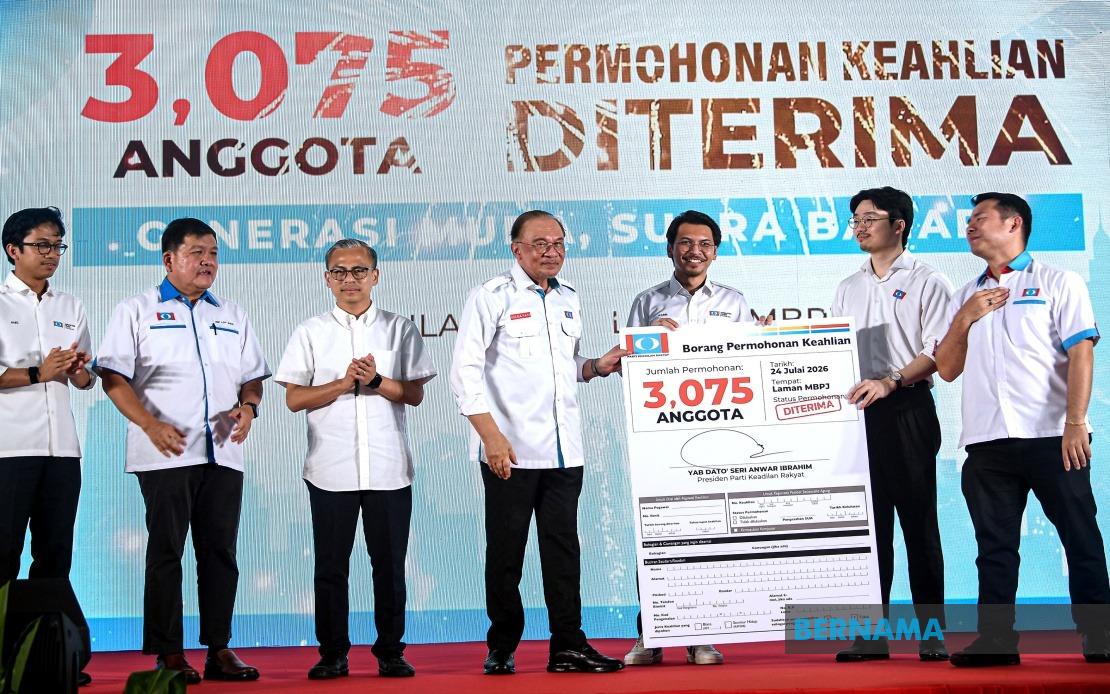
Beyond the infrastructure dimension, Fahmi used the occasion to highlight broader political developments within the ruling PKR party. The recruitment of 3,075 new members during the Generasi Muda Suara Baharu Programme reflected momentum among younger voters, with the majority of recruits drawn from Generation Z cohorts. This generational influx carries strategic implications for PKR's organisational reach and electoral prospects across the Klang Valley and wider Selangor region, where demographic composition increasingly favours younger voters with distinct concerns around climate resilience and urban livability.
The party leadership framed youth recruitment not as preparation for imminent state or general elections but as a sustained organisational drive to deepen engagement with Generation Z constituencies. However, observers recognise that strengthening membership bases carries obvious electoral utility, particularly in marginal constituencies where demographic turnout differences can determine outcomes. PKR's planned nationwide Jelajah AMK Gen Z programme represents an attempt to translate urban activism and climate consciousness into sustained political participation. The scale of the Petaling Jaya turnout has emboldened the party to expand this roadshow nationally, suggesting confidence in the messaging strategy resonating beyond initial test cases.
The convergence of infrastructure investment and youth mobilisation reflects broader governance priorities within the current administration. Younger Malaysians increasingly expect competent delivery on practical issues like flood protection alongside opportunities for meaningful political participation. The RM44.5 million allocation attempts to address material grievances while Fahmi's emphasis on generational engagement signals receptiveness to new voices within the party structure. Whether this translates into sustained policy innovation or remains primarily an electoral tactic will become apparent as specific projects progress and youth voices gain influence over party direction.
For Selangor voters, the immediate challenge will be monitoring project implementation timelines and quality standards. Historical Malaysian precedent reveals that announced allocations do not automatically translate into completed infrastructure. Delays, cost overruns, and technical modifications frequently characterise large-scale development schemes. The establishment of ICU oversight provides some assurance regarding accountability, yet residents in Petaling Jaya and Damansara will rightfully demand transparent progress reporting and clear completion deadlines. The next phase of this initiative depends not on announcements but on demonstrable physical changes to drainage systems that reduce flooding incidence and property damage during monsoon periods.

