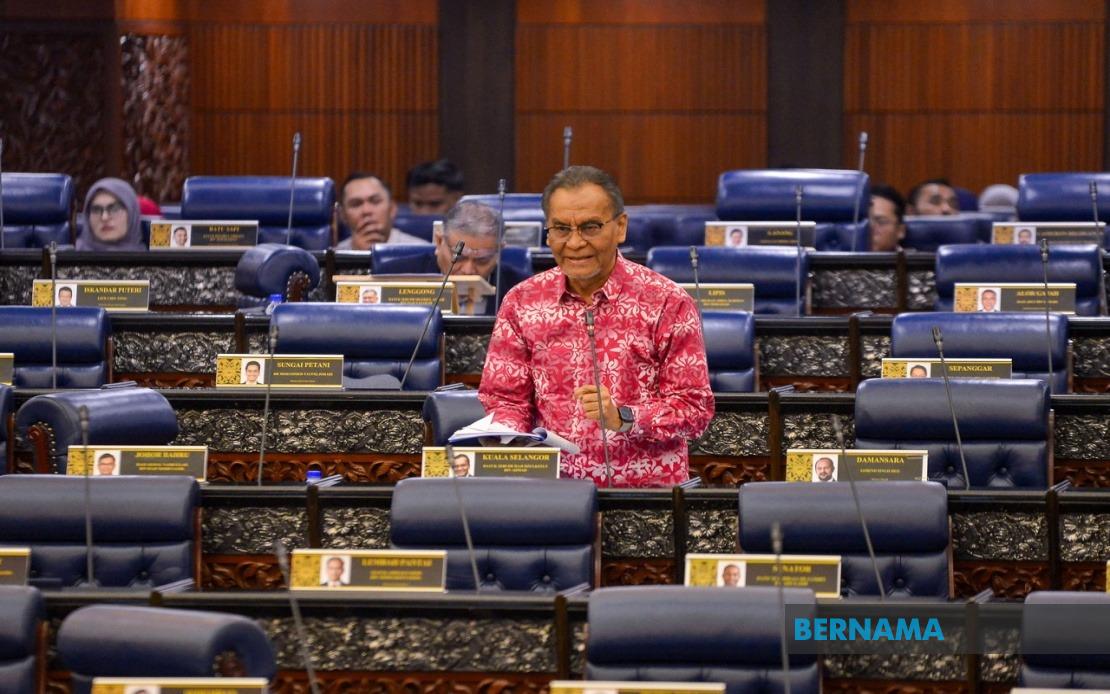
Health Minister Datuk Seri Dr Dzulkefly Ahmad has moved to allay public and parliamentary concerns about a RM500 million expenditure restriction placed on the Ministry of Health, characterising the measure as an administrative reallocation rather than a genuine funding reduction that threatens service delivery. Speaking during question-and-answer session in the Dewan Rakyat on July 2, Dzulkefly explained that the constraint, which represents approximately 1.07 per cent of the ministry's total RM46.52 billion annual allocation, stems from budgeted positions that remain unfilled due to workforce availability constraints rather than deliberate spending cuts affecting operational capacity.
The finance ministry issued the restriction warrant on June 5, prompting immediate concerns from lawmakers representing both peninsula and East Malaysian constituencies that rural healthcare facilities and hospital operations could suffer. However, Dzulkefly's explanation suggests the adjustment reflects a disconnect between approved staffing levels and actual recruitment capacity within the civil service framework. The ministry had received approval for 18,641 positions from the Public Service Department, yet appears unable to recruit sufficient personnel to fill these roles, creating a financial surplus that the government has decided to retain rather than redeploy.
This interpretation carries significant implications for understanding workforce challenges within Malaysia's public health system. The inability to fill approved positions, even with a government committed to strengthening health infrastructure following the covid-19 pandemic, points to deeper structural issues such as insufficient medical school graduates, poor retention rates among healthcare professionals, and competition from private sector employment. Rather than representing a crisis, the RM500 million saving arguably highlights the ministry's struggle to attract and retain qualified personnel at competitive salary and benefits levels compared to private healthcare providers and international opportunities.
Dzulkefly was adamant that the restriction does not touch allocations designated for operational expenses, staff allowances, professional development and training initiatives, or procurement of medical equipment and pharmaceuticals. These categorical exemptions mean that day-to-day hospital functions, outpatient services, emergency departments, and existing development projects should proceed uninterrupted. The reallocation essentially represents financial housekeeping—recalibrating budgets against realistic staffing patterns rather than enforcing genuine austerity measures that would compromise service volume or quality.
Questions raised by Datuk Shahelmey Yahya from Putatan and supplementary queries from Abdul Latiff Abdul Rahman representing Kuala Krai specifically targeted the risk of reduced services in rural and less-developed regions, areas traditionally vulnerable when central government budgets tighten. Dzulkefly's response directly addressed these concerns by emphasising that all basic healthcare services and development initiatives, particularly those benefiting underserved communities, would continue unaffected. This reassurance carries particular weight for Malaysian readers in Sabah, Sarawak, and peninsular rural constituencies where healthcare accessibility remains below urban standards.
Beyond addressing immediate budget concerns, Dzulkefly outlined broader ministerial initiatives aimed at containing private healthcare costs and standardising treatment pricing across Malaysia's fragmented hospital system. The ministry plans to introduce a basic health protection scheme termed Base Medical and Health Insurance/Takaful (MHIT) beginning this month at selected hospital sites, with nationwide rollout scheduled for January 2027. This initiative directly responds to escalating treatment expenses and insurance premium inflation that have priced increasingly large portions of Malaysia's middle class out of private healthcare access, a growing concern in a nation where private facilities account for approximately 40 per cent of hospital beds.
The MHIT framework positions itself as an affordable entry point into health insurance, offering essential coverage without the comprehensive but expensive premiums of conventional private health plans. For Malaysian families juggling healthcare costs alongside rising living expenses, this development represents a meaningful policy shift toward making private healthcare economically accessible. The scheme's introduction through the Joint Committee on Private Healthcare Costs signals coordination between government and private sector stakeholders, suggesting industry buy-in for measures that could ultimately expand patient volume through broader affordability.
Complementing the insurance innovation, the ministry is implementing a Diagnosis Related Groups payment system designed to standardise hospital charges and treatment costs nationwide. This benchmark system will encompass public, private, university-affiliated, and military hospital networks, creating unprecedented price transparency and consistency across Malaysia's healthcare landscape. Such standardisation addresses a long-standing complaint from patients and healthcare economists regarding arbitrary pricing variations between facilities offering comparable services, a particular concern for medical tourists and interstate patients seeking treatment away from their home states.
The DRG system represents a sophisticated health economics intervention with regional significance. Neighbouring countries including Thailand and Singapore have successfully implemented comparable frameworks to manage healthcare costs while maintaining service quality and institutional sustainability. Malaysia's adoption of similar mechanisms positions the nation competitively within Southeast Asia's medical tourism sector whilst protecting domestic consumers from exploitative pricing. The system also provides health administrators with granular data regarding cost-effectiveness and treatment outcomes, enabling evidence-based resource allocation across the healthcare system.
Taken together, Dzulkefly's parliamentary clarifications and policy announcements suggest a ministry navigating genuine structural constraints—particularly workforce limitations—whilst simultaneously advancing structural reforms addressing affordability, transparency, and access equity. The RM500 million adjustment, properly contextualised, reflects an honest acknowledgment of recruitment realities rather than evidence of healthcare system contraction. These nuances matter considerably for Malaysian readers concerned about public health resilience, particularly as the nation confronts persistent disease burdens, ageing demographics, and increasing chronic disease prevalence that will demand expanded rather than constrained healthcare capacity.

