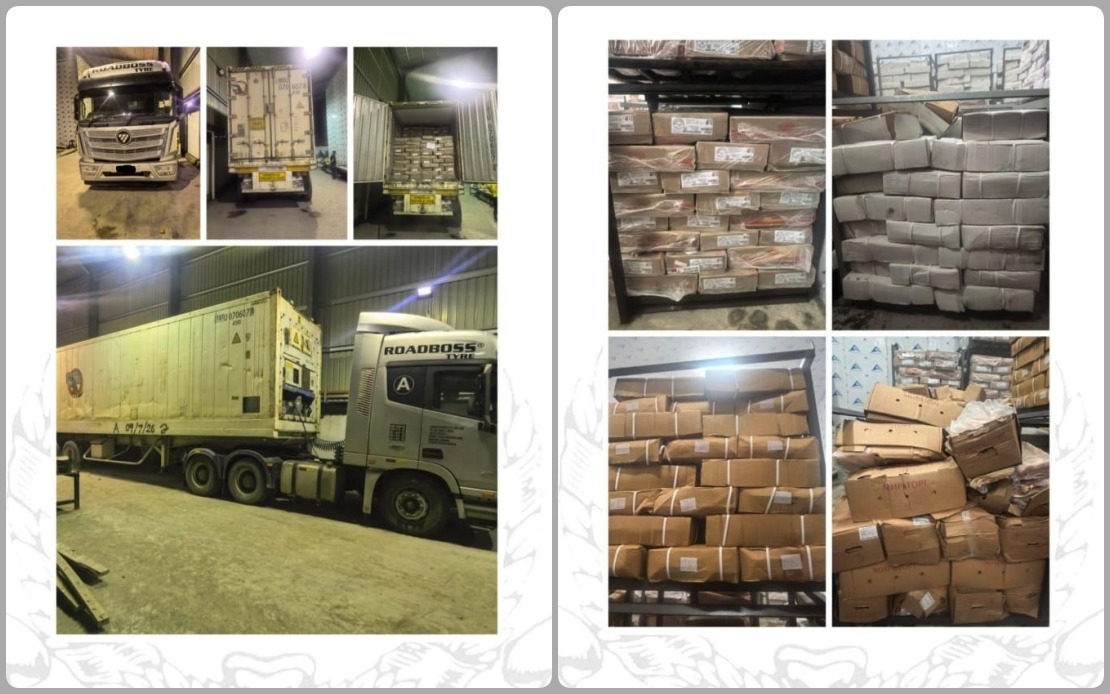
A major enforcement operation in Miri, Sarawak has resulted in the seizure of RM6.19 million worth of frozen pork products that authorities believe entered the country without proper documentation. Police arrested a 26-year-old local man during the operation, codenamed Op Taring Chiller, which took place at a warehouse in the state last night, according to a statement from the Internal Security and Public Order Department (JKDNKA). The case underscores the ongoing challenge Malaysian law enforcement faces in combating the importation and distribution of undocumented food products, a particularly sensitive issue given Malaysia's Muslim-majority population and strict halal certification requirements.
According to Datuk Seri Mohd Yusri Hassan Basri, director of JKDNKA, the operation targeted premises suspected of storing frozen food products of unknown halal status. The department characterised the raid as part of a broader police strategy to strengthen enforcement mechanisms against illegal food distribution networks. Such operations carry particular significance in Malaysia, where food safety and religious compliance intersect at multiple regulatory levels, making unauthorised pork imports not merely a customs matter but also a public order concern affecting consumer confidence and religious sensitivities.
The scale of the seized inventory reveals the sophistication of the operation being disrupted. Officers discovered approximately 30,000 kilogrammes of cooked frozen pork large intestines alongside 18,000 kilogrammes of pork loin distributed across 15 pallets. Additional items included 750 kilogrammes of pork packaged on a single pallet, multiple pallets containing bone-in pork bellies still bearing their rind, and substantial quantities of frozen pork shoulder. The diversity and volume of products suggests a distribution network rather than a simple storage facility, indicating that the operation may have supplied multiple retail or food service establishments across Sarawak or beyond.
The raid involved coordinated efforts across multiple agencies, demonstrating the interagency approach authorities employ for food security operations. The Wildlife Crime Bureau and Special Investigation Intelligence Division (WCB/PSK) led the operation, receiving support from the Miri district police headquarters and Sarawak's Veterinary Services Department. This collaboration reflects how Malaysia's enforcement architecture mobilises different regulatory bodies to address interconnected challenges—in this instance, combining law enforcement, veterinary oversight, and food safety compliance under a single operation.
Investigators are proceeding under the Veterinary Public Health Ordinance 1999, specifically Sections 9(1) and 9(3), which address violations related to the importation and storage of animal products without requisite clearances. Authorities have simultaneously issued a RM25,000 compound notice against the suspect under the same ordinance, creating a dual enforcement approach combining both criminal prosecution and administrative penalties. This layered enforcement strategy aims to deter future violations while also recovering costs associated with the violation.
The Miri seizure represents one component of a much larger enforcement landscape. Between January 1 and July 10 of this year, the WCB/PSK conducted 201 raids nationwide, resulting in the arrest of 375 individuals across various smuggling-related offences. These operations collectively disrupted networks involved in non-duty-paid goods smuggling, the diversion of controlled and subsidised commodities, frozen food trafficking, wildlife smuggling, and electronic waste distribution. The aggregate value of items seized during this period reached RM264.86 million, indicating that food product violations constitute a significant portion of Malaysia's broader smuggling enforcement workload.
The Miri operation carries particular relevance for Sarawak, which shares maritime borders with Brunei and Indonesia and functions as a significant transshipment point for goods moving between Southeast Asian markets. The state's strategic location and port infrastructure make it vulnerable to smuggling networks, requiring sustained enforcement presence. Authorities appear intent on preventing Sarawak from becoming a staging ground for illegal food products destined for distribution throughout Malaysia, where pork products occupy a specialised niche market requiring careful regulatory management to ensure consumer protection without infringing on legitimate commercial activity.
From a compliance perspective, the operation highlights the importance of proper import documentation and halal certification processes. Importers of animal products into Malaysia must navigate a complex regulatory framework encompassing customs clearance, food safety certification, halal authentication, and veterinary inspection. The seizure suggests that some operators attempt to circumvent these requirements entirely, storing and distributing products without any formal approvals. This approach exposes consumers to unverified food safety standards while creating unfair competitive advantages over compliant importers who bear the costs of proper documentation and certification.
The Royal Malaysia Police indicated commitment to intensifying intelligence-gathering and coordinated enforcement operations targeting smuggling and organised crime networks. This statement reflects recognition that food product smuggling often extends beyond individual violations to organised distribution systems with multiple stakeholders, requiring sophisticated investigative approaches. The mention of integrated operations suggests authorities are moving beyond reactive responses to develop proactive intelligence frameworks capable of identifying and disrupting trafficking patterns before products reach consumers.
For Malaysian consumers and businesses, the operation demonstrates active state capacity in food security enforcement, though the continuing scale of violations—RM264.86 million across seven months—suggests that smuggling networks maintain significant operational reach. Sarawak's unique position within Malaysia's federal structure, combined with its maritime vulnerabilities and cross-border trade characteristics, likely requires sustained, specialised enforcement efforts. The successful Miri operation may serve as a template for operations elsewhere, particularly in other maritime-adjacent jurisdictions across Malaysia and neighbouring Singapore, where similar vulnerabilities exist.

