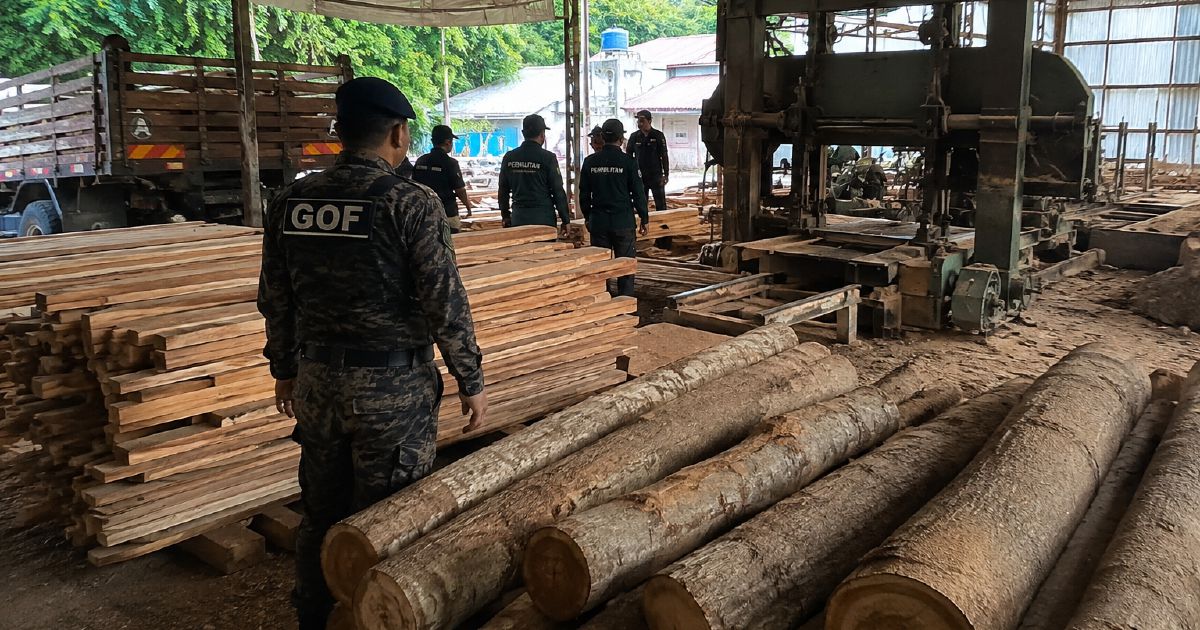
Enforcement authorities have moved decisively against illegal timber operations in Terengganu, with the General Operations Force (GOF) conducting a substantial raid on a sawmill facility in Kuala Berang. The operation culminated in the seizure of timber stocks and industrial processing equipment collectively valued at RM640,510, marking a significant blow against what authorities suspect was unlicensed timber processing activity in the state.
The enforcement action also resulted in the arrest of a 20-year-old individual present at the facility when GOF personnel arrived. Initial investigations are underway to determine the extent of the suspected violations and whether multiple parties were involved in the operation of the sawmill. The age of the arrested individual raises questions about labour practices and operational oversight at the facility, which enforcement agencies will likely examine closely as their investigation deepens.
This seizure reflects mounting concerns across Malaysia's forestry sector regarding compliance with timber licensing requirements and processing regulations. Kuala Terengganu and the broader Terengganu region have historically been significant timber-producing areas, and the state's rich forest resources have made it both economically important and a focal point for enforcement efforts. The substantial value of seized assets in this single operation underscores the financial scale of timber operations in the state and the potential economic losses from illegal activity.
The raid demonstrates the GOF's operational capacity to conduct major enforcement sweeps, particularly in detecting facilities that may operate outside regulatory frameworks. Processing equipment for timber operations represents substantial capital investment, and the seizure of such items sends a clear message to operators about the consequences of non-compliance. The specific equipment involved and its condition will provide investigators with insights into production capacity and the timeline of operations at the facility.
Forest management and timber regulation in Peninsular Malaysia fall under the jurisdiction of the Forestry Department and state governments, with the GOF providing enforcement support particularly in cases of suspected illegal harvesting or unauthorised processing. The coordination between these agencies remains crucial for maintaining the integrity of Malaysia's timber supply chain and preventing the laundering of illegally harvested timber through ostensibly legitimate processing facilities.
The commercial timber industry remains economically significant for Terengganu and contributes meaningfully to both state revenue and employment. However, regulatory frameworks exist to ensure sustainable harvesting practices and to prevent environmental degradation. Facilities operating outside these frameworks risk undermining the legitimacy of the broader industry and creating market distortions that affect licensed operators who bear the compliance costs and environmental responsibilities.
For Malaysian timber exporters and internationally recognised producers, enforcement actions of this nature are critical for maintaining the credibility of the nation's timber sector globally. International buyers increasingly scrutinise supply chain transparency and legal compliance, particularly as sustainability concerns and due diligence requirements intensify in developed markets. A reputation for rigorous domestic enforcement actually strengthens Malaysia's position in international timber markets by assuring buyers of the legitimacy of sourced materials.
The investigation that follows this seizure will provide important data about the nature and extent of illegal timber processing in Terengganu. Authorities will likely examine business records, licensing documentation, timber provenance, and customer networks to determine whether this represents an isolated operation or part of a larger pattern requiring expanded enforcement attention. Such intelligence gathering is essential for strategic resource allocation across enforcement agencies dealing with forestry violations.
Environmental implications of unregulated timber processing extend beyond simple resource theft. Illegal operations typically operate without the environmental controls and mitigation measures required by licensed facilities, potentially generating unmonitored waste and creating ecological damage in surrounding areas. The rehabilitation of such sites and the restoration of affected environments often become public financial burdens, effectively externalising the costs of illegal operations onto society.
For Terengganu specifically, this enforcement action occurs within a broader context of economic diversification efforts and increasing environmental consciousness. The state has been working to balance resource extraction with preservation and sustainable development, making enforcement against illegal operators consistent with longer-term economic and environmental planning. Stakeholders across the timber industry have generally supported rigorous enforcement precisely because it protects market conditions for legitimate players and maintains the sector's international reputation.
The investigation will determine whether charges will be brought against the arrested individual and what penalties may apply under relevant forestry and commercial licensing legislation. Depending on the severity of violations uncovered, potential penalties could range from fines to closure orders and formal legal proceedings. The outcome of this specific case will likely influence operational behaviour among other timber processors in the region, reinforcing the practical consequences of non-compliance with regulatory requirements.

