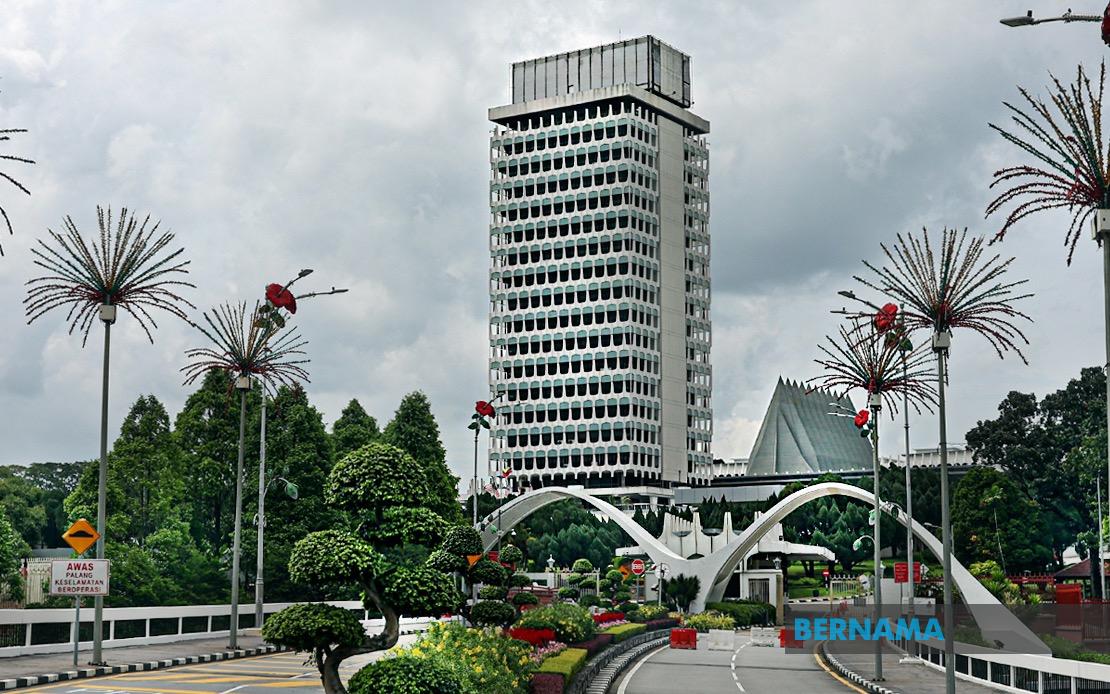
The Road Transport (Amendment) Bill 2026 emerged as the sole piece of legislation successfully enacted during Parliament's first week of sitting, which commenced on June 22 and continues until July 16. The bill represents a significant refinement to Malaysia's approach toward combating illegal street racing by introducing Section 42A, which empowers law enforcement to act decisively without requiring proof of accidents, injuries, or fatalities. Transport Minister Anthony Loke explained that the amendment directly addresses a long-standing enforcement handicap, whereby authorities previously struggled to prosecute dangerous driving activities because existing provisions demanded tangible evidence of harm or peril.
The new enforcement tool carries particular relevance for Malaysia's ongoing road safety challenges, where illegal racing operations have proliferated in urban and suburban areas. By removing the requirement to document actual consequences before intervention, the legislative change gives traffic police and highway authorities the ability to disrupt dangerous activities at their earliest stages. This represents a philosophical shift in enforcement strategy, transitioning from a reactive model that penalises harm already done to a preventive approach that interrupts dangerous behaviour before tragedies occur.
Look signalled that his ministry intends to pursue additional amendments to the Road Transport Act during the remainder of the year, focusing specifically on victim compensation mechanisms. The forthcoming provision would establish a dedicated fund or scheme to support individuals and families harmed by drivers operating under the influence of alcohol or drugs. This layered approach—combining stricter preventive enforcement with expanded victim support—demonstrates an attempt to address street safety from multiple angles simultaneously, complementing existing punitive measures like fines and custodial sentences.
While one bill advanced to enactment, several others encountered procedural setbacks. The Prison (Amendment) Bill 2026, which sought to introduce electronic monitoring technologies and formalize volunteer participation in rehabilitation initiatives, was withdrawn from consideration and sent back to the Parliamentary Select Committee for substantive revision. This deferment suggests that members harbour substantive concerns regarding implementation mechanics or constitutional implications, requiring deeper technical and legal scrutiny before the chamber can proceed.
Four additional bills received their initial parliamentary reading without progressing further: the Sexual Offences Against Children (Amendment) Act 2026, Competition (Amendment) Bill 2026, Competition Commission (Amendment) Bill 2026, and the Cybercrime Act 2026. The cybercrime legislation carries particular significance for Malaysia's digital landscape, as it proposes to repeal the Computer Crimes Act 1997 entirely and establish a modernised framework for prosecuting internet-facilitated offences. Given the exponential growth in cyber fraud, data breaches, and online harassment, updating this two-decade-old statute addresses genuine operational challenges facing law enforcement and regulatory agencies.
Administratively, Dewan Rakyat Speaker Tan Sri Johari Abdul confirmed that Larut MP Datuk Seri Hamzah Zainudin has resumed his position as opposition leader, taking effect from June 18. Separately, two parliamentary seats—Pandan and Setiawangsa—became vacant following the May 18 resignations of Datuk Seri Rafizi Ramli and Nik Nazmi Nik Ahmad respectively. These vacancies trigger constitutional procedures requiring the Election Commission to process casual by-elections, introducing political uncertainty in two significant constituencies and potentially reshaping the opposition's parliamentary composition.
Parliamentary business extended beyond legislative consideration. Minister's Question Time, ordinarily reserved for Prime Minister Datuk Seri Anwar Ibrahim on Tuesdays and Thursdays, was instead fielded by relevant sectoral ministers on several occasions as Anwar attended other commitments. This delegation reflects the practical demands on executive leadership during a period when the government navigates multiple simultaneous policy challenges. Additionally, various Parliamentary Select Committees utilised chamber time to present and debate reports, reinforcing Parliament's intention to enhance committee visibility and influence in legislative oversight.
Labour market conditions attracted significant parliamentary attention, with Human Resources Minister Datuk Seri R. Ramanan reporting that 42,807 workers experienced retrenchment between January and mid-June. Corporate restructuring and business failures constituted the primary drivers of job displacement. However, Economy Minister Akmal Nasrullah Mohd Nasir offered countervailing perspective, emphasizing labour market resilience through declining retrenchment momentum—June losses dropped 20 per cent from May—and stable labour force participation at 70.9 per cent. This divergence underscores the complex employment picture Malaysia faces: absolute job losses merit concern, yet directional improvement and workforce participation stability suggest underlying economic traction despite sectoral disruptions.
National security featured prominently in parliamentary discourse. Home Minister Datuk Seri Saifuddin Nasution Ismail announced government approval of RM22 million in funding to upgrade the Malaysia Border Control and Protection Agency's operational capability, particularly through acquisition of firearms and complementary equipment. This investment responds to transnational security threats ranging from human trafficking to smuggling networks, reflecting Malaysia's position as a regional crossroads requiring robust frontier management.
Digital safety regulations entered the conversation through Communications Minister Datuk Fahmi Fadzil's explanation of the Child Protection Code and Risk Mitigation Code, effective June 1. These frameworks obligate social media platforms to implement age-verification systems protecting child users from inappropriate content exposure. Platforms failing compliance face penalties reaching RM10 million under the 2025 Online Safety Act—a enforcement mechanism designed to compel rapid industry adaptation. For Malaysia's fast-growing digital ecosystem, these regulatory developments signal government determination to balance innovation with protection, particularly for vulnerable user segments.
Commodities and energy considerations also surfaced. The Ministry of Plantation and Commodities indicated it would scrutinise the feasibility of deploying B50 biodiesel blends nationally, acknowledging that existing depot infrastructure would require substantial capital investment to accommodate higher blending ratios. This analysis reflects Malaysia's ongoing effort to balance renewable energy transition objectives against infrastructure constraints and economic viability—a deliberation increasingly relevant as global supply chains remain disrupted and commodity volatility persists.

