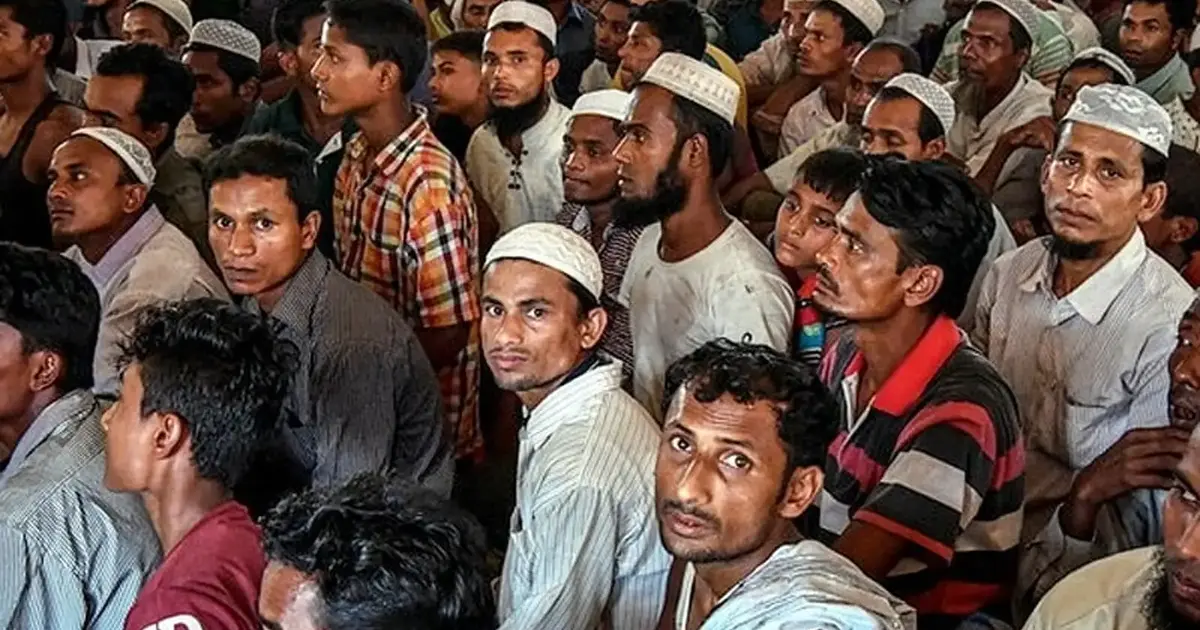
The leadership of the Rohingya Ulama Council has moved swiftly to refute widespread claims regarding the stateless community's purported interest in acquiring Malaysian citizenship, with chairman Rahimullah Hussain asserting that such narratives are fundamentally false and deliberately engineered to stoke animosity.
In a direct response to circulating allegations, Hussain characterized the claims as fabricated assertions designed specifically to provoke adverse sentiment against the Rohingya population. This denial underscores the delicate and contentious nature of Rohingya integration within Malaysian society, where discussions surrounding their legal status and future have become increasingly polarized across public discourse and social platforms.
The Rohingya crisis represents one of the most significant humanitarian challenges in Southeast Asia, stemming from decades of persecution and communal violence in Myanmar's Rakhine State. Malaysia has long served as a primary refuge destination, hosting one of the world's largest populations of stateless Rohingya displaced persons. The country's open-border policies and geographic proximity have made it a natural landing point for those fleeing systematic oppression, though this influx has simultaneously created substantial social and political tensions.
Malaysia's approach to the Rohingya question has remained characteristically pragmatic yet cautious. While the nation has historically provided shelter and humanitarian assistance without formally registering many arrivals with the United Nations High Commissioner for Refugees, citizenship has never been part of the official framework. The Malaysian government, under various administrations, has maintained that granting citizenship to the stateless minority is neither feasible nor aligned with national immigration policies. This position reflects broader concerns about demographic composition, resource allocation, and social cohesion.
The emergence of such allegations, whether originating from political opponents, nationalist groups, or misinformation campaigns, reveals the susceptibility of Rohingya-related discourse to distortion and manipulation. False narratives about citizenship aspirations can rapidly gain traction in environments where public sentiment is already mixed, creating fertile ground for xenophobic rhetoric and community scapegoating. The Council's proactive denial attempts to preempt further escalation of such claims before they crystallize into more entrenched political positions.
For the Rohingya community itself, operating through formal institutions like the Ulama Council represents a strategic necessity in Malaysian society. By establishing recognized leadership structures and engaging in public clarification of community positions, Rohingya leaders seek to maintain visibility and legitimacy while defending their population against sweeping generalizations. This institutional presence also facilitates communication with Malaysian authorities and civil society organizations on matters affecting their welfare and legal standing.
The timing and context of these citizenship allegations carry particular significance given Malaysia's periodic parliamentary and state-level elections. Rohingya populations have occasionally become electoral flashpoints, with some political parties leveraging anti-refugee sentiment to mobilize voter blocs. Accusations regarding citizenship pursuits align conveniently with nationalist talking points, regardless of their factual basis. The Council's swift rebuttal suggests an awareness that such claims, if left unchallenged, might influence policy discussions or electoral rhetoric in unfavorable directions.
Regionally, Malaysia's handling of the Rohingya situation has attracted international scrutiny and diplomatic attention. Neighboring countries, international human rights organizations, and geopolitical actors maintain vested interests in how this population is managed. Citizenship allegations, even if baseless, can affect Malaysia's reputation on the international stage and complicate its bilateral relationships. The Council's emphasis that such claims are fabricated serves not only domestic audiences but also international observers monitoring the nation's treatment of minorities.
The broader question of Rohingya integration in Malaysia remains fundamentally unresolved. Without formal refugee status or citizenship pathways, the community exists in legal limbo, unable to access many employment sectors, education opportunities, and social services afforded to citizens or recognized refugees. This precarious position creates genuine vulnerabilities that extremist groups occasionally exploit for recruitment purposes. Addressing root causes of marginalization requires sustained political will and resource investment that Malaysian governments have historically struggled to maintain.
Moving forward, the Council's denial of citizenship ambitions signals a pragmatic acknowledgment of political realities. By explicitly rejecting what might be perceived as maximalist demands, Rohingya leadership attempts to forestall hardening of public opinion and preserve space for dialogue on more immediate humanitarian concerns. This positioning suggests a community focused on securing basic protections and livelihoods rather than pursuing transformative changes to Malaysia's demographic or political structure.
The broader implications extend beyond the Rohingya themselves. How Malaysia manages stateless populations and refugee questions increasingly defines its regional role and international standing. The prevalence of misinformation surrounding these vulnerable groups underscores the need for robust fact-checking mechanisms, media literacy initiatives, and public education campaigns. Without these safeguards, baseless allegations will continue circulating, eroding social cohesion and complicating humanitarian responses to genuine refugee crises throughout Southeast Asia.

