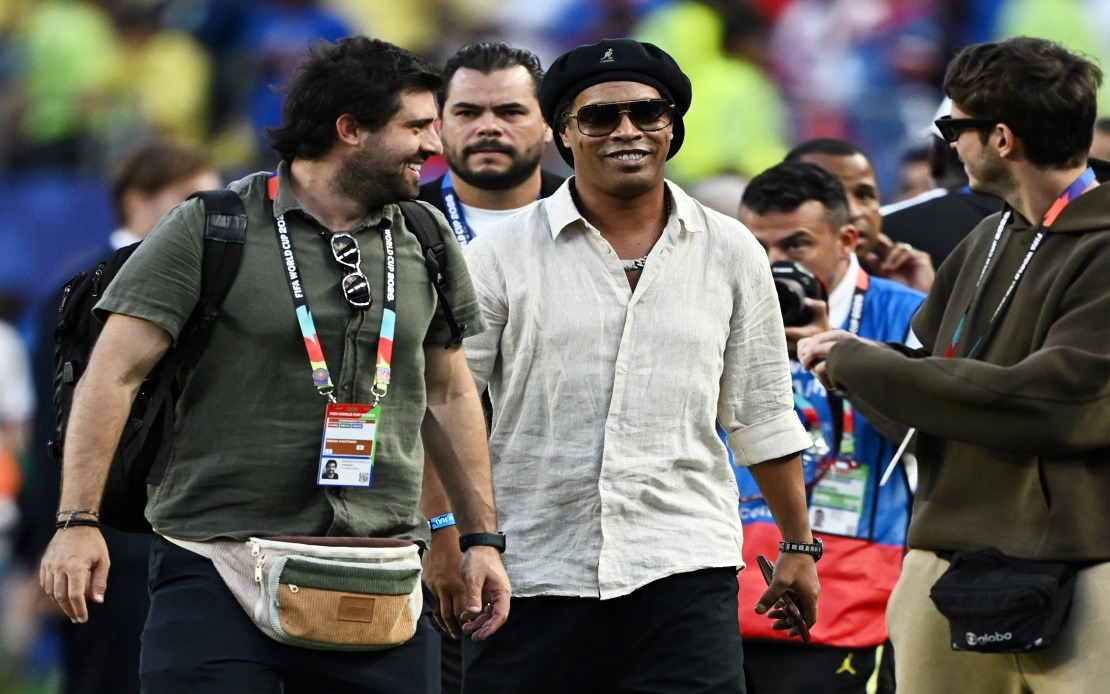
The prospect of legendary Brazilian footballer Ronaldinho returning to professional competition at 46 years old has surfaced, with German news agency dpa reporting that the two-time World Footballer of the Year is preparing to sign with Ravenna, an Italian third-tier club. The announcement comes as a surprise to many in the global football community, given that Ronaldinho has been retired from mainstream professional football for nearly a decade, stepping away from the sport after concluding his involvement with India's Premier Futsal League in 2017.
Ravenna, based in the Emilia-Romagna region of northeastern Italy, appears intent on bringing the decorated South American to their club, though initial reports suggest the agreement may primarily be a symbolic or commercial arrangement rather than a full-time playing commitment. According to Gazzetta dello Sport, Ronaldinho is expected to execute a contract, yet the precise nature of his involvement—whether he will actively compete in matches or serve in a consultancy capacity—remains ambiguous. Both the club and the player have indicated that clarification will emerge during a presentation scheduled for Tuesday in Miami, suggesting a significant media and promotional component to the partnership.
The iconic footballer expressed enthusiasm about the prospective collaboration, stating that he eagerly anticipates reconnecting with the ball and establishing a new chapter alongside club proprietor Ignazio Cipriani, a prominent businessman and hotelier. His words suggest a genuine desire to engage meaningfully with the sport he dominated for decades, though whether that translates into regular competitive fixtures remains uncertain. The sentiment reflects Ronaldinho's enduring passion for football, even as the practical realities of his age and fitness level create legitimate questions about extended playing time.
Ravenna's vice-president Ariedo Braida responded to scepticism about the signing by acknowledging that actual participation in matches would need evaluation, whilst simultaneously voicing confidence in Ronaldinho's timeless abilities. Braida's comments, conveyed to Italian news agency ANSA, strike a careful balance between promotional optimism and realistic assessment, hinting that the club views this arrangement as potentially valuable regardless of the level of on-field involvement. This approach suggests that Ravenna recognizes Ronaldinho's considerable marketability and global brand recognition, which could generate substantial commercial and sponsorship benefits for the provincial Italian outfit.
Ronaldinho's career represents one of football's most remarkable arcs. The Brazilian achieved legendary status through his performances at both club and international level, securing the FIFA World Player of the Year award twice and leading his nation to World Cup victory in 2002. His move to Barcelona in 2004 cemented his global reputation, as he became instrumental in helping the Catalan giants capture the Champions League trophy in 2006 whilst simultaneously revolutionizing the way attacking football could be played at the highest level. Beyond European football, Ronaldinho also captured the Copa Libertadores championship in 2013 whilst representing Atletico Mineiro, demonstrating sustained excellence across different continents and leagues.
His professional journey eventually led him to conclude his mainstream career in 2015 when he last appeared competitively for Rio de Janeiro-based Fluminense. Ronaldinho subsequently pursued futsal opportunities in India before officially retiring in 2017. The eight-year period since that retirement has seen him remain visible in football circles through occasional appearances, commentaries, and goodwill ambassadorial roles, but not as an active competitor at any meaningful level. This Ravenna development therefore represents a potentially significant shift in his post-retirement trajectory.
For Italian football observers, particularly those following Serie C—the third tier of Italian football—the prospect of acquiring a player of Ronaldinho's calibre is extraordinary. Ravenna competes in a league where most clubs operate with modest budgets and limited international prominence. The appearance of such a high-profile figure, even in a potentially limited capacity, represents an unprecedented marketing opportunity and could substantially elevate the club's visibility far beyond its traditional regional fanbase. The arrangement signals growing commercial sophistication among smaller European clubs seeking to generate revenue through partnerships with legendary athletes willing to lend their names and occasional involvement to projects.
The timing and Miami presentation component suggest that commercial considerations are central to this partnership. Major sports marketing and sponsorship implications accompany any announcement involving Ronaldinho, given his continued global brand value and social media following. The coordinated media rollout planned for Tuesday in Miami—rather than announcing developments directly from Ravenna—indicates that stakeholders are treating this as a significant international sporting story warranting professional presentation to global media outlets.
For Malaysian sports enthusiasts and Southeast Asian audiences more broadly, this development carries particular resonance. Ronaldinho's fluid, creative playing style and joyful approach to football cultivated admirers throughout Asia during his prime years. His performances, especially at Barcelona, were widely broadcast and celebrated across the region, influencing generations of young players. Any comeback attempt, regardless of its practical scope, therefore captures attention among fans who cherish memories of his distinctive artistry during football's golden era of the 2000s.
The fundamental question surrounding this arrangement concerns authenticity. If Ronaldinho genuinely intends to participate in competitive third-division matches, it would constitute an extraordinary sporting achievement—a legitimate professional return at an age when most former elite athletes have fully transitioned to post-playing roles. However, if the engagement primarily involves contracted appearance fees, promotional activities, and ceremonial participation, it would represent a different phenomenon: a commercially sophisticated arrangement allowing both the footballer and the club to benefit from association without authentic competitive demands. Tuesday's Miami presentation should clarify which scenario applies, though both possibilities carry interest for different reasons.
Ultimately, whether Ravenna can genuinely field Ronaldinho as an active player or whether this evolves into something more limited in scope, the very announcement demonstrates the enduring allure of football's greatest talents. At an age when most athletes fade from public consciousness, Ronaldinho's name still generates headlines and captures global attention. That capacity to command interest, combined with his undeniable technical gifts however age may have affected them, makes him attractive to clubs seeking unconventional competitive or commercial advantages. The coming weeks will reveal whether this represents football nostalgia, shrewd marketing, or something genuinely unexpected.

