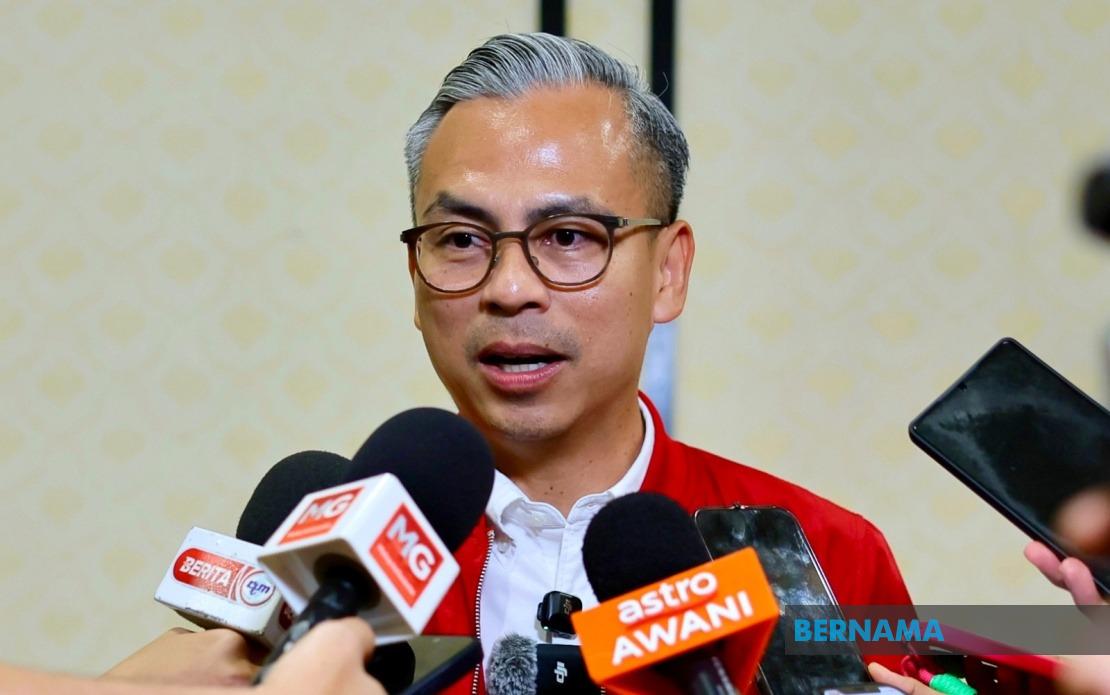
The national broadcaster Radio Televisyen Malaysia is prepared to host a televised dialogue between Johor Menteri Besar Datuk Onn Hafiz Ghazi and Pakatan Harapan's Puteri Wangsa contender Dr Maszlee Malik, Communications Minister Datuk Fahmi Fadzil announced this week. Speaking in Muar, Fahmi extended the offer as a means to give voters direct access to substantive discussions on the state's development trajectory and future vision, a move that reflects growing pressure within the coalition to facilitate high-profile encounters between competing leadership visions ahead of voting.
Fahmi outlined flexible parameters for the proposed engagement, indicating that RTM would accommodate discussions at any mutually convenient location and time, whether in the state capital of Johor Bahru or elsewhere. The minister emphasised that the initiative differs fundamentally from traditional campaign debate formats, instead positioning the dialogue as a structured exploration of policy priorities and governance approaches. This framing attempts to reposition what might otherwise be characterised as partisan political theatre into what his office describes as a civic conversation centred on substance rather than rhetoric.
Understanding the dynamics at play requires recognition of the broader strategic context shaping Johor's electoral competition. The Puteri Wangsa state seat represents a microcosm of the shifting political alignments across the peninsula, with Maszlee positioned as PH's standard-bearer against an incumbent coalition dominated by Barisan Nasional. The five-candidate field—including BN's Teow Chia Ling, Parti Bersama Malaysia's Nicholas Paul Vincent, MUDA's Rashifa Aljunied, and independent Wang Wee Seong—reflects the increasingly fragmented nature of state-level contests, where once-dominant coalition machinery now competes against an array of alternative political vehicles.
Fahmi's proposal also carries subtle messaging about leadership qualities and democratic resilience. By suggesting that willingness to engage with differing perspectives represents a prerequisite for effective governance, the Communications Minister frames acceptance of the dialogue offer as a test of Onn Hafiz's suitability to lead. This rhetorical move attempts to transfer onus onto the incumbent to demonstrate openness and confidence in his record, rather than allowing him to set the terms of engagement or decline participation without apparent cost to his standing.
The initiative responds to recent criticism that Pakatan Harapan lacked a clearly articulated Menteri Besar candidate ahead of formal debate invitations. By decoupling the dialogue offer from pre-existing conditions about candidacy announcement, Fahmi presents a pathway for engagement that acknowledges PH's internal processes while maintaining momentum toward public conversation. This diplomatic positioning reflects the coalition's awareness that voters increasingly demand opportunities to assess leaders through direct exchange rather than relying on mediated campaign messaging.
The timing of Fahmi's announcement carries significance as the state heads toward the July 11 polling date, with early voting scheduled for July 7. With less than a fortnight separating the announcement from balloting, any dialogue conducted through RTM would occupy a compressed timeframe compressed, potentially amplifying its impact on late-deciding voters. The minister explicitly appealed to younger constituents to prioritise their democratic participation despite potential scheduling conflicts, underscoring the coalition's recognition that youth turnout patterns could prove decisive in contests where margins remain competitive.
Maszlee's demonstrated openness to public engagement—including his recent interactive session with 41 young people discussing state aspirations—contrasts with the incumbent's more cautious approach to unscripted public forums. Fahmi's commendation of this accessibility serves to highlight differential approaches to democratic engagement, subtly favouring the opposition candidate's apparent willingness to submit himself to questioning and dialogue. For Malaysian voters accustomed to more tightly controlled campaign environments, such contrasts provide meaningful signals about competing visions of accountable governance.
The parallel contest in Machap between Onn Hafiz and Pakatan Harapan's Nor Hafiz Roslan operates as a straight two-way contest, eliminating the fragmentation visible in Puteri Wangsa and potentially concentrating voter attention more sharply on the direct comparison between incumbent and challenger. RTM's offering of a broadcast platform tilts the information environment toward enabling such direct comparisons, even as traditional media structures remain state-influenced institutions in the Malaysian context.
For Johor specifically, the election outcome holds implications extending beyond the state itself. As Malaysia's second-largest economy and a critical component of the southern corridor development strategy, Johor's governance trajectory influences investment confidence, intra-regional labour migration patterns, and the broader peninsular balance between incumbent coalitions and emerging political alternatives. A Pakatan Harapan performance strong enough to challenge established patterns would signal continued realignment across the country, whereas Barisan Nasional consolidation would suggest stability returning to traditional support bases.
The Communications Ministry's willingness to deploy state broadcasting resources for dialogue—rather than restricting RTM's coverage to standardised campaign formats—represents a notable evolution in how electoral competitions are mediated through public institutions. By positioning the broadcaster as a neutral facilitator of substantive exchange rather than a passive conduit for candidate statements, Fahmi frames public media as an active participant in deepening democratic conversation. This approach implicitly recognises that Malaysian voters increasingly demand and deserve opportunities to observe leaders engaging seriously with competing visions for state development.
Onn Hafiz's response to this overture will likely prove revealing about his strategic calculations. Accepting the dialogue offer risks unexpected questioning from a potentially formidable intellectual opponent in Maszlee, particularly regarding governance record and development outcomes. Declining or delaying acceptance risks portraying the incumbent as insufficiently confident in his tenure or disinclined toward public scrutiny. The framing Fahmi has established forces the Menteri Besar into a position where virtually any response carries political cost—a tactical advantage for the opposition before substantive campaigning even occurs.

