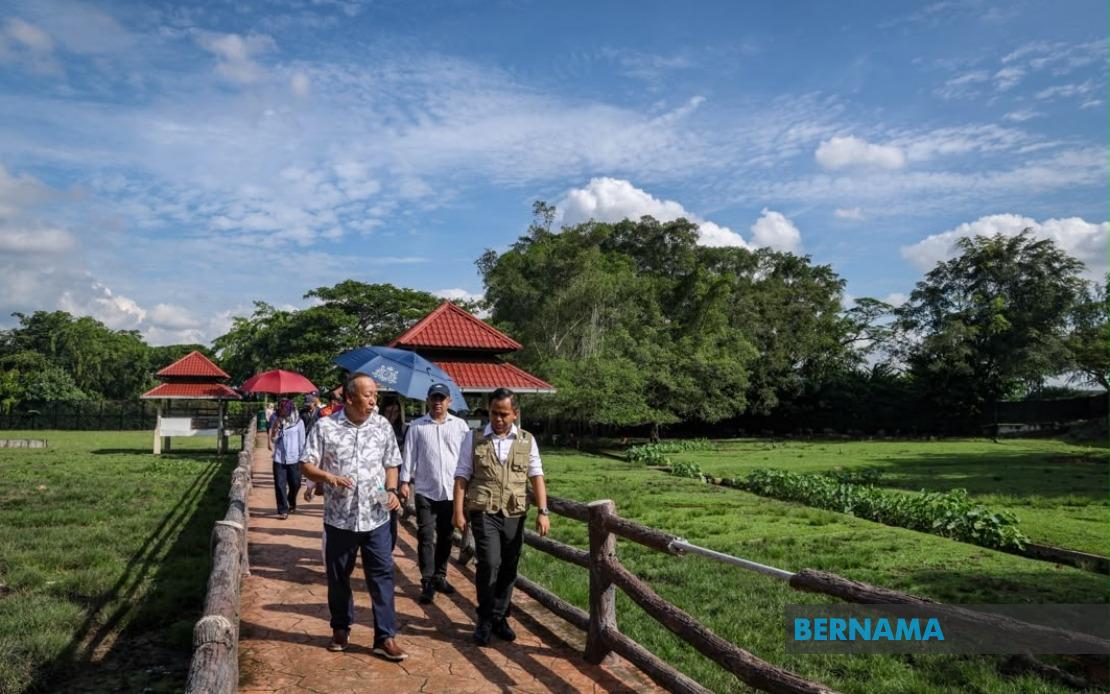
Sabah UMNO has committed to activating its organisational resources to strengthen Barisan Nasional's electoral performance in the upcoming Johor state election, with particular emphasis on constituencies hosting substantial populations of voters from Sabah. The decision reflects a coordinated approach by the coalition to mobilise regional party networks and leverage existing community ties to consolidate support across geographically dispersed voting blocs.
Datuk Jafry Ariffin, who leads the Sabah UMNO liaison committee, announced that the party has been designated to concentrate its efforts on the Pasir Gudang parliamentary constituency, specifically channelling resources into the Permas and Johor Jaya state electoral divisions. This targeted strategy recognises demographic realities on the ground, where migration patterns from East Malaysia have created pockets of voter concentrations that merit tailored campaign approaches.
Available electoral data indicates approximately 3,000 registered voters from Sabah currently reside in Permas, whilst a further 2,000 are enumerated in Johor Jaya. These figures underscore the significance of the Sabahan diaspora in southern Johor politics and explain why Barisan Nasional has allocated specific regional party units to court these communities. For Malaysian elections, such granular demographic mapping has become increasingly important as voter mobility and internal migration reshape constituency compositions.
Sabah UMNO's involvement in supporting these constituencies is not unprecedented. The party executed a similar assignment during the 2022 Johor state election campaign, which means current operatives possess institutional knowledge and established networks within both electoral divisions. This continuity provides operational advantages, as campaign machinery can be reactivated and refined rather than constructed entirely anew, potentially improving efficiency and message penetration among target voter groups.
Ariffin, who concurrently holds the portfolio of Sabah Minister of Tourism, Culture and Environment, emphasised that hard-won campaign expertise from the previous electoral cycle will be systematically applied to maximise outcomes in constituencies with significant Sabahan voter representation. The transfer of institutional knowledge across election cycles has become a standard practice in Malaysian politics, enabling parties to capitalise on prior investments in grassroots infrastructure and community relationship-building.
Initial preparatory activities by Sabah UMNO have already commenced on a modest scale, reflecting the party's intention to establish organisational foundations well ahead of the formal campaign period. However, Ariffin indicated that more intensive campaign deployment would commence following nomination day, when electoral contests become officially defined and candidate identities are formally declared. This graduated approach allows campaigns to calibrate messaging and resource allocation based on the specific competitive dynamics that emerge following candidate nominations.
The Election Commission designated June 27 as the nomination date for the Johor state election, with voting scheduled for July 11. This timeframe provides political parties with two weeks between nomination and polling day to conduct their ground campaigns, a compressed period that rewards parties possessing pre-existing organisational readiness and voter contact infrastructure. Sabah UMNO's early mobilisation positions the coalition to maximise this limited window.
Prior to its dissolution on June 1, the Johor State Legislative Assembly comprised 56 seats, with Barisan Nasional commanding a commanding majority of 40 seats. Pakatan Harapan held 12 seats, whilst Perikatan Nasional occupied three and MUDA claimed one seat. This distribution indicates that Barisan Nasional, despite its dominant position, faces a competitive challenge from opposition coalitions and must actively defend its substantial parliamentary advantage through vigorous campaigning.
The deployment of Sabah UMNO machinery illustrates broader coalition strategies whereby larger umbrella organisations coordinate resources across constituent parties and regional branches to concentrate firepower in strategically important areas. Such coordination mechanisms, refined through successive electoral cycles, have become hallmarks of modern Malaysian political competition. For Barisan Nasional, this integrated approach seeks to convert demographic advantages into electoral victories by ensuring that communities with historical ties to particular regions receive targeted outreach from parties with established credibility within those communities.
For Malaysian voters and political observers, the Sabah UMNO involvement signals that both major coalitions are treating the Johor election as genuinely competitive, notwithstanding Barisan Nasional's apparent structural advantages. The mobilisation of inter-regional party resources suggests that campaign strategists believe margins will be tighter than formal seat distributions might superficially suggest, and that victory requires sustained organisational effort rather than passive reliance on incumbent advantages.
The campaign will test whether Barisan Nasional can effectively consolidate its existing support whilst expanding appeal among constituencies where demographic shifts and voter migration have altered electoral mathematics. Sabah UMNO's role in this endeavour represents a microcosm of how Malaysian coalition politics functions in practice, with regional parties serving as vital bridges between national party hierarchies and geographically dispersed voter communities.