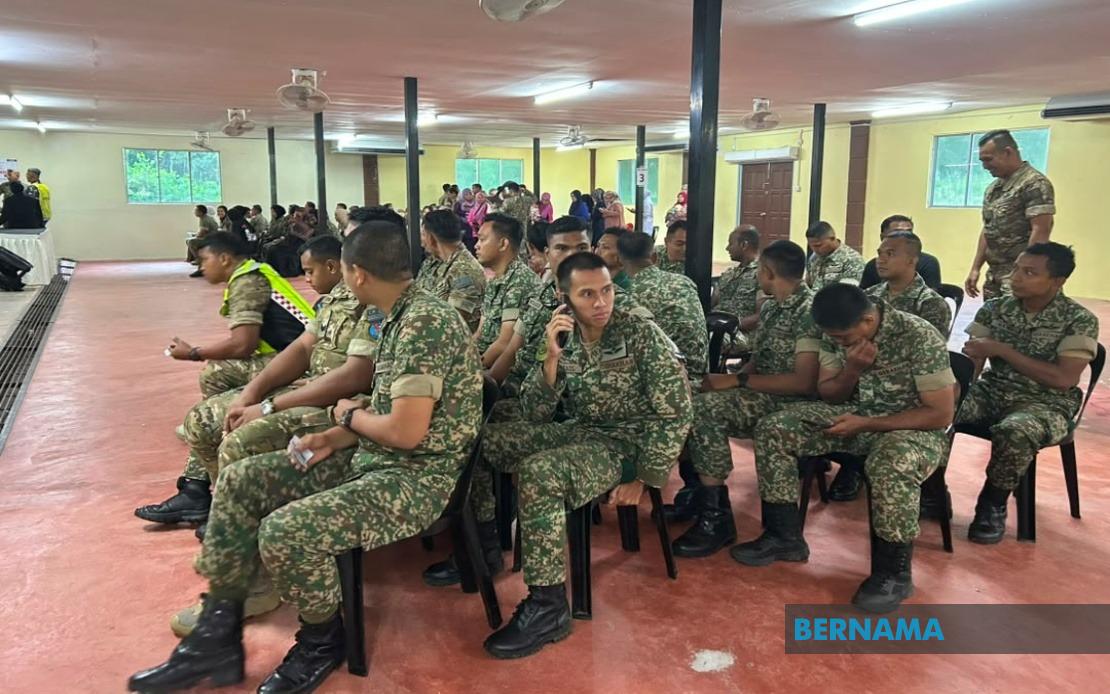
Senior government figures have made separate appeals to early voters participating in Johor's state election, emphasising the importance of civic responsibility and democratic principles as polling gets underway. Home Minister Datuk Seri Saifuddin Nasution Ismail and Defence Minister Datuk Seri Mohamed Khaled Nordin each took to Facebook to encourage the 24,751 eligible early voters—primarily military and police personnel—to cast their ballots with integrity and in the spirit of Malaysia's democratic tradition.
Saifuddin Nasution, who also serves as Pakatan Harapan secretary-general, framed voting as both a right and a responsibility. His message to early voters stressed the importance of exercising their franchise thoughtfully and in accordance with democratic values. In a parallel appeal, Mohamed Khaled urged early voters to recognise their civic role in shaping Johor's future trajectory, emphasising that their votes would influence the state's continued development and progress.
The early voting cohort comprises two distinct groups serving national interests: 12,041 members of the Malaysian Armed Forces and their spouses, alongside 12,710 police personnel and their spouses. This arrangement allows security personnel to vote ahead of the general polling day, accommodating their operational schedules and ensuring their participation despite duty commitments. The composition of this electorate reflects Malaysia's constitutional provisions allowing serving military and police officers to cast ballots under dedicated early voting procedures.
Menulis Besar Datuk Onn Hafiz Ghazi added a competing appeal on behalf of Barisan Nasional, urging voters to place their confidence in BN candidates and their agenda centred on stability, development, and public welfare. This dual appeal from government figures representing different coalitions highlights the competitive nature of the 16th Johor State Election, with both major political blocs actively mobilising support among all voter segments, including those voting early.
The logistical framework for early voting reflected the anticipated scale of participation. A total of 64 dedicated early voting centres opened at 8 am across Johor, with staggered closing times between noon and 6 pm depending on location and registered voter numbers at each centre. This phased approach aimed to manage the flow of voters smoothly while ensuring that all security personnel could exercise their franchise without disrupting their operational duties.
Beyond direct appeals to voters, the three leaders called for the entire electoral process to proceed peacefully and in orderly fashion. Their joint prayer for smooth and harmonious voting reflected institutional concern that large-scale elections, particularly those involving sensitive constituencies like military and police personnel, should transpire without incident or irregularity. This emphasis on peaceful conduct underscores Malaysia's commitment to electoral integrity and democratic norms, values that have become increasingly important as regional democracies face mounting scrutiny over institutional strength.
The scale of this election underscores Johor's political significance within Malaysia's federal structure. The 16th Johor State Election involves 172 candidates competing for 56 state assembly seats, with both Pakatan Harapan and Barisan Nasional fielding candidates in all constituencies. This comprehensive contestation indicates the stakes involved and the determination of both coalitions to secure and maintain influence in one of Malaysia's economically and strategically important states. Johor's electoral outcome carries implications extending beyond state governance, potentially signalling voter sentiment about national political directions.
General polling for the election was scheduled for the following Saturday, meaning early voting represented the opening phase of a campaign that had already generated substantial political activity. The emphasis on early voting procedures, security, and orderly conduct reflects lessons learned from previous electoral cycles and commitment to refining Malaysia's democratic processes. For military and police personnel, whose professional obligations demand they remain available for national service, early voting provisions ensure their constitutional rights are not compromised by operational requirements.
The appeals from Saifuddin Nasution and Mohamed Khaled, though representing different political coalitions, shared a common thread: the invocation of democratic values and civic responsibility rather than narrowly partisan messaging. This rhetorical approach, typical of Malaysian electoral culture, emphasises unity around democratic institutions even while competing fiercely for votes. Such framing is intended to reinforce public confidence in electoral processes and demonstrate that despite partisan differences, Malaysia's major political actors share fundamental commitment to democratic governance.
For Malaysian observers and Southeast Asian analysts tracking electoral trends in the region, the Johor election illustrates several important dynamics. First, it demonstrates how Malaysia continues refining its democratic institutions and electoral procedures to accommodate the needs of different voter populations while maintaining security and integrity. Second, the participation of military and police in early voting highlights Malaysia's approach to reconciling security personnel's democratic rights with operational requirements—a balance that some neighbouring democracies struggle to achieve. Third, the organised nature of the campaign, with senior ministers personally endorsing voting participation, reflects the continued salience of state elections in Malaysia's federal system and their role as barometers of political sentiment.
The emphasis placed by government figures on integrity, responsibility, and democratic spirit in their early voting appeals also carries a subtle message about electoral expectations. By publicly urging voters to exercise their franchise with integrity, leaders signal to the broader electorate the importance of clean voting processes and the rejection of electoral malpractice. This rhetorical investment in democratic norms, particularly when directed at security personnel whose institutional importance is considerable, serves to reinforce institutional and public commitment to democratic standards.
As Johor voters participated in early voting, the messages delivered by Saifuddin Nasution, Mohamed Khaled, and Onn Hafiz Ghazi reflected different political visions for the state's future while converging on shared democratic values. The orderly conduct of early voting, the substantial turnout among eligible security personnel, and the peaceful atmosphere at polling centres would set the tone for Saturday's general election day. For this important state election, the early voting process served as both a practical necessity accommodating security personnel and a symbolic reaffirmation of Malaysia's democratic commitment.

