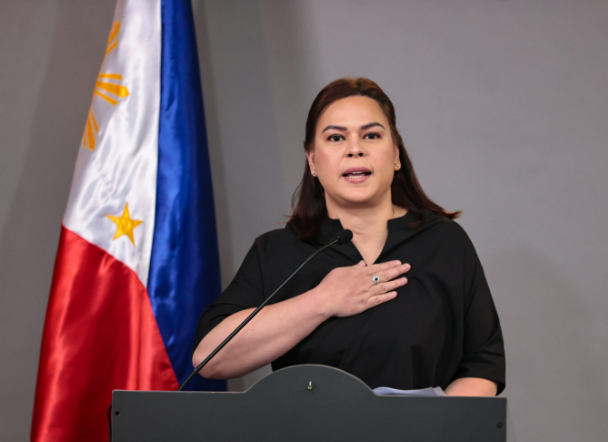
Vice President Sara Duterte delivered a sweeping indictment of President Ferdinand Marcos Jr.'s administration on Tuesday, using a major public gathering along Epifanio de los Santos Avenue (Edsa) as a platform to articulate mounting popular discontent. The remarks came as thousands of members of the Iglesia ni Cristo (INC) assembled on the iconic Manila thoroughfare to protest what they characterised as "selective justice" and "distortion of law" in connection with a plunder complaint filed against Senator Rodante Marcoleta. Duterte's intervention transformed what began as a religious organisation's demonstration into a broader political statement, with the Vice President framing the gathering as evidence of a "growing sentiment" that has animated her public positions since 2024.
At the heart of Duterte's critique lies an assertion that the Marcos administration has fundamentally failed in its basic duty to govern competently and with the interests of ordinary Filipinos at heart. She characterised the government as defined by what she termed "poor governance," a deliberate choice of language that positions systemic failure rather than isolated missteps as the defining feature of the current dispensation. This framing is significant because it moves beyond personalised attacks on individual ministers or policies and instead suggests that dysfunction permeates the entire institutional apparatus. For regional observers, this mirrors tensions that have emerged across Southeast Asia, where middle-class and working-class constituencies have grown increasingly vocal about their governments' inability to manage economic pressures and deliver tangible improvements in living standards.
Duterte's catalogue of grievances reflects concerns that have driven public sentiment across the Philippines in recent months. She highlighted the persistent burden of rising consumer prices, employment precarity, and the overall squeeze on household purchasing power—economic pain points that resonate deeply across urban and provincial communities alike. These are not abstract policy debates but material realities affecting millions of Filipinos who struggle with daily expenses for food, transport, and utilities. By tying the Marcos administration's legitimacy directly to its economic performance, Duterte is invoking a classical argument about governmental accountability: leaders must justify their tenure through demonstrable improvements in the material welfare of their constituents. The fact that inflation and employment remain persistent problems, despite nearly two years of Marcos Jr.'s presidency, provides considerable ammunition for opposition voices.
Yet beyond economic performance, Duterte's remarks escalate into a more contentious domain: her accusation that the administration has adopted an "oppressive political environment" designed to suppress dissent and critical voices. She specifically alleged that the government responds to criticism—whether directed at alleged corruption in Malacañang, policy failures, or charges against the President himself—through intimidation and coercion rather than reasoned rebuttal or policy adjustment. This characterisation touches on foundational democratic principles regarding freedom of expression and the right to hold government accountable. From Duterte's perspective, the administration's approach to political opponents and critics has crossed a line from partisan competition into something more sinister: the deployment of state power to silence opposition and consolidate control.
The Vice President was particularly pointed in condemning what she described as the government's choice to "silence dissent under the guise of accountability." This phrasing is strategically constructed to suggest that efforts to prosecute or investigate critics are pretextual—legal instruments weaponised for political purposes rather than genuinely designed to uphold the rule of law. She warned that such practices undermine the democratic institutions upon which constitutional governance depends, implying that Marcos Jr. is sawing through the branch upon which his own legitimacy ultimately rests. This argument carries particular resonance in the Philippine context, where cycles of democratic backsliding and reinvigoration have characterised recent history, making citizens acutely aware of how quickly institutional norms can erode when unchecked.
Duterte's accusation that the President is "detached" from the suffering of ordinary Filipinos introduces a personalised dimension to her critique. Rather than simply critiquing policies, she is making a character judgment about Marcos Jr.'s empathy, awareness, and commitment to addressing the concerns of the majority. This rhetorical move attempts to establish that the problem is not merely technical incompetence but a fundamental absence of concern for the people's welfare—a failure of leadership at its most basic level. For audiences, this personalisation can be more persuasive than abstract policy arguments because it creates a human narrative: a leader out of touch with reality and indifferent to suffering.
Duterte's positioning of the Edsa rally as a symbol of broader national concern rather than merely as a religious organisation's protest is politically astute. By universalising the message—suggesting that the gathering represents not just INC members but all Filipinos frustrated with governance—she attempts to build a coalition broader than her own political base. This framing is particularly relevant given that the INC itself has substantial political influence in the Philippines, with a track record of collective mobilisation that can influence electoral outcomes. An alignment between Duterte's opposition stance and the INC's organisational capacity could pose considerable political risks to the Marcos administration heading into future electoral cycles.
It is important to note that Duterte made these statements while facing an ongoing impeachment trial before the Senate Impeachment Court, which was scheduled to begin on July 6. Her impeachment stemmed from allegations including threats against Marcos and his wife, unexplained wealth, and misuse of confidential funds. This context complicates the reception of her criticism: supporters may view her as a principled voice willing to challenge governmental abuse despite personal risk, while critics may characterise her as a politically wounded figure leveraging public grievances to rehabilitate her political standing. The simultaneity of her impeachment proceeding and her high-profile attacks on the administration creates a complex optics situation in which her motives and credibility remain matters of significant dispute.
Duterte's invocation of "the honor of the State and the future of a people" at the conclusion of her statement elevates her critique beyond partisan disputation toward a national concern framing. By suggesting that economic hardship and political repression together threaten the very integrity and future trajectory of the Filipino nation-state, she attempts to transcend purely political calculation and appeal to a deeper patriotic sentiment. Whether such framing proves persuasive to broader audiences remains uncertain, but it represents a deliberate attempt to position opposition to Marcos not as factional opposition but as protection of the national interest itself.
The implications of Duterte's intervention extend beyond the immediate Philippine political arena. Southeast Asia has witnessed growing tensions between incumbent governments and opposition movements in recent years, with questions about democratic governance, economic management, and political freedoms increasingly central to regional political contestation. The Philippines' experience under Marcos Jr. will likely influence how other regional leaders balance economic policy, security concerns, and civil liberties protection. For Malaysian observers particularly, the Philippine situation offers relevant lessons about how opposition figures can mobilise public discontent and institutional resources to challenge governmental authority, and the risks and opportunities such challenges present for democratic resilience.

