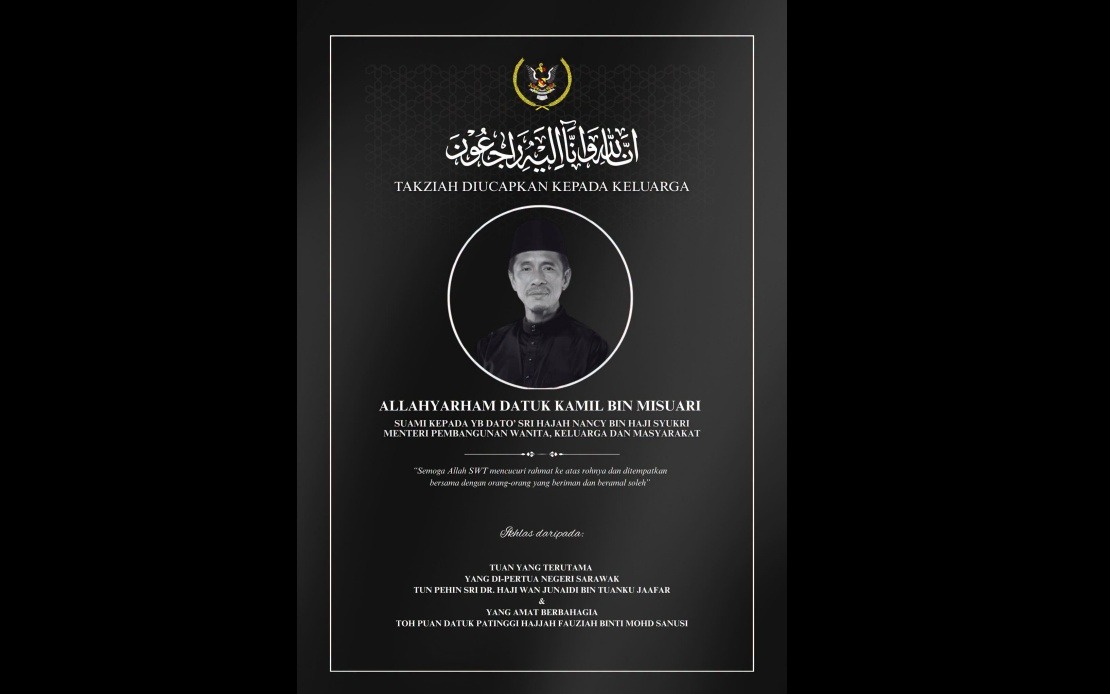
The Yang Dipertua Negeri Sarawak, Tun Dr Wan Junaidi Tuanku Jaafar, has extended formal condolences to Women, Family and Community Development Minister Datuk Seri Nancy Shukri following the sudden death of her husband, Datuk Kamil Misuari, on June 18. The 65-year-old passed away at a hospital in Kuala Lumpur, marking the end of a decades-long marriage that had shaped much of Shukri's personal and professional life.
Through a statement issued by Astana Sarawak, the Governor and his wife, Toh Puan Fauziah Mohd Sanusi, expressed their grief and offered prayers for the deceased. The message conveyed a request that Allah SWT would bestow blessings upon Kamil's soul, accept his righteous deeds, and grant him a place among the pious in the afterlife. This expression of sympathy reflects the formal protocols observed within Malaysia's political establishment when senior members experience significant personal losses.
Particularly poignant was the Governor's invocation of divine strength for the grieving family during their period of mourning. The statement explicitly prayed that Datuk Seri Nancy and her relatives would receive fortitude and patience as they navigate the emotional and practical challenges that accompany bereavement. Such sentiment acknowledges not only the immediate shock of loss but also the lengthy process of adjustment that lies ahead for the minister and her household.
The late Kamil Misuari and Nancy Shukri had built their union over nearly four decades, having married in 1985. Throughout their marriage, they welcomed three children into their family, establishing a household that balanced Nancy's rising political profile with their private life together. This longevity suggests a partnership that weathered the complexities of public service and political commitment, no small feat in Malaysia's demanding political environment.
Arrangements proceeded swiftly following Kamil's passing in the federal capital. His remains were scheduled to be transported to Kuching the following day, returning him to the state where much of his life had been centred and where his family maintains deeper roots. The decision to inter him at Samariang Muslim Cemetery in Kuching indicates the family's intention to lay him to rest in familiar surroundings, allowing both immediate family and extended networks to pay their respects within a familiar community context.
Nancy Shukri's portfolio as Women, Family and Community Development Minister positions her at the forefront of national policy affecting Malaysian households and social structures. The loss of her spouse comes at a time when her ministerial responsibilities demand considerable attention and presence. The timing of such personal tragedy presents the minister with the dual challenge of managing state and personal affairs simultaneously, a situation that will inevitably test her professional commitments while she processes profound grief.
The announcement from her ministerial office presented the facts of Kamil's death with appropriate solemnity, confirming details to the public and media while maintaining the privacy that grieving families require during initial stages of mourning. This measured approach allows the government machinery to acknowledge the loss of a cabinet minister's family member while respecting the personal nature of their suffering.
Condolences from high-ranking officials such as Sarawak's Governor underscore the interconnected nature of Malaysia's political leadership and the protocols that govern expressions of sympathy within these circles. The involvement of Tun Dr Wan Junaidi and his wife in offering formal condolences reflects the broader political community's recognition of Nancy Shukri's position and contributions to national governance.
For Malaysian readers following developments in the political sphere, this moment serves as a reminder of the human dimension underlying public service. Senior politicians, regardless of their portfolio or prominence, remain vulnerable to life's inevitable sorrows. Nancy Shukri's loss illustrates how personal tragedy intersects with public responsibility, creating situations where individuals must reconcile private grief with professional obligation. The expression of sympathy from Sarawak's leadership, delivered through formal channels, represents the collective acknowledgment of this intersection and offers a moment for the political establishment to pause and honour both personal loss and the strength required to continue serving the nation.

