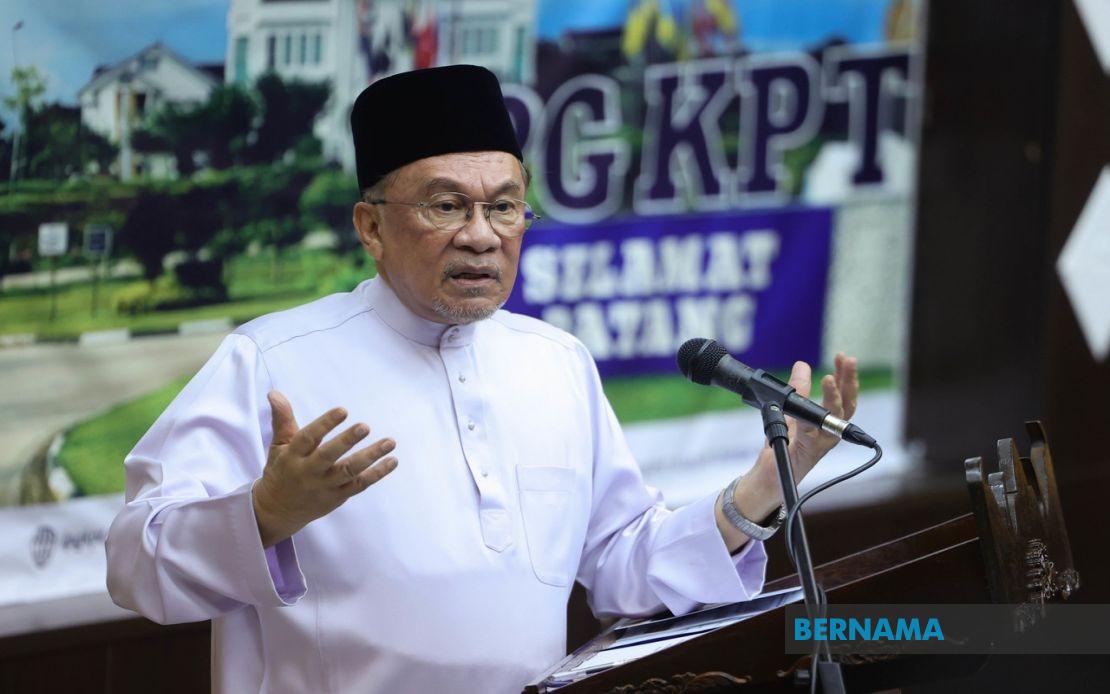
Prime Minister Datuk Seri Anwar Ibrahim delivered a forceful message to Malaysia's education sector this week, insisting that schools must abandon any practice of suppressing bullying reports to preserve their public image. Speaking in Nilai alongside Education Minister Fadhlina Sidek, Anwar made clear that institutional reputation should never take precedence over the welfare of students who fall victim to harassment and intimidation within school premises.
The Prime Minister's remarks underscore growing concern about how Malaysian educational institutions handle misconduct allegations internally. By framing transparency as a moral obligation rather than a public relations liability, Anwar has effectively redrawn the boundaries of acceptable institutional behaviour, signalling that school leaders who prioritise damage control over duty of care will face scrutiny. His comments suggest awareness that some schools may currently operate under the misguided assumption that fewer reported incidents reflect better management, when in fact the opposite often holds true—underreporting indicates either institutional blindness or deliberate concealment.
Anwar employed a pointed illustration to clarify his position: a school enrolling one thousand students that records two bullying cases should not be viewed as poorly managed. Rather, administrators who identify problems and act upon them demonstrate competence and integrity. Conversely, leadership that detects misconduct but fails to intervene, instead choosing silence to maintain appearances, commits a far graver dereliction of duty. This distinction matters profoundly because it reframes the narrative around school accountability, making transparency a marker of excellence rather than failure.
Beyond immediate safeguarding concerns, the Prime Minister identified a deeper educational malaise that bullying incidents reveal. He argued that the prevalence of such behaviour among students reflects insufficient emphasis on character development and moral instruction, despite Malaysian schools offering more religious education than previous generations enjoyed. This diagnosis suggests that technical curricular additions have not translated into measurable improvements in student conduct, pointing toward potential gaps in how values-based education is delivered and reinforced.
Anwar's critique extends to the fundamental purpose of formal education itself. He challenged the prevailing emphasis on academic achievement and technical skill acquisition, contending that these metrics alone provide an incomplete measure of educational success. An institution that produces graduates with impressive credentials but limited empathy, poor interpersonal skills, and disregard for human dignity has ultimately failed its primary mission. This perspective aligns with broader international discussions about holistic education that prepares young people not merely for employment but for responsible citizenship and meaningful social participation.
The Prime Minister articulated the apparent contradiction inherent in modern educational systems: societies invest heavily in producing accomplished professionals, yet these same individuals may lack fundamental understanding of human values and mutual respect. A person who achieves doctoral qualifications or expertise in information technology while remaining emotionally immature, socially callous, or fundamentally unable to interact respectfully with peers represents a hollow form of achievement. Anwar's rhetorical question—what value do such accomplishments hold without corresponding moral and interpersonal development—strikes at the heart of current educational philosophy in Malaysia and the region.
Teachers bear particular responsibility in this framework, according to the Prime Minister's assessment. Educators occupy a unique institutional position to model comportment, establish classroom cultures grounded in mutual respect, and actively cultivate virtues such as compassion and dignity. The school environment they help shape either reinforces or undermines broader social messaging about acceptable behaviour, peer relationships, and the treatment of vulnerable individuals. When bullying flourishes, it often indicates that classroom norms and teacher oversight have failed to establish clear boundaries or effective consequences for harmful conduct.
Despite his critical tone regarding current shortcomings, Anwar simultaneously acknowledged that Malaysia's teaching profession operates at internationally credible standards. This balanced assessment avoids demoralising educators while maintaining pressure for continuous improvement. He expressed confidence that the profession will sustain progress aligned with government objectives to elevate Malaysian education to world-class status. Such statements serve to position reform as achievable enhancement rather than indictment of systemic failure, potentially encouraging greater professional buy-in for initiatives addressing bullying and character development.
The policy implications of Anwar's intervention extend beyond bullying specifically. By publicly endorsing transparent incident reporting, he has effectively established that schools cannot operate with impunity when concealing misconduct. This positioning invites enhanced oversight mechanisms, clearer reporting procedures, and potential accountability measures for administrators who suppress information. Schools may now face legitimate questions about their incident reporting protocols and whether current systems adequately protect complainants and facilitate early intervention.
For Malaysian parents and students, these remarks signal that institutional reputation should not obstruct their access to accurate information about school safety. Students experiencing bullying, and their families, receive implicit reassurance that coming forward with complaints will not reflect negatively on the school's standing or invite retaliation disguised as administrative indifference. This reframing can potentially encourage greater willingness to report incidents, though only if schools demonstrate through consistent action that they genuinely prioritise victim support and perpetrator accountability.
The broader regional context matters here, as bullying remains a persistent challenge across Southeast Asia despite increasing awareness. Malaysia's Prime Minister has positioned himself as an advocate for institutional transparency at a moment when regional education systems collectively grapple with balancing pastoral care, academic performance, and behavioural standards. His insistence that reporting incidents represents strength rather than weakness challenges prevailing institutional cultures in schools throughout the region that may still regard discretion and internal resolution as preferable to formal disclosure.
Implementing Anwar's directive effectively will require more than rhetorical endorsement. Schools need clear protocols distinguishing between minor interpersonal conflicts amenable to peer mediation and serious bullying requiring formal investigation and intervention. They require training for staff to recognise harmful behaviour, support for victims, and rehabilitative approaches for perpetrators. Resources must flow toward preventive programs that build inclusive school cultures, and complaints mechanisms must offer genuine confidentiality protections while ensuring accountability. Without such infrastructure, even well-intentioned directives from national leadership risk remaining aspirational rather than transformative.
Ultimately, Anwar's intervention reflects recognition that educational quality cannot be measured solely through examination results or skill certifications. Schools exist within broader social ecosystems and bear responsibility for developing informed, ethical, compassionate citizens capable of building cohesive communities. When bullying persists because institutions prefer silence to accountability, they betray this fundamental mission. By challenging such practices and insisting on transparency, Malaysia's Prime Minister has articulated a vision of education oriented toward human flourishing rather than mere credential accumulation.

